What to Do in a Flower Bed Before the First Snow
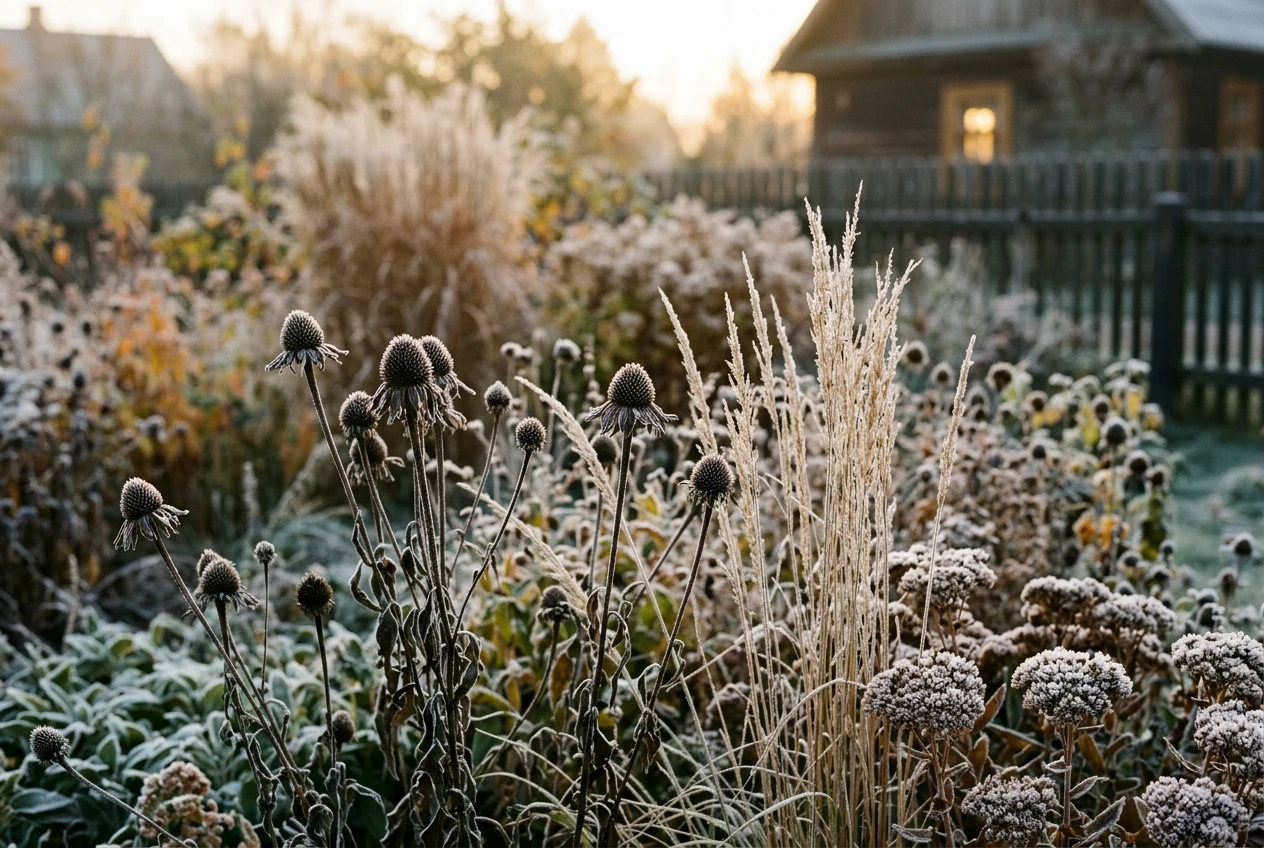
Do you know when is the right time to prepare flower beds for winter so that plants awaken in spring with full vitality? Well-thought-out autumn work before persistent minus temperatures and the first snow arrive ensures the safe wintering of flowers and saves your valuable time in the new gardening season.
Which perennials to cut and what to leave in the beds
During autumn garden care, you shouldn't automatically cut all perennials down to the ground. Selective pruning allows you to leave strong and healthy plant stems and seed heads in the beds, providing food for birds and shelter for beneficial garden dwellers. Plants such as coneflowers, cock's combs, and ornamental grasses collect frost and snow, creating an architectural and aesthetic view in the garden during winter. You can safely leave their pruning for early spring.
You should pay particular attention with pruning shears to those perennials that have become diseased during the summer or fallen victim to pests. Garden leeks and bergamot affected by powdery mildew should be cut down to approximately five centimeters high after the first frosts. Plant debris showing signs of disease should not be added to the compost heap, as pathogens can overwinter there and return in the new year.
Low-growing evergreen and semi-evergreen perennials, such as pearlwort, sedums, snow roses, and moss phlox, need rest in autumn, as their foliage acts as a natural frost protection shield. For woody plants, you should also consider the specific growth pattern of each species. For example, garden and panicle hydrangeas can be pruned in autumn, while large-leaved hydrangea should not be touched, as its flower buds form on last year's shoots. Well-matched and regularly maintained shrubs add value to your home and create beautiful structure in the garden, which is why you should approach each species thoughtfully.
Weeding and autumn watering of beds
Before the ground freezes, flower beds should be carefully weeded. Many cold-tolerant weeds can survive during a mild winter and will start growing rapidly in spring, spreading seeds everywhere. Thorough autumn weed control and trimming of bed edges straight gives the garden a neat appearance even in late autumn without snow and saves you hours of time in spring.
Autumn watering of perennials is often overlooked, but it is a crucial step. If autumn has been dry, the root balls of perennials and ornamental shrubs should be watered generously before persistent frost arrives. Plants growing near roof gutters, wide hedges, and walls need special attention, as rainwater often doesn't reach these areas. Moist soil retains heat much better than dry sandy soil, protecting the root system from unexpected temperature fluctuations and frost.
Lifting cold-tender tubers and rose winter protection
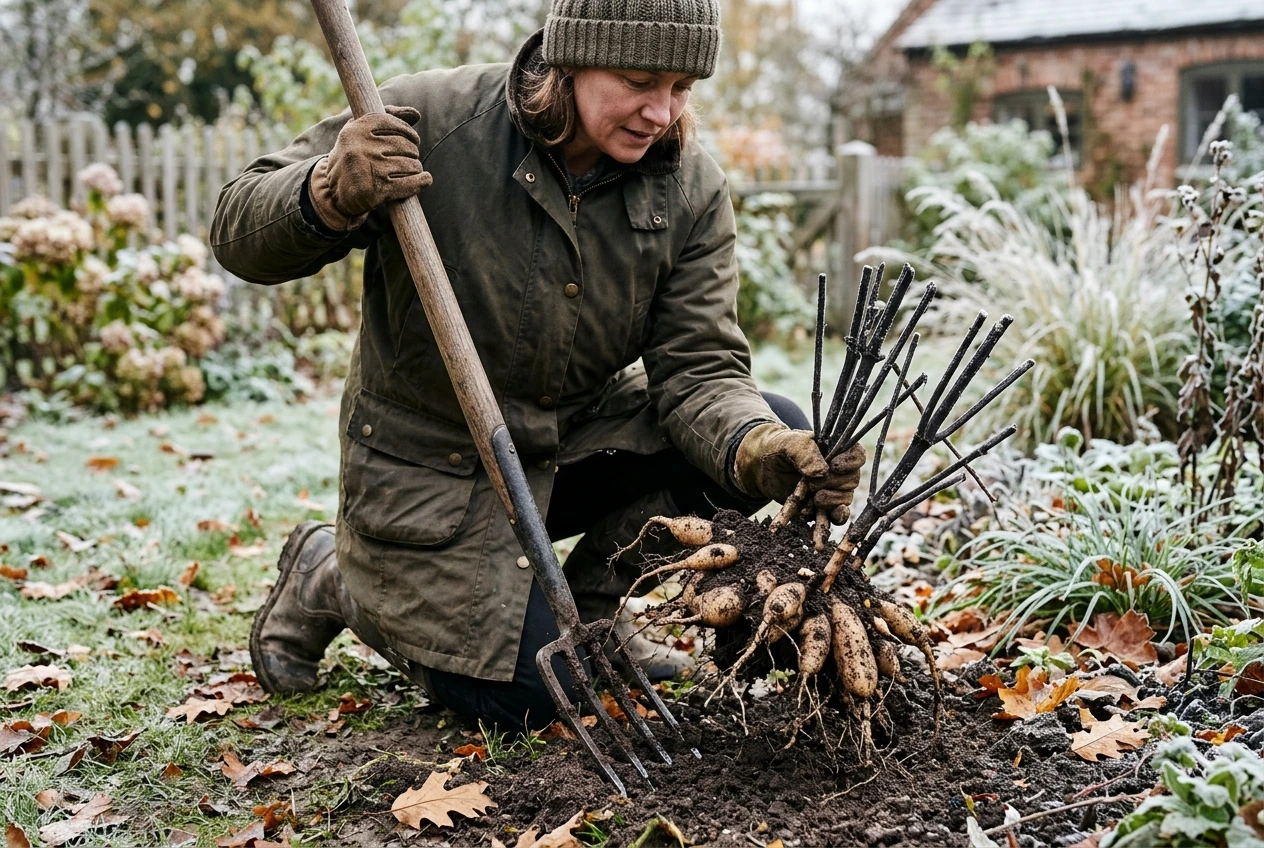
Cold-tender species, such as dahlias and cannas, need careful attention before winter arrives. When the first strong night frosts have blackened the above-ground part of the plant, carefully dig up the tubers with a fork, remove excess soil, and let them dry. Tubers are stored in a cool, dark room where the temperature stays between four and ten degrees.
Autumn is also an excellent time to plant spring-flowering bulbs, such as tulips, daffodils, and alliums, in the soil so they can establish firmly before the ground freezes. When covering roses for winter, however, you shouldn't hurry too much, but wait for more persistent minus temperatures that harden the wood. Around the root collar, a cone of dry garden soil or compost about twenty centimeters high is mounded up, which protects the grafting point and lower buds from severe cold.
Mulching and covering plants at the right time
Timing is key when installing winter mulch and covers. A thick mulch layer added too early keeps the soil warm longer and can interfere with plants' natural preparation for winter dormancy. Therefore, you should wait to install the winter cover until the ground is slightly frozen. The main purpose of winter cover is to keep soil temperature stable and protect plant roots from repeated freezing and thawing cycles, which can heave plants out of the ground.
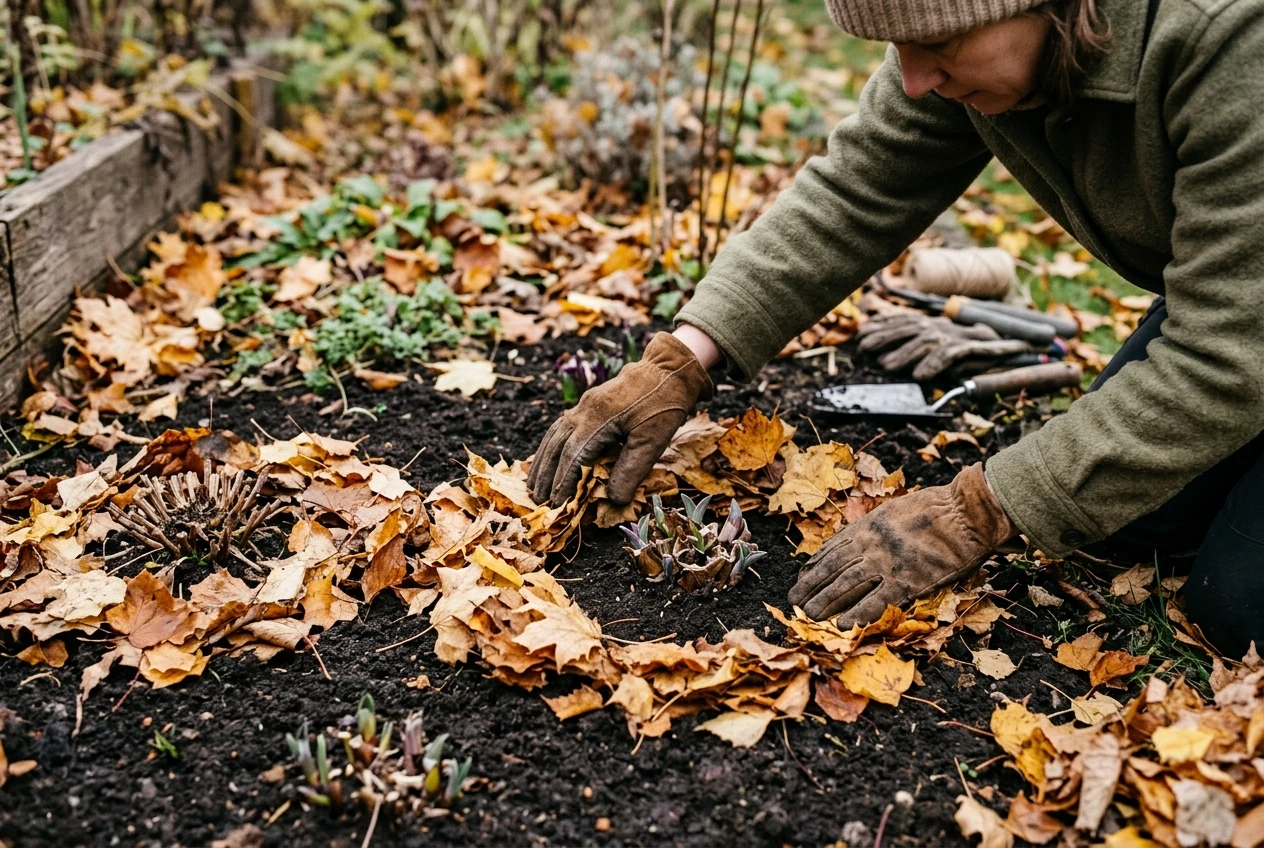
Mulch is distributed evenly over the plant's root zone, keeping it away from the plant's center to avoid moisture accumulation and suffocation. Dry leaves provide a very effective and natural protective layer. More detailed advice on how best to use leaves and when to rake them can be found in the guide on when to rake leaves in autumn and when you might want to leave them instead. To protect light leaves and tender perennials, you can spread spruce branches on top, which effectively catch snow and provide wind protection.
Tended beds increase the value of your home garden
A garden deliberately prepared for winter rests peacefully and healthily under a blanket of snow, creating the best conditions for lush spring growth. If autumn maintenance work is done smoothly and at the right time, the next spring garden cleanup will proceed smoothly and without excessive effort. A healthy and aesthetic garden space increases property value and ensures a great first impression in every season.
If you're looking for a new home with a spacious garden or want to sell your existing property to a conscious buyer, explore Kinnisvara24's diverse listings and start planning your next real estate project today.
Search
Keywords
Most read articles
- Price per Square Meter of Apartments in Tallinn in 2025

- Apartment Market in Early 2026: Prices Rising, Transaction Activity Remains Modest

- Apartment Market in Early 2026: Prices Rise, Transaction Activity Remains Modest
- Estonian Apartment Prices and Market Expectations in 2025

- Notary Fee and State Fee – Who Pays and How Much?