Why Do Cracks Form Between Wall and Ceiling?
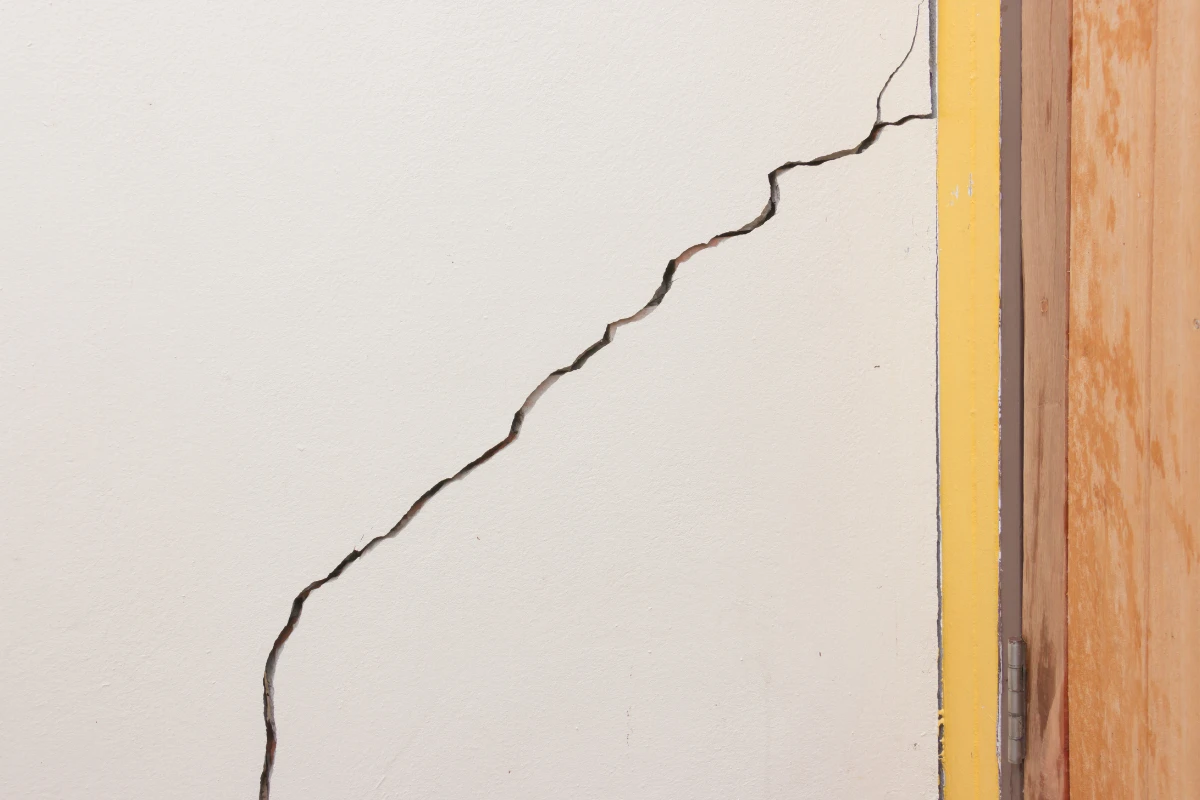
Did you notice a thin crack in the corner of the room where the wall meets the ceiling? Although the appearance of a white line on a freshly finished surface often causes concern, it is usually the result of the building's natural adjustment. The vast majority of such lines are harmless and can be fixed with simple cosmetic repairs.
Natural movement and settling of buildings
Every structure constantly responds to the ground and external environmental influences. Especially in newly built houses, it is completely normal for the building's framework and foundation to undergo tiny micro-shifts during the first years of life. This barely perceptible settling creates stress at the junction of two different planes, where the ceiling meets the wall. Drywall joints or ceiling cornices give slightly under this stress, resulting in a visible thin line. In the construction world, it is often recommended to wait about a year in a newly completed home before making final repairs, allowing the building to settle peacefully into place.
When purchasing real estate, it's worth noticing such spots to understand the building's overall behavior and technical condition. If you're currently searching for a new home, a professional pre-purchase property inspection will help clarify whether the crack running in the corner is merely an aesthetic peculiarity or whether the construction requires more detailed structural analysis.
Temperature and indoor humidity fluctuations
Estonia's four seasons are characterized by significant temperature and humidity variations. When heating begins in autumn and winter, indoor air becomes drier, while during spring and summer, moisture levels rise again. Wooden frames and other building materials react to humidity by expanding and contracting. During the heating period, it's advisable to maintain indoor relative humidity between 30–45 percent, as stable interior climate reduces material drying stresses and keeps living spaces healthy.
Since the ceiling and wall may be made of different materials or supported by load-bearing structures of different stiffness, these surfaces move in microscopically different directions. If the joint finishing is done too rigidly instead of with elastic material, a crack inevitably forms at the connection line. In older buildings, such movements can be even more interesting in character, as materials used over time live to their own rhythm. Our guide on how to renovate an old house offers valuable insights into the life and structures of historic buildings.
How to distinguish a cosmetic defect from a serious problem
Most cracks between wall and ceiling are purely cosmetic and do not affect home safety. Uniform cracks up to three millimeters wide are typically classified as surface defects that result from normal wear and tear of finish layers. Fixing such small cracks is an easy part of home maintenance that can be conveniently tackled during a routine renovation update.
You should be more careful when the crack is wider than five millimeters or if it runs unevenly, being narrow at one end and wide at the other. Situations that require additional investigation include cases where the crack is accompanied by visible ceiling sagging, peeling plaster, creaking boards, or diagonal tears in doorway and window corners. Also, before plastering, make sure there are no moisture stains or mold marks on the ceiling, as in case of leaks, the moisture source must always be eliminated first and the structure allowed to dry.
Repairing cracks between wall and ceiling
Any homeowner can easily handle minor cosmetic defects. Before starting work, the crack should be cleaned of dust, debris, and loose paint, ensuring a clean and dry surface. Since the junction between wall and ceiling remains in constant micro-movement at the microscopic level, you shouldn't apply only ordinary rigid spackle, which may crack again. The best and most durable result is provided by special elastic acrylic sealant or joint tape combined with quality finish compound that adapts to the structure's micro-movements without damaging the paint layer.

Once the sealant or putty has completely dried, sand the repaired area smooth with fine-grit sandpaper, then prime and paint over with matching ceiling paint. Similar principles and practical techniques for maintaining various wall materials are step-by-step explained in an article that teaches how to repair a hole in a wall.
Keeping your home cozy and safe
Fine micro-cracks at the wall and ceiling boundary are part of almost every building's natural life cycle, and with the right finishing techniques, rooms can be made perfectly beautiful again. By maintaining a balanced interior climate and paying attention to your home's structures, living remains cozy, bright, and worry-free. If you're planning to take a new step in your life and are looking for a fresh apartment or spacious house, explore thousands of listings on the Kinnisvara24 portal, where you'll find a large selection of inspiring homes from trustworthy real estate agents and owners.
Search
Keywords
Most read articles
- Price per Square Meter of Apartments in Tallinn in 2025

- Apartment Market in Early 2026: Prices Rising, Transaction Activity Remains Modest

- Apartment Market in Early 2026: Prices Rise, Transaction Activity Remains Modest
- Estonian Apartment Prices and Market Expectations in 2025

- Notary Fee and State Fee – Who Pays and How Much?