What to Do After a Severe Storm? How to Assess Damage and Restore Your Home Safely

Do you know what the first critical steps are after a violent storm to ensure the safety of your home and family? Strong winds and thunderstorms can leave behind dangerous destruction, which is why it's important to act calmly and thoughtfully as soon as the sky clears.
Safe approach and initial damage mapping
Begin inspecting your property only after official crisis information channels have confirmed that the danger has passed. Estonia's national crisis information emphasizes in its guidelines that a storm with wind speeds exceeding 21 m/s can break trees and damage buildings in ways that make their surroundings dangerous for hours after the wind subsides. Stay away from fallen power lines and report them immediately to the network operator at 1343 or the emergency center at 112. Never attempt to move power lines yourself or enter a building whose structures seem unstable or where you suspect a gas leak, as post-storm collapses are frequent risk areas.
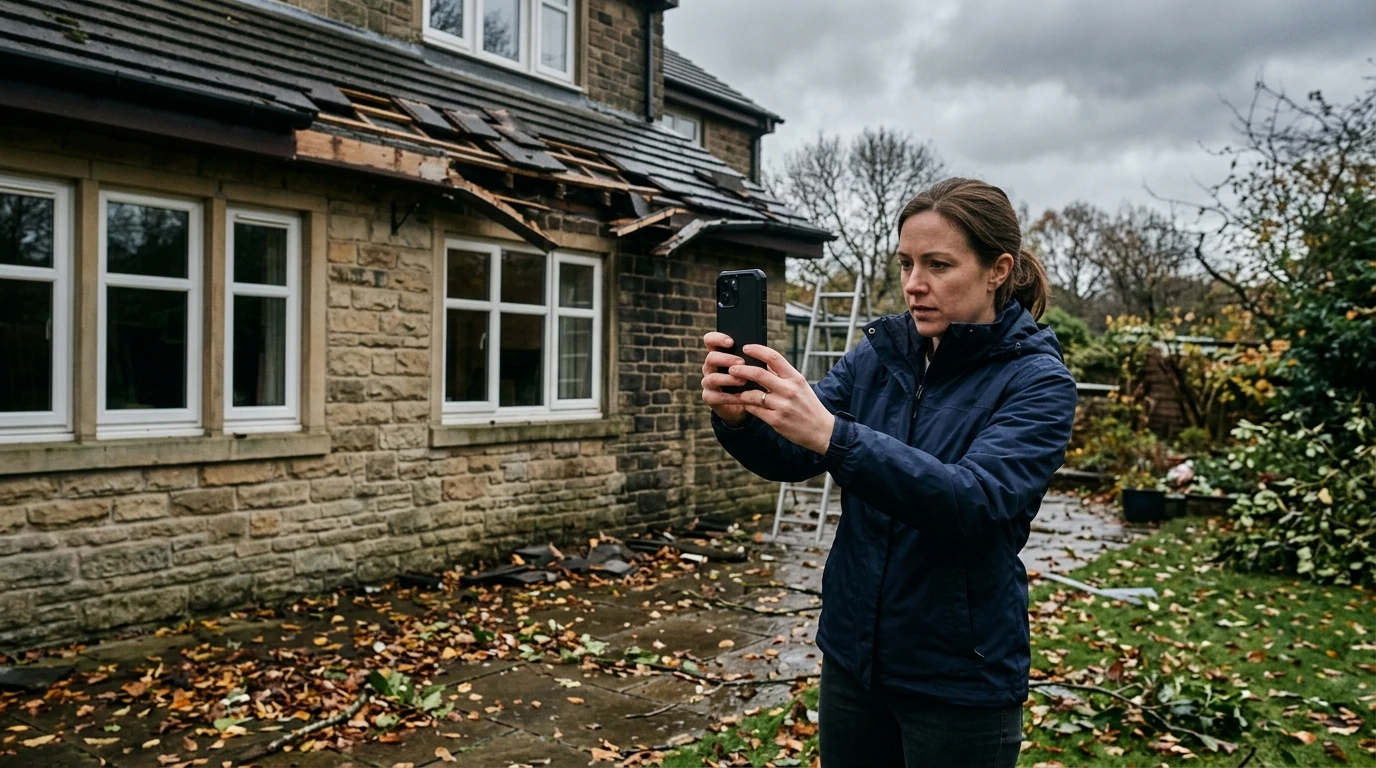
Before starting major cleanup work, it is critical to document all damage that has occurred by taking photos and videos of both the building's exterior facade, roof, and interior spaces. This material is invaluable in settling insurance claims and helps avoid future disputes about the extent of damage. If you notice damage to the building's outer walls, it's worth remembering that thorough facade and roof maintenance helps mitigate similar risks in the future and increases the building's durability. In addition to checking the roof covering, it's worth paying attention to details and researching how to build a wind box, which protects eaves and improves roof ventilation. Kinnisvara24's statistics confirm that well-maintained and cared-for exterior appearance helps homes retain their market value better, even if the area has been hit by extreme weather conditions.
Cleanup work and moisture control
During cleanup work, always use appropriate protective equipment, such as strong work gloves, waterproof boots, and if necessary, an N95 mask to avoid contact with dirt or mold spores. If the building has experienced water damage, turn off the electricity only if the electrical panel is in a dry location, and never use fuel-powered generators indoors due to the risk of carbon monoxide poisoning. When removing debris and broken branches in the yard or on the balcony, proceed carefully, and if you plan to perform a major cleaning and refresh of your balcony after the storm, first make sure that the underlying structures have retained their load-bearing capacity and pose no danger to anyone.
One of the greatest post-storm risks is excessive moisture, which can lead to rapid mold growth within 24 to 48 hours of wetting. Therefore, it is important to begin drying and ventilating rooms as soon as possible, removing wet materials that cannot be cleaned quickly. Effective ventilation and conscious mold prevention measures are key to keeping your indoor environment healthy and avoiding costly renovations in the future. This is also a good time to check other safety systems and ensure that smoke detector installation has been carried out correctly, as post-storm electrical malfunctions can significantly increase fire risk.

Restoring your home after a severe storm requires patience and a systematic approach, starting with ensuring safety and ending with thorough documentation. If you feel that your current home needs a more comprehensive renovation after storm damage or you want to find a new and safer place to live, you can find tens of thousands of real estate listings and trusted real estate agents on the Kinnisvara24 portal who will help you find a new and secure home that meets your needs.
Search
Keywords
Most read articles
- Price per Square Meter of Apartments in Tallinn in 2025

- Apartment Market in Early 2026: Prices Rising, Transaction Activity Remains Modest

- Apartment Market in Early 2026: Prices Rise, Transaction Activity Remains Modest
- Estonian Apartment Prices and Market Expectations in 2025

- Notary Fee and State Fee – Who Pays and How Much?