Small Towns and Rural Areas Attract More Than Half of Home Buyers
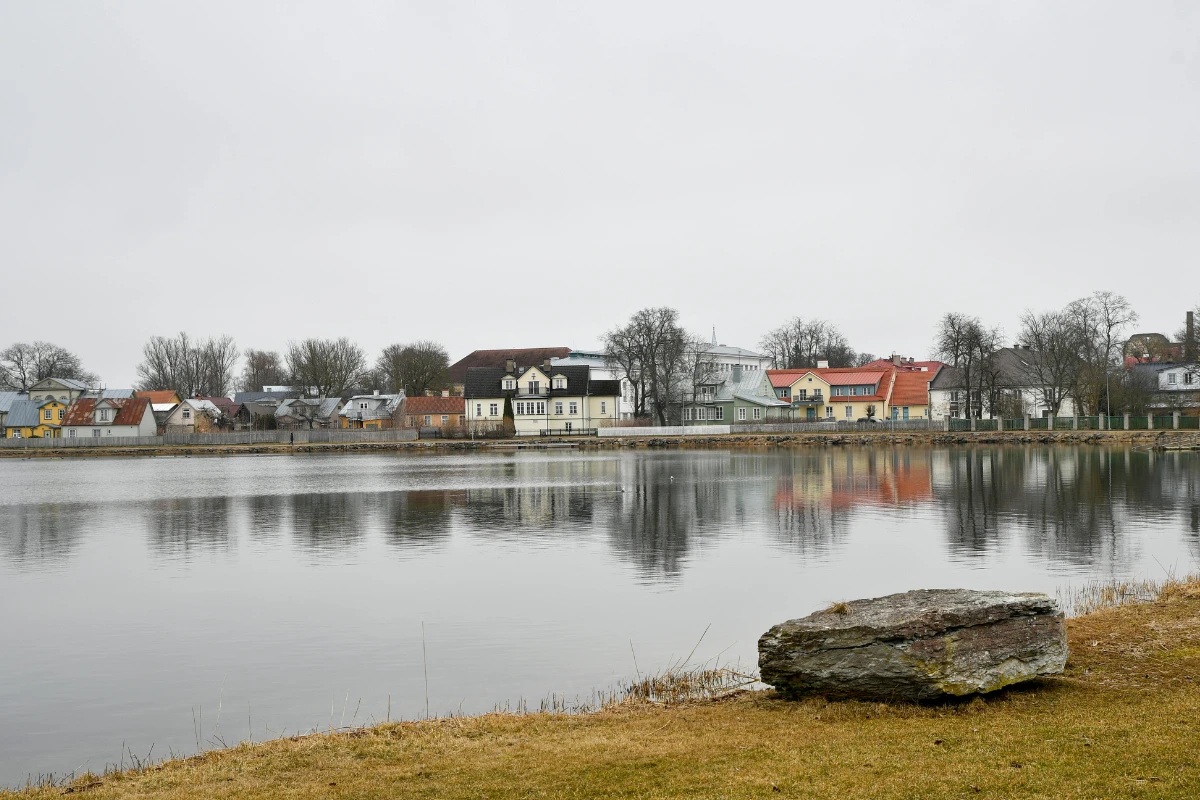
More than 50% of real estate transactions take place outside Tallinn and Tartu, yet it is precisely outside the larger centers that one should think more carefully about real estate liquidity and financing options.
Large centers like Tallinn and Tartu no longer dominate real estate transactions – more than half of all real estate transactions occur in smaller towns and rural areas, as shown by the Land Board's transaction statistics. In 2025, 54% of all homes were purchased outside Estonia's two largest cities.
According to Karin Ossipova, head of Coop Bank's home loan business line, this clearly shows that life is not concentrated only in large centers, but many people want a quieter environment both for raising a family and for work. "Among Coop Bank's clients, smaller centers and rural areas are even more popular – 60% of home loans are taken for living away from Tallinn and Tartu," she says.
However, when buying real estate outside major cities, one must account for additional risk factors. "The biggest problem outside large centers is real estate liquidity and, as a result, banks' willingness to lend. This is followed by insufficient income and the risk that in case of job loss, there is no alternative with sufficient income in the region," explains Ossipova.
In urban-adjacent settlements and rural areas, one must also account for larger logistical costs and the fact that a house located away from the city means greater maintenance burden. In the case of an older house requiring renovation, the cost of construction work can turn out to be almost as large or even larger than the purchase price. "If there is a desire or need to sell the house, the market price may not cover the bank loan and investments made. Therefore, one should make a deliberate decision and long-term investment," says Ossipova.
Price and proximity to centers influence choice
According to Urmas Uibomäe, CEO of Kinnisvara24, buyers most often look for homes suitable for year-round living, renovated or easily adaptable farms, private homes close to centers, and partly also cottages that can be converted into permanent residences.
Over the last decade, demand for real estate in small towns and rural areas has changed, which has also been aided by the spread of remote work opportunities. "If 10 years ago, acquiring real estate in rural areas was connected to a specific job offer or the desire to acquire a cottage, then now rural areas are more often seen as actual living places, not just summer homes," says Uibomäe. Among regions, those with transport connections, necessary services, at least partial access to the labor market, and an active local community are still preferred.
Western and Southern Estonia appeal most
Thus, municipalities and villages located near larger cities remain the most popular. For example, interest in Haapsalu, the Pärnu region, and real estate located in Southern Estonia has grown noticeably. In the future, some Southern Estonia regions, certain parts of Pärnu, Viljandi, and Lääne counties may also increase in value according to his assessment.
In the case of Haapsalu and Pärnu, proximity to Tallinn and at the same time a peaceful seaside living environment play an important role. Haapsalu offers notably more affordable housing prices, and since Tallinn is within an hour and a half's drive, it suits well, for example, remote workers who do not need to go to the office daily. The Pärnu region is also popular among remote workers, but offers more opportunities for those who prefer to work close to home.
In the case of Southern Estonia, the trend is somewhat different and a stronger pull factor is the price level and a more rural living environment, being attractive to those looking for a more affordable alternative to city life. However, interest is not uniform within Southern Estonia either, and what becomes decisive is whether the region has job opportunities or sufficient infrastructure for everyday life.
"The importance of jobs in rural areas remains a very important factor in making real estate purchase decisions. A good example is Ida-Viru County, where the number of jobs has decreased over time and interest in local real estate has since begun to decline rapidly," he points out.
The further from centers, the greater the equity requirement
According to Karin Ossipova, head of Coop Bank's home loan business line, loan terms differ significantly depending on location and are related to real estate liquidity, or how quickly and at what price it is possible to conduct a real estate transaction.
"While in the Tallinn or Tartu area one can get a loan up to 85% of the value of good condition real estate (up to 95% with KKF guarantee), then in more remote regions such as near Valga the equity requirement can be as much as 30 percent or even more," says Ossipova.
With the same type of house as collateral, one can get a 15–20% smaller loan amount in rural areas than in the city. As solutions, for example, KKF home loan guarantees or home loans provided by the Rural Development Foundation as co-loans are used to support situations where equity funds are lacking. Additionally, KKF occasionally opens rural house renovation support rounds and according to Ossipova, it is worth inquiring from the local municipality whether there are any benefits provided there for acquiring housing when settling there.
Search
Keywords
Most read articles
- Price per Square Meter of Apartments in Tallinn in 2025
- Apartment Market in Early 2026: Prices Rising, Transaction Activity Remains Modest

- Apartment Market in Early 2026: Prices Rise, Transaction Activity Remains Modest
- Estonian Apartment Prices and Market Expectations in 2025
- Notary Fee and State Fee – Who Pays and How Much?