The Most Efficient Cleaning Order: From Kitchen to Entrance
Do your cleaning sessions often stretch too long or does the end result not seem worth the effort? The right cleaning order can make the entire process much more efficient and faster. Scientific research shows that a systematic approach can reduce cleaning time from 5-8 hours to just 1 hour per week!
Before you start: cleaning basics
Before we dive into room-by-room cleaning, it's helpful to keep some general principles in mind:
Move from top to bottom - start with ceilings and end with floors, so you don't have to go over already cleaned surfaces again
From dry to wet - start with dusting and end with wet cleaning, this helps prevent spreading dirt
Gather all necessary tools before starting - this saves time running back and forth and helps you focus on the work
Reduce the number of cleaning products - according to experts, 1-3 universal cleaning products are usually enough, which reduces both costs and confusion
Now let's look at room by room what the optimal cleaning order is.
1. Kitchen: start here!
The kitchen is often the dirtiest area of the home and requires the most attention. By starting with the kitchen, you give it sufficient energy and time. Additionally, the kitchen is where hygiene is particularly important for food safety.
Step-by-step cleaning:
Collect all dishes and put them in the dishwasher or kitchen sink - this quickly creates visual order
Clean work surfaces with universal cleaning product and microfiber cloth - pay special attention to areas where food is prepared
Clean the stove and ovens - especially important are greasy surfaces, as grease is stubborn and becomes increasingly difficult to remove over time
Wash the dishes or run the dishwasher - while the machine is running, you can move to the next room
Finally wash the floor with a floor dryer - this prevents already cleaned surfaces from getting dirty again
Practical tip: If you're cooking, clean the stove immediately after use - this prevents grease stains and saves time later. Make it a habit - wipe it down as soon as the stove is slightly cooled, but before the grease and food residue has hardened.
2. Bathroom: moving on
The bathroom is another room that requires thorough cleaning, as it contains a lot of moisture and potential bacteria. Moisture creates a favorable environment for mold and bacterial growth, so the bathroom should be cleaned regularly.
Step-by-step cleaning:
Start by cleaning the shower corner or tub - spray on cleaner and let it work while you deal with other surfaces. This helps remove soap and calcium residue with minimal scrubbing.
Clean the sink and basins - don't forget to clean the areas around the sink and the taps
Wash the toilet (use a separate cloth!) - start with the cleanest parts and end with the interior
Dry mirrors and glass surfaces with microfiber cloth - to avoid streaks, clean in circular motions
Wash the floor last - especially carefully in corners and around the toilet
Practical tip: Make it a habit to clean the glass and surfaces dry immediately after using the shower - this prevents lime scale buildup and saves time later. It's enough to keep a small squeegee in the shower corner and squeegee the glass after washing.
3. Bedroom: ensuring restful sleep
The bedroom should be a place of calm and restful sleep, so it's worth paying sufficient attention to it. A clean bedroom can significantly improve sleep quality, especially for people with allergies.
Step-by-step cleaning:
Tidy up items and clothes to their places - this immediately creates a sense of visual order
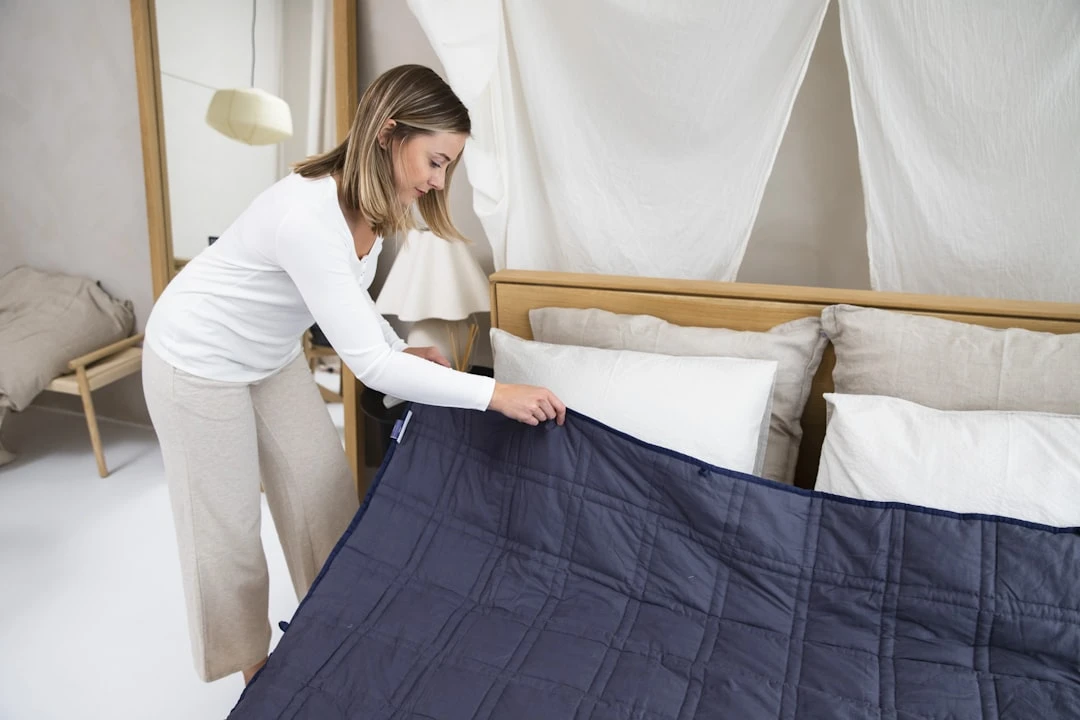
Change bedding (recommended 1-2 times per week) - clean bedding reduces dust mite accumulation and ensures better sleep
Dust shelves and furniture with microfiber cloth - pay special attention to nightstands and reading lamps, which you touch frequently
Clean the floor - first with a vacuum and then wet cleaning if needed, moving carefully under and around the bed
Practical tip: Keep your bedroom minimalist - the fewer items you have, the less dust accumulates and the faster cleaning is. Choose easy-to-clean furniture and avoid excessive use of textiles that collect dust.
4. Living room: family gathering place
The living room is often the center of the home, where the family spends time together. Here it's important to focus on both comfort and cleanliness, as this is the room where we spend the most waking time.
Step-by-step cleaning:
Tidy up loose items (toys, books, magazines) - use baskets or boxes that make categorizing things easier
Dust shelves and decorative items - pay special attention to hard-to-reach places like bookshelves and windowsills
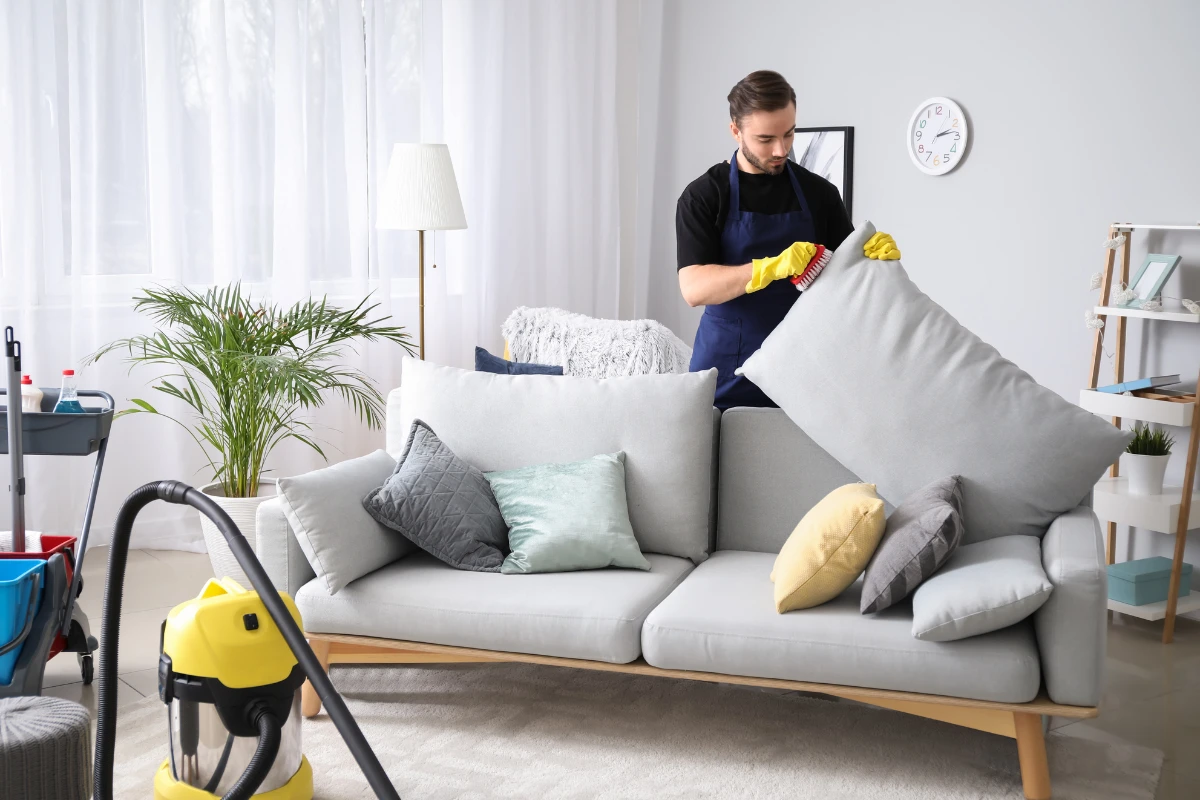
Clean sofas and chairs - remove dust and stains, also regularly clean the underneath and sides of cushions and seats
Clean electronic devices (screens, remotes) - use special microfiber cloths for this, which don't leave streaks
Clean the floor - first with a vacuum, then wet cleaning, paying special attention to the underside of sofas and heavy furniture
Practical tip: Use a HEPA filter vacuum, which significantly reduces dust spread during cleaning. A HEPA filter traps microscopic dust and allergens that regular vacuums release into the air.
5. Entryway: final stop
The entryway is the first and last room visitors see, so it's worth keeping it tidy. Additionally, this is where dirt and dust from the outside world enter the home.
Step-by-step cleaning:
Tidy up shoes and place them neatly in a row or designated place - use shoe racks or boxes
Hang up outerwear on hooks or in the closet - this prevents a cluttered appearance and allows air to circulate better around clothing
Clean door handles and switches - these are places that are constantly touched and can contain many bacteria
Wash the floor especially carefully, as this is where the most dirt is brought in - use a strong cleaning product
Practical tip: Place a quality doormat in the entryway to trap most of the dirt collected outside and keep the rest of the home cleaner. Ideally, use two mats - one outside and one inside - which together form an effective barrier against dirt.
Common cleaning mistakes to avoid
Using too many cleaning products - research shows that 1-3 universal products are usually sufficient, which is more wallet-friendly and environmentally sustainable
Overusing the vacuum on hard floors - use a floor dryer instead, which is more effective and creates less noise
Using dirty cleaning cloths - keep microfiber cloths clean and change them regularly, otherwise you'll spread dirt from one surface to another
Rushing - effective cleaning requires time and system, but in the long run it saves hours
Creating a cleaning schedule
For daily quick cleaning, it takes an average of 20-30 minutes if you follow a systematic approach. Thorough cleaning could happen once a week, dedicating 1-2 hours to it.
Distribute tasks throughout the week:
Monday: Quick kitchen and bathroom
Wednesday: Bedrooms and entryway
Friday or Saturday: Thorough cleaning of all rooms
If you're looking for a new home, it's also worth thinking about how easy it is to keep different rooms in order. New developments are often designed to be easier to clean thanks to modern materials and better layouts. For example, newer homes often use easy-to-clean surfaces, better ventilation, and better-arranged rooms.
Summary: cleaning quick guide
Kitchen - start here, moving from top to bottom, paying special attention to food preparation surfaces
Bathroom - next clean the wet rooms, starting with the shower corner and ending with the floor
Bedroom - focus on creating a clean sleeping space, changing bedding and minimizing dust
Living room - pay attention to surface cleanliness and comfort, moving from top to bottom
Entryway - finish with the home's gateway, creating a good first impression and a barrier against outside dirt
Home maintenance is significantly easier if you follow a logical order and create a routine for yourself. According to cleaning experts, conscious and systematic cleaning reduces average weekly cleaning time to 2.5 hours, which gives you more time to enjoy your home rather than constantly cleaning it.
If you're considering moving to a new home, you might also want to look at house sales offerings, where you can choose a home with a suitable layout that's easy to maintain. To take care of your home's safety, be sure to also read our guide on smoke detector installation, which is an important step in ensuring your home's safety.
Search
Keywords
Most read articles
- Price per Square Meter of Apartments in Tallinn in 2025

- Apartment Market in Early 2026: Prices Rising, Transaction Activity Remains Modest

- Apartment Market in Early 2026: Prices Rise, Transaction Activity Remains Modest
- Estonian Apartment Prices and Market Expectations in 2025

- Notary Fee and State Fee – Who Pays and How Much?