The Loan Market for Baltic Companies is Generally Shrinking, but Bigbank's Market Share is Growing
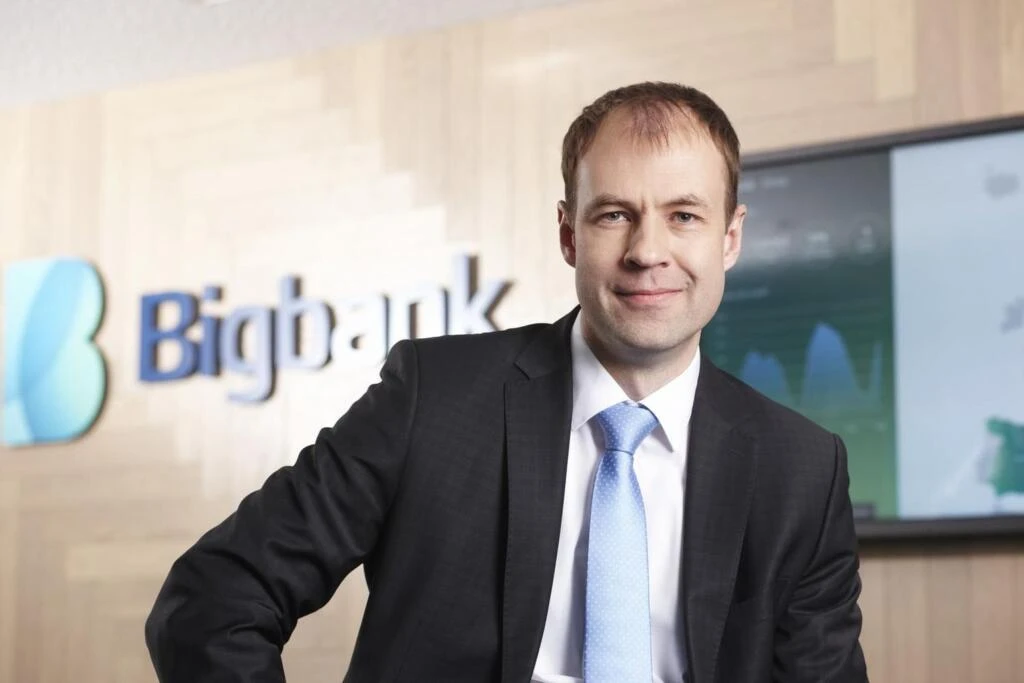
According to Ingo Põder, member of Bigbank's board and head of the corporate banking division, the Baltic business banking sector is generally experiencing a clear downturn – based on first-half market results, the volume of new loans issued to companies has declined by 20-50% compared to the same period last year, depending on the sector and country, but Bigbank managed to grow its corporate credit portfolio in Estonia, Latvia and Lithuania by 32% year-on-year.
According to Ingo Põder, Bigbank issued new business loans and leases exceeding 209 million euros across the three Baltic countries over 7 months, which is approximately at the same level as last year. "Bigbank's business loan and lease portfolio exceeded 560 million euros in July and we continue to grow several times faster compared to the market," he noted.
According to Põder, however, the situation in the Baltic corporate credit market is far from rosy – the sales volumes of business loans and leases in the Baltics have decreased significantly in the first 6 months of this year compared to the same period last year. "If we look at Bigbank's focus areas, which are agriculture, forestry, and real estate and construction, then using Estonia as an example, the first-half loan turnover in agriculture and forestry is -41% and in real estate -39%. In sectors showing growth such as retail and energy, the growth is driven by individual major transactions," he explained.
When the issuance of new loans to companies is so much smaller, it inevitably leads to a halt or even decline in credit portfolio growth, and this is what has generally happened in Baltic business banking, according to Põder. "The enterprise credit markets in Estonia and Lithuania, which are approximately the same size – 9 and 10 billion euros respectively – showed no growth. Lithuania, as the most dynamic market in the Baltics, declined by approximately 2% in the first half. Latvia's corporate credit market, which is smaller compared to Estonia and Lithuania, also declined."
According to Ingo Põder, the reason for the stagnation and decline is not a decrease in companies' investment needs, but rather lost confidence among entrepreneurs. "In such an unpredictable economic environment, it is indeed difficult to make long-term plans. Especially when the interest rates on the loans needed for this are in the range of 7-9% due to rising base rates, and it is clear that the base rate will remain above normal for another year or two," he describes the current situation. Export demand remains low, domestic consumption is faltering, wages are rising, and borrowing costs are high.
"Banks want to lend, leasing companies are actively seeking new clients – risk margins have been reduced for both mortgages and business loans and leases. There is also a noticeable increase in lenders' risk appetite – even companies that would have received a negative answer last year can now get leases," he highlights a change that he considers positive from the market development perspective. "The Baltic countries differ somewhat in their market behavior: Estonia has been the trendsetter, Lithuania's market has followed Estonia. Latvia's credit market, which has shown only faint signs of life even compared to its neighbors before, remains quiet."
Speaking more broadly about the Baltic credit market, Põder notes that in Latvia, individuals with below-average incomes have been outside the scope of banks' interest for some time, as they simply cannot meet banks' lending requirements. "Since they cannot get loans, real estate development corresponding to their purchasing power is also not happening – the supply of quality and affordable housing is low. Development is happening for the middle class and the market is quietly functioning there," he describes the market situation in Latvia. "Latvian real estate is somewhat cheaper compared to its neighbors. New real estate sellers are not rushing to lower prices because supply is scarce and money is moving even without bank assistance. The tone is mainly set by developers and investors with Estonian backgrounds, and in the commercial real estate sector also from Lithuania."
According to Ingo Põder, the number of real estate transactions in Lithuania has completely dried up. "Statistics are what they are, but subjectively at least 50% in a short period of time. Transactions are still being made and there is no complete collapse," he shares information received from his Lithuanian colleagues. "There is an opinion that perhaps things will get even worse. Similar to descriptions of the Estonian market, the situation is one where everyone is waiting for something – both buyers and developers and banks. No one wants to lower prices even though there is a shortage of buyers. Loans are being offered and there are also takers, which means the market is still functioning."
In assessing the overall situation in the real estate sector, Põder highlights that pessimistic predictions have not come true in the Baltics – there has been no general price decline in new developments and transaction activity has not stopped: "Relief has been provided by the lack of oversupply, reasonable unemployment and rapid wage growth, developers have held up and banks want to lend." According to Põder, some increase in short-term payment defaults in banks' loan portfolios can be observed, but a credit crisis and massive growth in debt are probably not to be expected in the near term either.
Search
Keywords
Most read articles
- Price per Square Meter of Apartments in Tallinn in 2025
- Apartment Market in Early 2026: Prices Rising, Transaction Activity Remains Modest

- Apartment Market in Early 2026: Prices Rise, Transaction Activity Remains Modest
- Estonian Apartment Prices and Market Expectations in 2025
- Notary Fee and State Fee – Who Pays and How Much?