The First Signs of House Settling and Costly Consequences
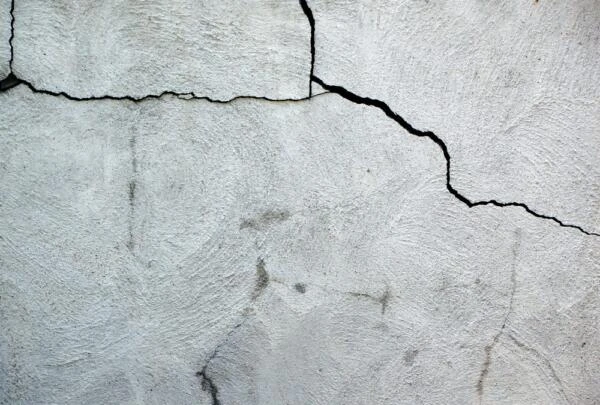
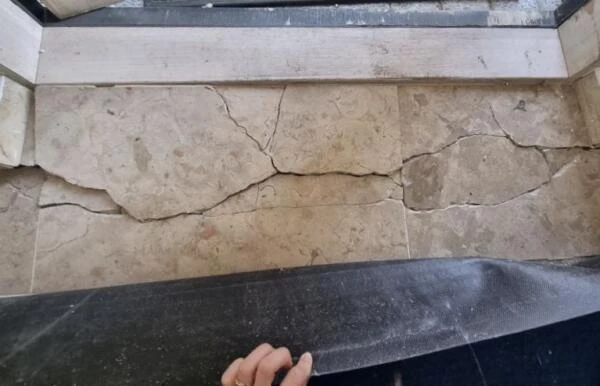
Home is our fortress. Responsible owners tend to monitor the condition of their house. They like to carry out repairs in a timely manner to keep their home in good shape and ensure its safety. Should you worry if you notice cracks in the walls and floors of your house or gaps between baseboards?
Cracks in the walls of a house and sunken floors are a sign of a more serious threat – the building's load-bearing structures have begun to settle. This is a process where, due to environmental effects or poor quality construction work, as well as changes in soil properties, the foundation of a building begins to settle.
If you notice changes in your building that point to settlement, it would be worth contacting professionals who carry out geotechnical work at the first opportunity. Specialists confirm that if the problem of building settlement and soil compaction is not addressed in a timely manner, it will result in more serious consequences and additional costs in the future. Simply eliminating the visible aesthetic defects in the house will not stop the settlement process – the root of the problem remains unresolved.
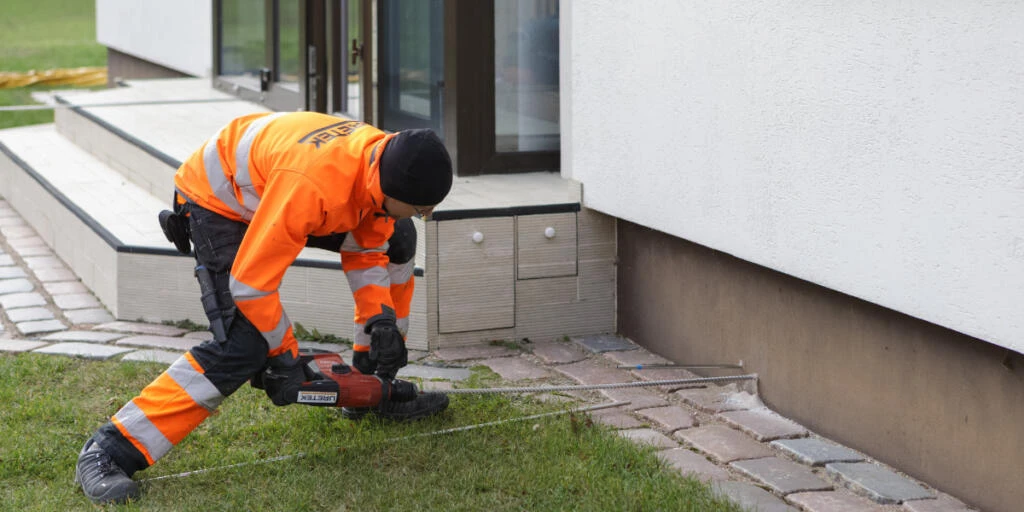
In Estonia, URETEK Baltic stabilizes settled buildings, improving the soil using environmentally friendly geopolymer resins with a fast and dust-free method that does not disturb the lives of people living in the house or the daily work of businesses.
"Floor, foundation, and building settlement can be caused by various circumstances – weak subgrade, poor soil compaction, excessive load on the floor, vibration, inadequate drainage, or a broken underground water pipe, as a result of which water washes away fine soil particles," says Aleksandr Jakubovitš, project manager at URETEK Baltic OÜ. Building settlement can also begin due to construction of new buildings nearby, since during this process water is pumped from the soil very vigorously. Large trees can also cause settlement, as their roots grow under the building, extracting moisture from the soil.
Jakubovitš adds that building foundation settlement can be accompanied by initially invisible problems and additional costs in the future. "If the building foundation settlement is not stopped at the first opportunity, then the building's energy efficiency decreases, faults develop in heating and electrical systems, water pipes rupture, moisture and mold appear in the building, and the property value drops," notes Jakubovitš.
URETEK Baltic has helped stabilize real estate for businesses operating in very different sectors as well as public sector buildings. Using URETEK technology, soil settlement problems can be solved in many different fields, from the private sector to more complex infrastructure facilities. Over the years, URETEK Baltic has dealt with soil stabilization and settlement prevention for thousands of buildings, including residential houses, warehouses, shopping centers, airports, ports, railways, roads, industrial and agricultural buildings, as well as historical buildings and monuments.
"To compact the soil, we inject geopolymer resin through 16mm diameter drilled pipes into the soil, distributing point loads and vibration evenly. Work can be done if necessary at night or in stages at the time intervals desired by the client. Soil compaction occurs without dust and noise and presents no danger to human health and the environment around us," explains the project manager.
He adds that private house clients typically highlight as a positive aspect of our technology that all work is done without disturbing daily life. People do not need to move furniture out or search for alternative accommodation for weeks or months – their floors are leveled and foundation settlement is stopped within 1-2 days, depending on the scope of work. The same feedback comes from entrepreneurs whose building foundations have been stabilized by URETEK Baltic. "There is no other way to solve the soil settlement problem so painlessly and quickly without halting daily cash flows. The traditional method would require emptying the rooms first, then dealing with breaking up and removing concrete floors, compacting the soil, and pouring a new floor," explains Jakubovitš. "This work can take 1-2 months and means moving, dust, and of course money and time expenditure. Who has time to wait that long?"
URETEK Baltic can stop settlement problems, leveling the floor with +/-1 mm precision and increasing the load-bearing capacity of the floor to the desired capability. The geopolymer resins used have all necessary environmental and safety certificates and the materials come with a 50-year warranty.
In laboratory conditions, it has been proven that the lifespan of geopolymers is at least 100 years, so this is a long-lasting and stable solution. The geopolymer resins used are two-component, water-repellent, and expand in the soil. While soil improvement of up to 4 meters is routine for the URETEK Baltic team, in practice we have also encountered more specific tasks, including soil compaction at depths of up to 10 meters.
URETEK Baltic offers free consultation and assessment of the condition of the building's load-bearing structures by experienced specialists.
URETEK Baltic – private house soil and foundation stabilization – https://www.youtube.com/watch?v=vB5poOZ_01A
Search
Keywords
Most read articles
- Price per Square Meter of Apartments in Tallinn in 2025

- Apartment Market in Early 2026: Prices Rising, Transaction Activity Remains Modest

- Apartment Market in Early 2026: Prices Rise, Transaction Activity Remains Modest
- Estonian Apartment Prices and Market Expectations in 2025

- Notary Fee and State Fee – Who Pays and How Much?