The First Question Every Home Buyer Asks: Should You Choose a Ready Apartment or One Still Under Construction?
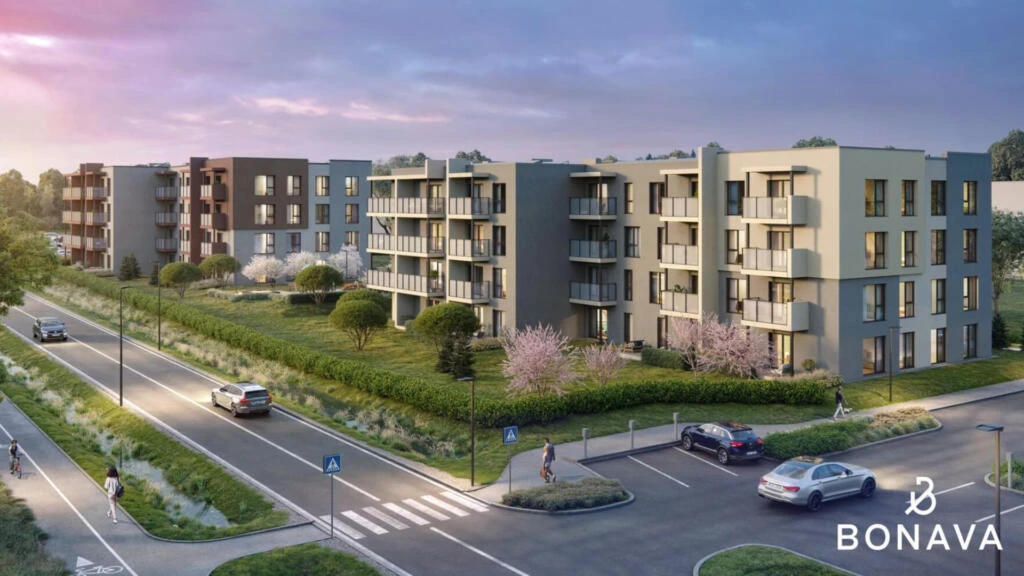
When buying a new home, a dilemma often arises: should you purchase a new apartment that is still under construction, or look for older property that you can move into immediately? Both options have their advantages and disadvantages. Therefore, Bonava Estonia's sales and marketing manager Lauri Laaonoja has written down five tips to guide you in making your choice.
1. Pay attention to the apartment's layout and orientation to the cardinal directions
First, think through how many rooms you need and which spaces are most important to you. Do you value having a pantry, well-planned built-in wardrobe locations, and space left for a dining table? Usually, these considerations are already thought through in the planning of new developments. To make home buying easier, kitchens are often pre-planned, showing what shape kitchen will fit into the space and accounting for the number and dimensions of kitchen furniture modules right away.
But would you prefer a separate kitchen instead, and have the shower room and toilet also in separate spaces? Many older apartment buildings have exactly such layouts, and although it was very popular twenty years ago to combine rooms, the market still has plenty of solutions where no renovation has been done. Regardless of whether it's a newly constructed building or already completed property – in any case, it's worth thinking about what matters to you in terms of space layout and making your choice based on your own needs and preferences.
Once you've found a suitable layout, be sure to also consider when and from which windows the sun shines in. A morning person probably won't mind if the sunrise is visible from the bedroom window. Someone else, on the other hand, prefers the evening sun in the living room.
2. Think through and explore the neighborhood
Based on Bonava's "Happy Neighborhoods Survey" conducted last year, it is extremely important for home buyers to feel safe in the area – 88% of respondents considered this the most important reason for feeling happy in their residential area. Similarly, 82 percent of Estonians thought it was important that the neighborhood is clean and well-maintained. However, in addition to a sense of safety, the survey shows that it is also important that the home is conveniently accessible by transport, located near a park or green area, and has schools, kindergartens, and shops nearby.
Every neighborhood develops its own dynamic of residents, so it's definitely worth taking a walk in the area you're considering for your home purchase to get a better sense of it. Our experience shows that many new developments attract families with children, who often consider the same things important regarding outdoor areas and the surrounding neighborhood. This way, courtyards become pleasant communal spaces where you can almost always find playmates or people to chat with.
It's also worth reviewing parking arrangements when exploring the area: are there enough parking spaces planned for all residents, and are they located at a safe distance from pedestrian and play areas? Because even if you don't use a personal car daily, it's worth considering whether traffic safety is sufficiently guaranteed for all your family members.
3. What does your dream home look like?
To ensure your home's interior finishing matches your taste perfectly, a definite advantage of new developments is that the choice is usually made very simple through various interior design packages. Specifically, at the right time you can choose between finishing packages created by professional interior designers. This way, you can select the flooring, wall color, and bathroom tiles you prefer, which will help create an overall style for your future living spaces. At the same time, this helps make the furnishing process easier when moving in, as some of the finishing is already done.
With a finished apartment, you may initially face a need for a refresh renovation. Larger renovations can take months. However, those who prefer finding personalized solutions for every detail and want more freedom of choice may not find what new developments offer interesting enough, and renovation in some finished apartment might sound like an exciting challenge.
In addition to the apartment's interior finishing, storage rooms and pantries are important to many homeowners. Whether the so-called basement storage is spacious enough, clean, well-lit, lockable, and weather-resistant.
4. Verify building quality and apartment safety
For new developments where the building itself is not yet finished, it's definitely worth visiting either a completed sample apartment in the area or another development by the same company – precisely to see what building quality is being offered. When visiting a sample apartment, be sure to inquire about the building's storage areas and common areas, such as staircases, shared stroller and bicycle storage, and parking solutions.
For older apartment buildings, however, check whether the building has been renovated inside and out or what the homeowners' association plans are in this regard. Be sure to ask how large the renovation loan is or what the monthly maintenance fund payment is. If the building needs renovation, also find out what the residents' attitude and readiness is to undertake various renovation work, such as foundation or facade insulation, staircase restoration, and heating system updates.
You should also pay attention to what materials were used if renovations have been done in the apartment. Definitely ask about the replacement and maintenance times of heating and electrical systems. Electrical wiring older than 30 years is worn out and can pose a fire hazard.
5. Research the building's energy class and what the average utility costs are
New apartment buildings are built with at least a B-energy class rating. This means they are energy-efficient buildings where attention has been paid to making the structure thermally efficient. Generally, this also results in lower heating, electricity, and management bills. Additionally, there are fewer losses of all kinds and no renovation needs in the coming decades. New buildings are constructed energy-efficiently, using new and quality materials and technologies (such as heat recovery ventilation, smart home solutions, solar panels, access and video monitoring systems, etc.). Furthermore, a new building has no homeowners' association renovation loan debt, which in an older apartment can turn out to be a major expense.
Search
Keywords
Most read articles
- Price per Square Meter of Apartments in Tallinn in 2025

- Apartment Market in Early 2026: Prices Rising, Transaction Activity Remains Modest

- Apartment Market in Early 2026: Prices Rise, Transaction Activity Remains Modest
- Estonian Apartment Prices and Market Expectations in 2025
- Notary Fee and State Fee – Who Pays and How Much?