Summer Cottage Market Overview: Estonians Seek Summer Homes in the 40,000-80,000 Euro Price Range
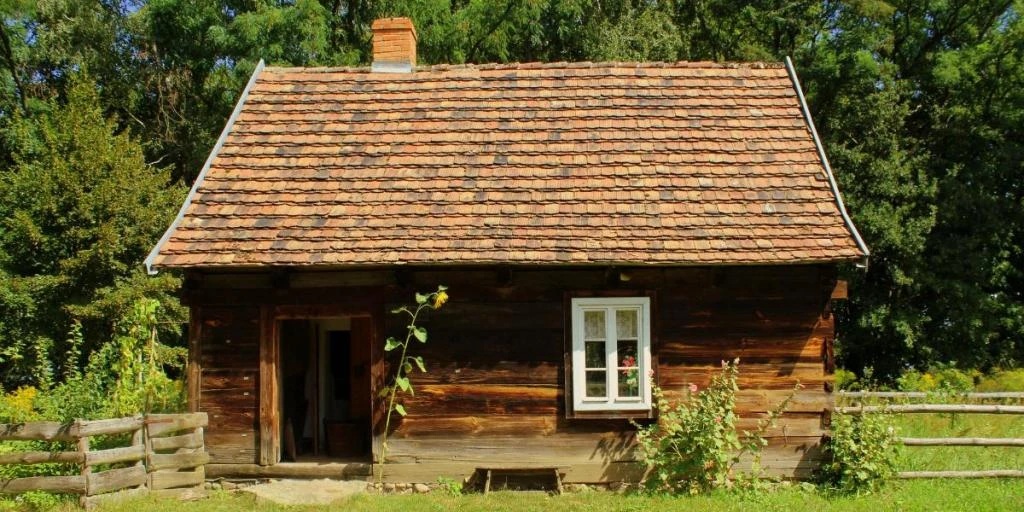
Compared to homes intended for year-round living, buyers want to get a cottage for a more affordable budget and renovate the house themselves to make it more modern. Urmas Uibomäe, the CEO of real estate portal Kinnisvara24, provided an overview of this year's cottage market. Ehituskaitse Büroo head Marko Sults added aspects that should definitely be clarified before buying a cottage to avoid unpleasant surprises during construction work.
According to Marko Sults, Estonian people's expectations when buying a cottage are not as high as those for a home intended for year-round living. "A cottage can also be a building with poor thermal insulation, where it is not necessary to have all modern conveniences such as floor heating, hot water, an automatic heating system, or an indoor toilet. The cottage category is very broad, and before purchase, you need to clarify exactly what is being offered, because in Estonia, cottages are called both Soviet-era cottage projects, old farm buildings, and small houses in scenic locations that have gained popularity in recent years."
Currently, 238 real estate objects with cottage purpose are for sale on the Kinnisvara24 portal. Additionally, many cottages have been converted for year-round living, and these offers can be found in the houses category, where 2,500 buildings are for sale.
Most of the cottages for sale need either updating or major renovation, but completely new and well-maintained cottages are also being sold. Most cottages are for sale in Harju County; from other counties, Ida-Virumaa, Raplamaa, and Pärnu County follow. Only one cottage is offered in Valga County, and there are currently no cottages for sale on the Kinnisvara24 portal in Hiiu County.
The cottage has become a second home
According to Marko Sults, a trend that began during the coronavirus pandemic and persists today—due to the possibility of remote work—people want to use the cottage year-round as a second home. "There are already higher expectations for a country home intended for year-round use—it is very common to install a heat pump for heating, hot water must come from the tap, and bathrooms are renovated to modern standards," said Sults, adding that if water supply has been brought to the building or the house is heated with water-based radiators or water floor heating, year-round heating must be ensured. "This in turn means year-round electricity costs. To prevent costs from becoming too high during cold winter months, there is a need to insulate the house."
Kinnisvara24 CEO Urmas Uibomäe pointed out that although the real estate portal has cottage listings throughout Estonia, buyers' favorites are still well-known resort areas. "Most searches are made for cottages in Pärnu, Haapsalu, Võsu, and Kaberneeme. In the vicinity of the capital, the popular areas are Laulasmaa and Kloogaranna. In South Estonia, people want cottages in Setomaa, but also in other scenic places."
Uibomäe added that when building a cottage or second home, the person's origin is also important—for Estonians, the places where family roots are located are important. "For example, islanders' hearts still yearn for the islands, and the same pattern can be seen throughout Estonia."
According to Uibomäe, Estonian people have one more clear preference: a cottage should be located near a body of water, whether it is the sea, a lake, or a river. "From the portal's searches, we see that there is interest in private plots where one could build a house according to one's wishes and in such a way that neighbors remain far away. But what is even more important is proximity to a body of water."
What budget should a cottage buyer typically expect
Statistics from the Kinnisvara24 portal show that most searches are for cottages in the price range of 40,000–80,000 euros. "In Harju County and popular resort areas, the most money must typically be spent on a cottage. Although offers for the most expensive cottages can approach as much as 500,000 euros, the Kinnisvara24 portal currently offers nearly 700 houses or cottages with a price below 80,000 euros," said Uibomäe, and added as an explanation that the price depends on location, proximity to a body of water, the condition of the buildings, and the size of the plot. "Highly sought after and highly valued are more luxurious restored old farm complexes located directly on the water's edge with a private location."
There is also increased interest in such old farm houses that could be renovated. Marko Sults pointed out that although buyers often have the expectation that a cottage can be made into a year-round dwelling suitable for economical living with little effort and low cost, Ehituskaitse Büroo experience unfortunately does not support this expectation. "Before planning a purchase, you must find out whether the cottage and its technical systems were built legally or if it is an unauthorized building or reconstruction. Many Soviet-era cottages were built on posts, which means the building lacks a solid underground load-bearing structure. A problem can also be the structural parts of walls and ceilings, which cannot be insulated as desired without significant reconstruction work," listed Sults the most common challenges that cottage renovators face.
Thorough background check before buying a cottage
Sults emphasized that when buying an older cottage, you must find out how the water supply and sewage system are solved. "In Estonia, we have many garden associations where tap water can be used only during warm weather and water supply is cut off during the winter period. If the water supply is local, meaning the plot has its own borehole or a dug well, it is important to check that the water quality meets drinking water standards. Additionally, it is important to understand the system, how water reaches the house from the well, whether and how often the septic tank or septic pit needs to be emptied, and what maintenance work is needed to keep the water and sewage system in working order. Wastewater flowing directly into the ground is unfortunately still a fairly common situation, although it is completely unacceptable from an environmental protection standpoint."
The condition of electrical installations, that is, the electrical panel, electrical cables, outlets, and switches, must also be thoroughly checked before purchase, as this may require immediate financial investment. "Considering our daily habits and constant need for electricity to power household appliances and equipment, a defective or incorrectly installed system can pose a direct fire hazard," said Marko Sults. His experience shows that situations that cause direct damage to a building are often related to stormwater systems, roof leaks, poorly constructed bathrooms or defective technical systems.
You must conclude a contract with the builder
Depending on the scope and nature of the renovation work, according to Marko Sults, it is usually necessary to coordinate the construction project with the local municipality and obtain a building permit. "This process can take several months, and even longer for more complex projects. Once the project documentation has been prepared and a building permit is in place, the budget for renovation work must be calculated. Once the budget is set and the necessary financial resources are available, a suitable construction company must be found to carry out the work. To carry out construction or renovation work, a contractor must conclude an appropriate work contract with the builder. The main purpose of the contract is that the obligations of the client and the contractor are clearly fixed in written form: an exact description of the work and the volumes of work by type, quality requirements for the construction work to be performed, the cost of the work and the deadline for completion," listed Sults.
Search
Keywords
Most read articles
- Price per Square Meter of Apartments in Tallinn in 2025
- Apartment Market in Early 2026: Prices Rising, Transaction Activity Remains Modest

- Apartment Market in Early 2026: Prices Rise, Transaction Activity Remains Modest
- Estonian Apartment Prices and Market Expectations in 2025
- Notary Fee and State Fee – Who Pays and How Much?