Summer in the countryside: what to consider when choosing a summer cottage
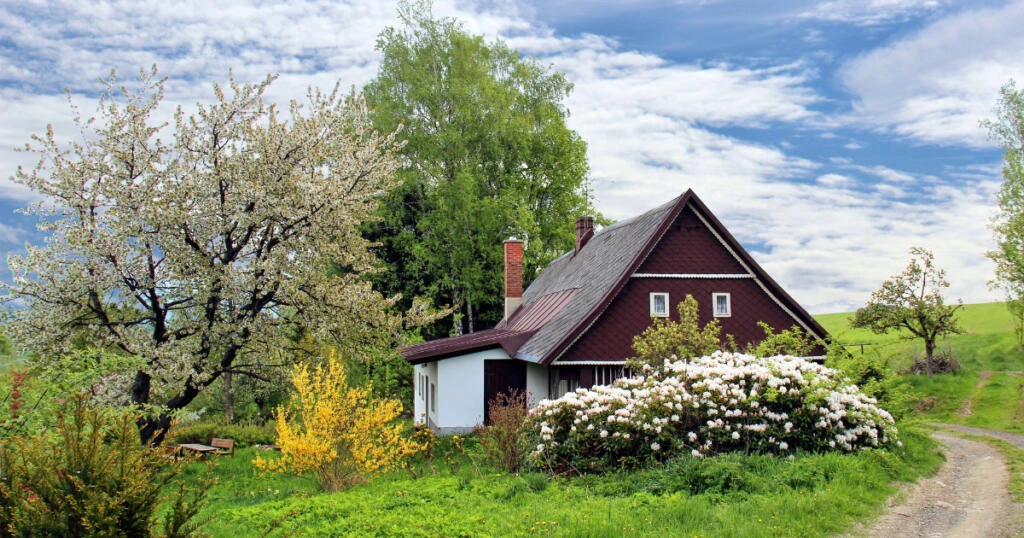
Real estate specialists highlight a couple of important nuances regarding how and when to choose a cottage, what additional costs to expect, and how to avoid unpleasant surprises.
While the most affordable cottage offers are typically found in autumn, the most popular time for buying and selling cottages – when the portal features the largest selection of offers – is in spring and early summer. Currently, there are 200 cottages for sale on the Kinnisvara24 portal. The most listings are found in Harju County, Ida-Viru County, and Rapla County, where prices range from approximately 100,000, 78,000, and 44,000 euros respectively.
When selecting a cottage, price, location, and overall condition are important factors. Attention is also paid to quality, size, and paperwork. "More specific criteria already depend on the values of each particular family – for some it's important to be able to live in the cottage year-round, some are looking for exclusivity and seclusion, and many are simply looking for an interesting project where they can get their hands dirty," added Urmas Uibomäe, CEO of Kinnisvara24.
Apart from selling your own home, a cottage is the only type of building whose sale is tax-free for a private individual – if the cottage has been owned by the seller for at least two years and the property is smaller than 2500 m2, then no income tax needs to be paid on the cottage sale.
Interest in cottages has been increased by the increasingly widespread possibility of working from home, where most work matters are handled via the internet. According to Uibomäe, the maximum distance of such cottages from the city is usually around 100 km – so that if there's an urgent matter in the morning, one can quickly get into the car and be in the conference room after a while.
Since people typically move to cottages in May or June and return to the city in September, Annika Mällo, product manager at ERGO home insurance, emphasizes that insurance should cover the cottage year-round. "Accidents often happen when the person themselves is not at the cottage, which means the homeowner may not find out about it immediately, and by the time they arrive at the cottage, the damage has already grown significantly larger than it would have been if discovered right away," added Mällo.
In ERGO's practice over the years, there have been several seemingly unbelievable incidents with cottages. For example, owners who visited their cottages in winter have found ice castles in front of them, complete with sand drifts and ice formations – it turned out that the cottage's plumbing had been forgotten to be drained in autumn, so the pipes froze and burst, and water kept flowing until the winter frost stopped it. There have also been cases where an empty cottage has been taken over by homeless people who set up camp there, or where mice have gnawed on electrical wires, resulting in a short circuit that caused the house to catch fire.
Increasingly, cottages are being sought for year-round living as well. Due to high utilities and loan payments, many people have found it more sensible to sell or exchange their city apartment for a more optimal living space. "However, due to work and other obligations, it's not always possible to move far from the city, which is why more affordable cottages are being looked for in the vicinity of cities, which could be converted into residential buildings intended for year-round living on one's own. Conversion is usually also cheaper than building a new house, since renovation buildings in cottage areas are not subject to such high requirements," explained Uibomäe.
However, Uibomäe emphasizes that one should allow sufficient time and patience for the conversion process, as converting a building designed only for summer season in Estonia's climate often requires starting from scratch, i.e., improving the building's basic structures. In addition to construction and renovation work, converting a cottage into a residential building also comes with certain requirements that may differ between local municipalities – for example, initiating detailed plans, requesting approval from neighbors, and other administrative procedures.
Search
Keywords
Most read articles
- Price per Square Meter of Apartments in Tallinn in 2025
- Apartment Market in Early 2026: Prices Rising, Transaction Activity Remains Modest

- Estonian Apartment Prices and Market Expectations in 2025

- Notary Fee and State Fee – Who Pays and How Much?
- Apartment Market in Early 2026: Prices Rise, Transaction Activity Remains Modest