Growing Edible Plants in Pots and on Balconies

Do you dream of a fresh harvest right from your home window or balcony, regardless of the size of your living space? Smart urban gardening allows every apartment owner to transform limited space into a productive food source and a healthy green oasis.
Taking Estonian climate into account and planning
Estonia's volatile climate sets certain limits for the urban gardener, as the growing season typically lasts only 150–170 days and night frosts can damage plants until the end of May. Therefore, it is advisable to prefer pre-growing in indoor spaces and move more sensitive plants such as tomatoes or peppers outdoors only when stable warmth arrives. To save space, it is recommended to use modern vertical solutions, which allow you to multiply your harvest even in very narrow areas. If you want to functionally plan your outdoor area and find smart ways to save space, you'll find practical tips on how to furnish a small balcony.
Choosing suitable plants and varieties
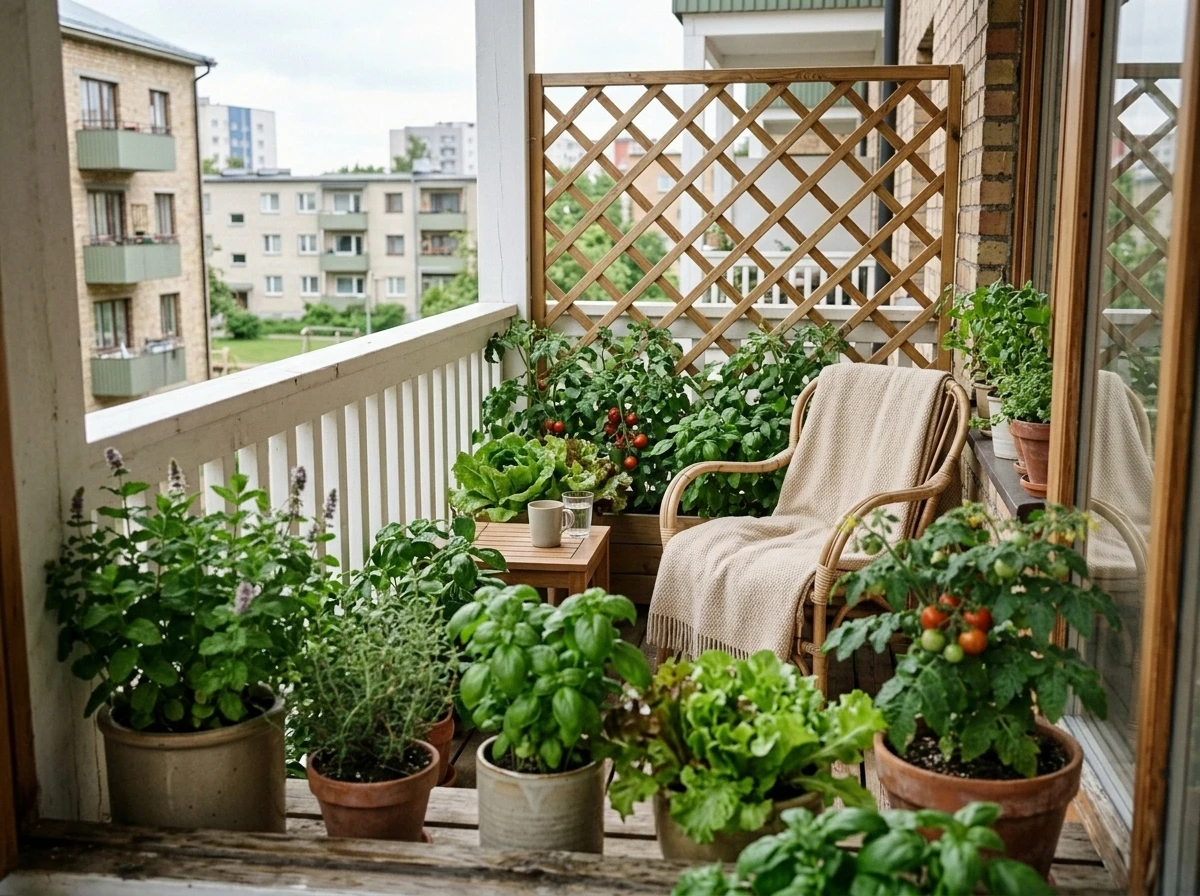
When selecting plants, it is worth focusing on dwarf varieties and compact crops that have been bred specifically for growing in containers. For example, low-growing cherry tomatoes, 'Maxibel' type bush beans, and various leafy lettuces feel great in pots, provided they get at least six hours of direct sunlight per day. Research shows that vertical farming and layered plant placement can significantly increase yields compared to traditional methods. Depending on the crop and technology, productivity can be many times higher, and in certain cases even manifold greater per square meter. Herbs such as basil, thyme, and peppermint require only a small windowsill, while providing year-round freshness and enriching your daily meals.

Container selection and plant care
Quality substrate and the right container are the foundation of a successful harvest, as the amount of soil in a pot is limited and it dries faster than in open ground. For larger plants, such as tomatoes or courgettes, at least a 20-liter container is necessary, while radishes and green onions are content with considerably smaller pots ranging from 10–25 centimeters. It is important to ensure that all pots have proper drainage holes, which prevent excess moisture and root rot. Since irrigation water washes nutrients out of the substrate over time, container plants need regular and balanced fertilization to ensure plant health and maximum growth rate throughout the season.
Balcony garden challenges and design
One of the biggest challenges for an Estonian balcony gardener is strong wind and, in coastal areas, salty spray, which can damage delicate leaves and dry out soil at record speed. On higher floors, it is wise to place plants in more sheltered corners or use decorative windbreaks, which at the same time create necessary privacy. If you want to turn your mini garden into a complete environment where you can also relax after a work day, it is worth exploring ideas on how to create a stylish and comfortable balcony rest area. This approach makes your balcony both a practical vegetable garden and a visually enjoyable extension of your living space.
Urban gardening is a simple and rewarding way to bring more greenery into your life and enjoy fresh food right from your home, regardless of the size of your living space. Start boldly with a couple of herb pots on a windowsill and expand your activities according to your experience and space opportunities. However, if you feel that your current home is too small for your gardening dreams, then explore Kinnisvara24's fresh offerings to find yourself a new home with a terrace or a home with a large balcony, where your green hobby can flourish to its full potential.
Search
Keywords
Most read articles
- Price per Square Meter of Apartments in Tallinn in 2025

- Apartment Market in Early 2026: Prices Rising, Transaction Activity Remains Modest

- Apartment Market in Early 2026: Prices Rise, Transaction Activity Remains Modest
- Estonian Apartment Prices and Market Expectations in 2025
- Notary Fee and State Fee – Who Pays and How Much?