Interior Design Expert Gives Advice and Shares Their Principles | #1
Interior design expert gives advice and reveals their principles | #1
Interior designer, artist and lecturer at Pallas Academy of Fine Arts Madis Liplap is a man of undeniably good taste when it comes to home topics. Inspired by this, Kaanon Real Estate asked Liplap to share interior design recommendations and his underlying principles.
Interior design is a process that makes many people's eyes light up. For this reason, we decided to create a small series in which we talk with experts in our field about various interior design-related topics. This story is the first in the series.
You have been working in the field of interior design for several decades now. What principles do you mainly follow regarding interior design?
Well, I'm sharing my own "truth" here. I write and speak the way I see space and interiors. In the way I believe is aesthetically beautiful and right from a design perspective, I share my understanding of space.
I am drawn to views in space. No matter how large or small a room is, I want the view to be arrested when entering the room, so there is immediately something within sight or on axis. It's nice if there's a view further into the next room and if there is, then there should also be something to catch the eye there, be it a painting, sculpture or some other work, or even a mirror. In my opinion, such a principle gives the room and environment grandeur and nobility.
What are the biggest mistakes made in interior design?
I think there are no right or wrong solutions on this topic. We all want the overall impression to be spacious, even if we are collectors and gather hunting trophies or cool empty/full alcohol bottles.
For me personally, however, it would be a mistake if, for example, you design strictly in a certain key. Whether that means a certain and uniform material choice, a la everything is made of oak. I find it very nice to place a lightweight, shiny metal support chair next to a heavy, robust oak cabinet.
Please describe interior design norms and rules that an ordinary person could also follow.
There are no norms and rules, really. Typical interiors are those that at first glance may seem shocking, but ultimately are enchanting for the resident and the person is very happy there. I'm thinking of those overstuffed interiors, for example, where something is collected – these may seem so strange at first sight, certainly not top design or high class taste, but they are still spontaneous and interesting. The bottom line is that every magazine fights to get this interior between their covers.
People ask: "What's in fashion?" And then finally the fashion designer says on TV: "You are in fashion, the way you feel good in your own dress pants, jacket or whatever – the main thing is that you wear these things." The same applies to homes: the main thing is that the person feels good at home.
One example: the kitchen walls are painted sage green and the cabinets are orange … My hair would stand on end at that, I couldn't even sleep at night! But the homeowner is thrilled, says "oh, what a beautiful and tasteful home." If the homeowner likes it that way, then everything is fine.
Please describe, by your choice, different design styles.
Overcrowded style. For example, when it comes to a collector who a la collects books that are stacked on shelves, tables and/or in cabinets. Recently, for example, it's trendy to collect Loru or, for example, Langebrun products. Many people often need to display all this, show it and admire it themselves.
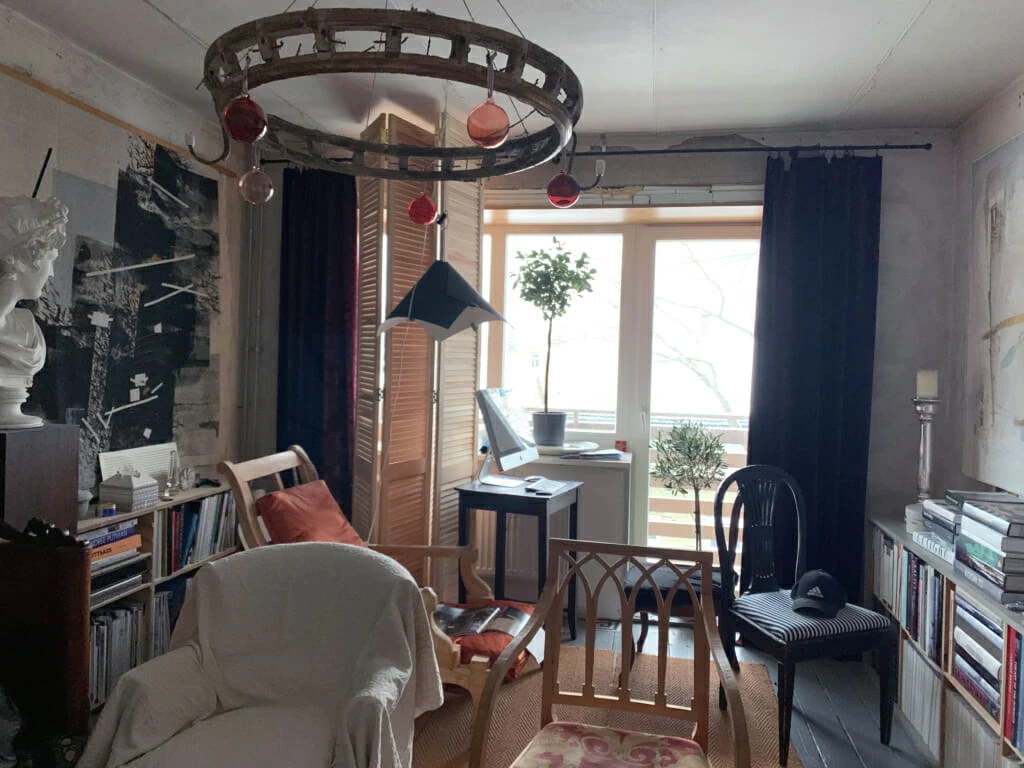
Seaside style, where the outside world is reflected in interior spaces. White, clean and bright tones. Here with us it would seem strange if we used the same tones in interior spaces as, for example, Mexicans do.
Designer decorates style. When you have the time, desire and resources to design an expensive and luxurious home for yourself. This is certainly the most expensive and time-consuming style, but as a result, it is likely to achieve a refined and timeless solution.
Minimalist. The style that requires the most self-discipline. Pure, clear, but sometimes also the most boring. Although: if materials, proportions and the proxemics between pieces of furniture are considered, you can achieve a very enjoyable whole. Some might say it's boring and like a cold and bleak hospital, but if you look around the world and study the creations of authors and designers, you can find very interesting solutions.
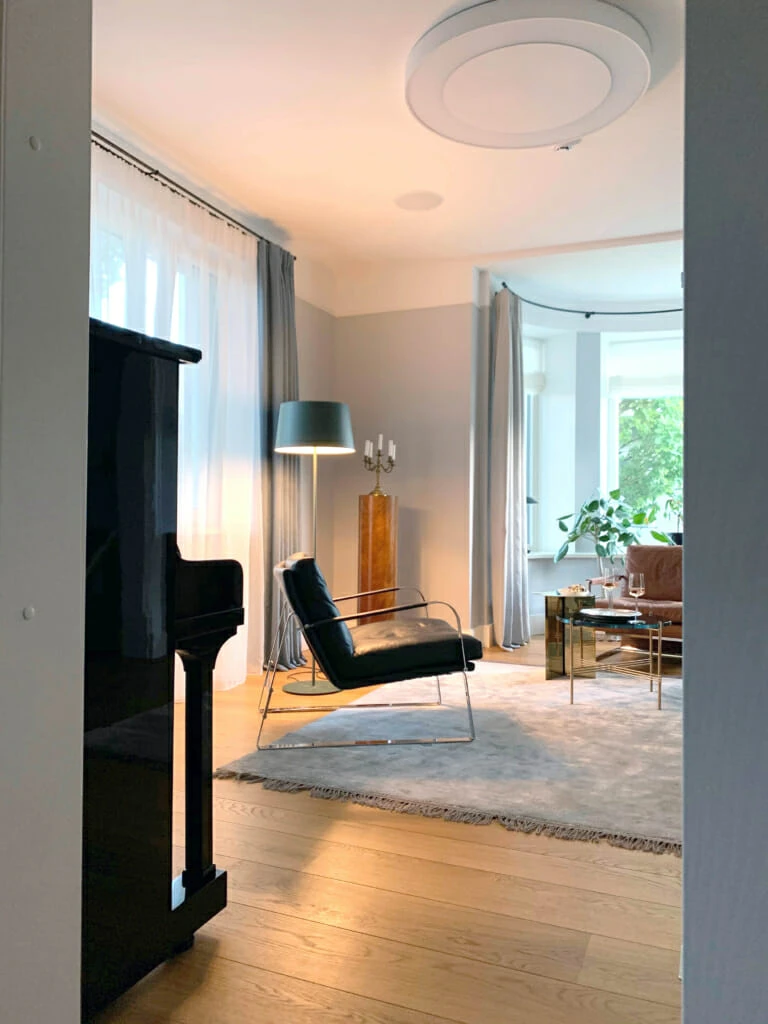
Shabby chic. Worn, charming chic. A style born from the scarcity of time and resources, where existing old items are cleaned and displayed in their unique beauty. A carpet can be worn and torn or even turned upside down on the floor, a tablecloth doesn't have to be hemmed and curtains don't have to be hung on a curtain rod, but are simply draped with nails above the window. Paint can freely be worn off the door frame, but don't rush to fix it! You shouldn't make the bed either – leave it messy, in the evening it's much more pleasant to crawl into a bed that invites you in, the bed as if calls out. Everything is worn, but clean. If you've been doing this for years, you can achieve a very inviting and peaceful interior.
One stylistic principle is that something light and delicate, such as a sidetable (side table) with thin conical legs, should sit next to something heavy. If in front of a floor-to-ceiling velvet sofa you place a more slender coffee table or even several small cocktail tables, then a good contrast is created between the forms.
When should you involve an interior designer, or a professional? How much is this done in Estonia and how much does hiring a designer cost?
A designer should be involved when you want to build and design a room that has, so to speak, outlived its time. Or if you want to achieve a timeless and always fashionable interior. And also if you want to achieve a precise and well-proportioned interior.
It seems to me that hiring an interior designer is a growing trend. For good reason, people don't want to deal with interior design themselves. Someone who has already built one home and is now building a second one thinks that they don't want to decide alone, because making decisions is very difficult. They want someone to help them with these things. One possible way of thinking and list of reasons to involve an interior designer is just like that.
Cost is very relative. Some want only color solutions: choosing wall colors, floor materials, ceramic tiles, etc. But they want to deal with furniture themselves. Others, however, want the designer to provide detailed drawings of kitchen furniture and other elements, rather than the client going to a kitchen salon and letting someone there do it. That person is certainly a kitchen professional, but may not be as proficient in interior design.
How do you find a good interior designer?
The main and most effective channel in my experience is still recommendations. That is, first ask your family, friends and acquaintances – maybe they have had good experiences with someone or heard good things about someone.
Another option is visibility on the internet. For example, I recently got a very cool client who simply googled "Tartu interior designers". He went through the designers that came up one by one and eventually came to me. You can also reach an interior designer this way, whose work you find sympathetic.
What interior design trends have you noticed recently?
To be honest, I don't follow Estonian interior design that much.
In the world, however, I think the movement is increasingly towards tranquility. That everything would be a little level and gentle. When I look at the work of top creators, they all have flowing and grand spaces. In a way, these are boring, but they are deliberately playing with light, shadow and little furniture.
How can you navigate design options more consciously?
Today, many magazines and books are published and internet pages are created. If you analyze why something you like is beautiful and interesting (for example, why is a rigid rectangular coffee table placed next to a soft-formed sofa, i.e., contrast is created), then it is quite possible to learn and develop on your own and be ready to design. If you study the work of professionals in the field, then eventually you may come up with very cool ideas yourself.
I don't want to say anything bad about Pinterest, but for me, the content there doesn't help you see the whole picture. There are individual cool solutions, but you don't find the answer to the question of how the whole is created. That, for example, the living room would be coordinated with the bathroom solution, that the hallway would be the same living space as the kitchen. If a view opens up through rooms, then it should still be a coherent, enjoyable, peaceful, grand whole.
So I recommend looking at magazines or websites on the internet where entire interiors are shown, from the front door to the balcony. Even better if it's done from the garden gate to the compost heap.
Can you name more specific publications, outlets and creators to follow on interior design topics?
I myself follow websites like contemporist.com. There is design, interior design as well as architecture. Comprehensive and nice to watch.
Among top creators, whose work I recommend you familiarize yourself with, I particularly like Axel Vervoordt and Andrée Putman.
Source: Kaanon Real Estate
Search
Keywords
Most read articles
- Price per Square Meter of Apartments in Tallinn in 2025

- Apartment Market in Early 2026: Prices Rising, Transaction Activity Remains Modest
- Apartment Market in Early 2026: Prices Rise, Transaction Activity Remains Modest
- Estonian Apartment Prices and Market Expectations in 2025

- Notary Fee and State Fee – Who Pays and How Much?