Should You Turn Down the Heat at Night?
Does lowering the thermostat at night really save on heating costs, or does it take more energy to warm up the room in the morning? The answer lies in the characteristics of your home's heating system and the building's heat retention. Let's take a closer look at when lowering the temperature brings noticeable savings and when it's better to maintain stable heat.
Conscious regulation of room temperature can significantly reduce heating costs, as each degree lowered saves approximately 5 percent on heating expenses. However, this doesn't mean that in every home it makes sense to adjust the thermostat every evening. Incorrect settings can actually increase heating costs or create unwanted excess humidity in living spaces.
Radiators and district heating in apartments
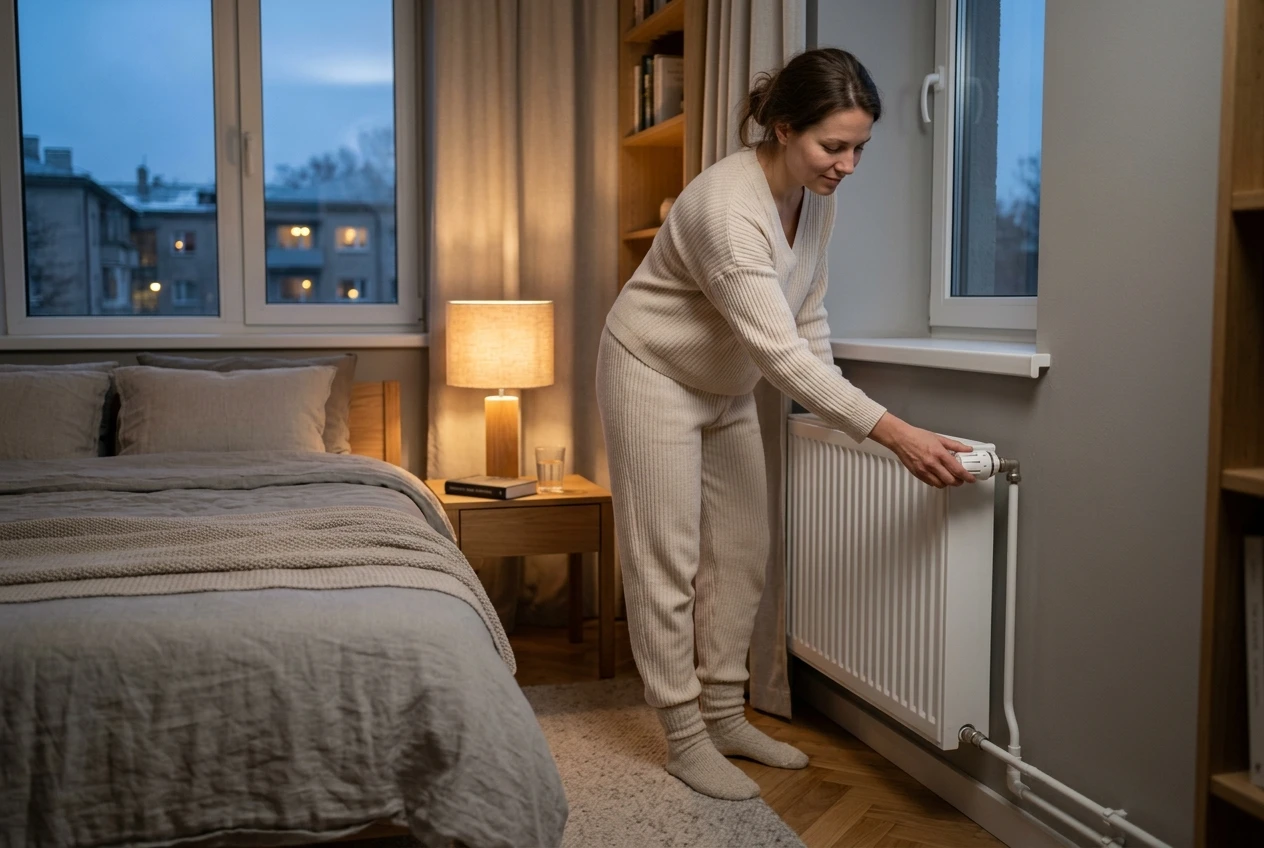
With classic central heating or district heating, radiators respond relatively quickly to temperature changes. For sleep, it's appropriate to lower the bedroom temperature by 1–2 degrees, which also supports deeper and more restful sleep. At the same time, you should avoid constant and extreme adjustments to thermostat valves, as frequent changes may not produce the desired result. A district heating heat exchanger automatically regulates the heating water temperature according to outdoor temperature, so often only slight room-based adjustments are needed.
To ensure that heat reaches the room unobstructed and heating costs remain optimal, radiators must be regularly maintained and bled. Timely system inspection ensures smooth operation throughout the entire heating period, about which you can find more detailed information in the article on heating system maintenance.
Heat pumps and floor heating require stability
In a home heated with a heat pump, especially with concrete-cast water floor heating, dropping the temperature sharply at night is not advisable. Concrete flooring has large heat capacity, or thermal inertia, which means its cooling takes hours and morning reheating requires considerable additional energy. If you want to warm up the room quickly in the morning, the heat pump may automatically activate electric auxiliary heaters, which consume significantly more electricity and nullify the night's savings.
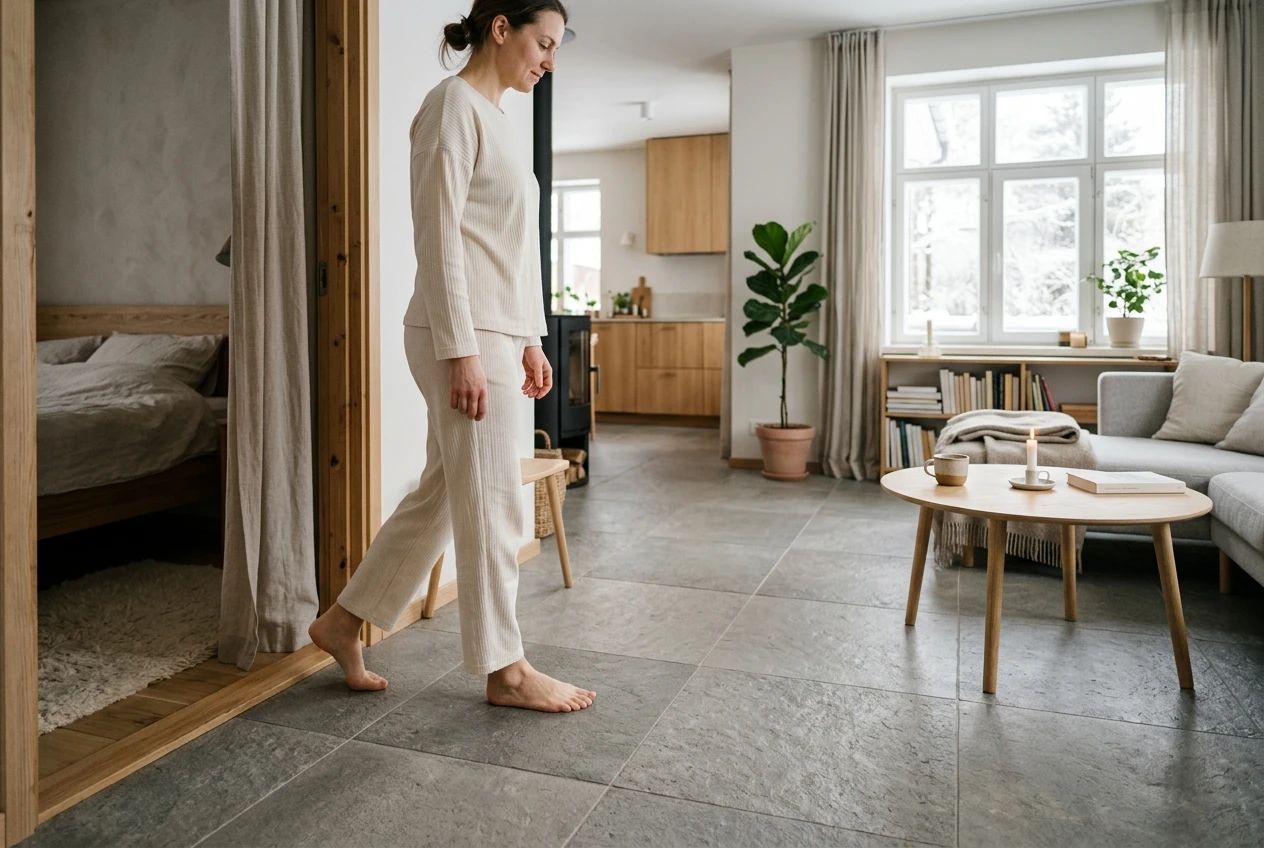
Heating experts recommend maintaining a consistent temperature when combining a heat pump and floor heating, or limiting the reduction to a maximum of one to two degrees. Uniform operating mode ensures the device's best efficiency, saves the equipment, and keeps the floors pleasantly warm.
Electric radiators and direct electric heating
With radiators or convectors running on direct electricity, there is no thermal inertia and heat reaches the room immediately. With such a solution, lowering the temperature at night by 2–3 degrees provides clear financial savings. Modern programmable thermostats allow the heating to automatically switch to a lower setting at night and raise the temperature to a comfortable level shortly before waking up.
With storage heaters, a different principle applies: the device stores heat at a more favorable night electricity rate and releases it during the day. Therefore, with electrical solutions, you must always consider both the heating element's operating principle and your electricity plan conditions.
Healthy room temperature and preventing mold
To maintain a healthy indoor environment, the Health Board recommends ensuring room temperature between 20–22 degrees and relative humidity of 35–60 percent. In a bedroom, 18–20 degrees is considered optimal temperature, but the room should certainly not be allowed to cool below 16–17 degrees.
In a room that is too cold, water vapor in the air can condense on cold exterior walls, window sills, and corners, creating a favorable environment for mold growth. For practical advice on preventing excess humidity and moisture damage in living spaces, find it in the article on how to prevent mold. Special attention must be paid to older buildings, where walls need additional insulation. If you plan to increase the building's heat retention, familiarize yourself with the guidelines on how to renovate an old house.

The role of building heat retention in energy efficiency
The profitability of lowering heating temperature depends directly on how quickly the building loses heat. In a modern well-insulated building, indoor air cools barely noticeably during the night even when heating is reduced, while in an older house there may be uncomfortable coldness by morning. When buying or renting real estate, it's always worth checking the building's energy consumption and technical data, about which you can find information in the article on why the energy label is important.
A consciously chosen heating solution helps keep your home cozy and monthly costs balanced. If you want to find a new home with low maintenance costs or an apartment with a modern energy-efficient heating system, explore the options on Kinnisvara24 real estate search, where thousands of diverse offers await you.
Search
Keywords
Most read articles
- Price per Square Meter of Apartments in Tallinn in 2025

- Apartment Market in Early 2026: Prices Rising, Transaction Activity Remains Modest

- Apartment Market in Early 2026: Prices Rise, Transaction Activity Remains Modest
- Estonian Apartment Prices and Market Expectations in 2025
- Notary Fee and State Fee – Who Pays and How Much?