Rising Euribor Could Actually Bring Benefits Instead of Harm
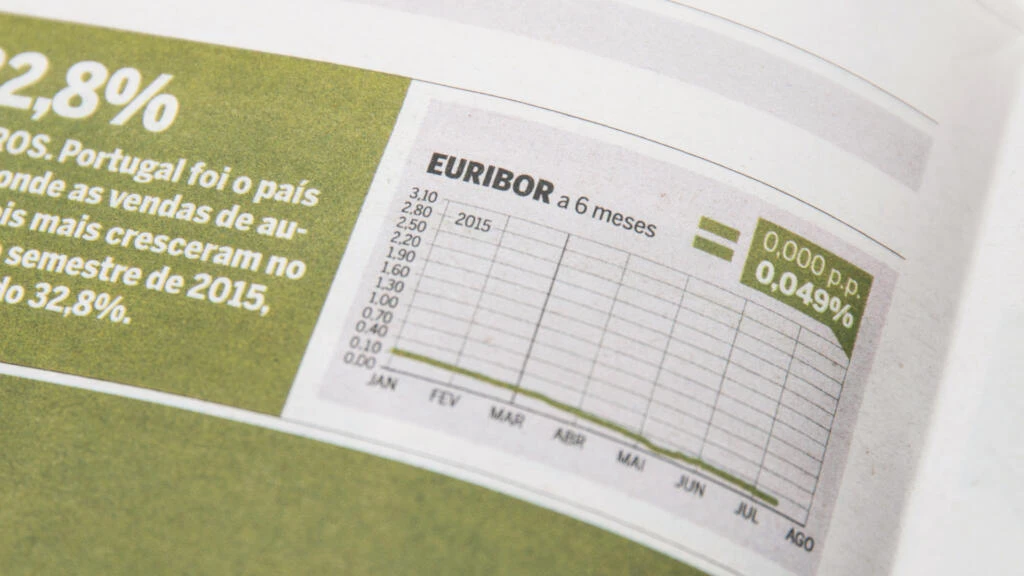
Gone are the days, according to many experts permanently, when the average interest rate for interbank lending in Europe, Euribor, was negative. The rise in Euribor over the last 6 months has been sharp, unpleasantly surprising many borrowers, but the good news is that the top rungs of this upward ladder are already in sight. Eesti Pank in its recent forecast estimates that the Euribor peak should arrive in autumn and at a level below 4%.
One might seem to rejoice about the halt in the rise, but for a responsible borrower, even this possible 4% Euribor means that he or she will have to pay this new interest rate in the months that follow – meaning that borrowers must prepare for interest rates in the coming winter that have not been seen in over ten years. Since in most loan agreements the interest rate can typically be changed twice a year, a conservative borrower will act wisely by factoring in rather this 4% level Euribor when preparing their family budget for 2024. Things could go well and Euribor could fall as quickly as it did in 2008-2009 (from 5.5% to 1.2%), but the reference period written into the logic of loan agreements nonetheless means that at least in the first half of 2024, all borrowers will have to pay rather high interest rates.
Whether the future based on this information is dark or bright depends on each person's perspective, income and savings. For those to whom the future of loan obligations seems as dark as the Mordor known from "The Lord of the Rings," there is still no reason to despair. Where there are problems, there are always opportunities and solutions. One of the first thoughts a homeowner managing a tight budget might consider is an analysis of the existing home's suitability and actual needs. It is quite clear that far too many homeowners are stuck either in the past (my grandfather already lived here!), or in location (trendy people live in Kalamaja!), or in comfort (moving is tedious and I have so many things!), or have anchored themselves in some fourth way to a certain building and location. Real estate is often viewed too narrowly and rigidly – it tends to be the case that if a young home buyer comes from Viimsi, then their own preference is to buy their first home also in Viimsi or the neighboring vicinity. Yet it might be wise to ask oneself whether, if for example the workplace is in the city center or if children exist then the daycare or school is also 10 km away from home, is all of this transportation arrangement worth a high loan payment and perhaps also a wrong location? All the more so if at least in Tallinn the city authorities are rather restricting than encouraging car traffic.
Actually, the real estate prices that have risen in recent years, especially for homeowners in Estonia's larger attraction centers, provide more opportunities than they perhaps initially realize for themselves. And from this also comes the so-called positive effect of rising Euribor – the borrowed loan amount and interest rate simply force one to look for new real estate that is financially optimal and in accordance with both the family budget and the actual living space needs. In quite a few regions it is possible, in case of a successful sale, to earn a sum that is sufficient for taking out a significantly smaller home loan in another region and there is also still money left over, from which one can create either a financial buffer or invest instead.
For many years, negative Euribor on the loan market, or essentially "free" money, could create a feeling of living beyond one's actual capabilities and needs, but the understanding that using borrowed money comes with a clear price hopefully leads to thoroughly considered purchase decisions and financial security and stability.
Article author: Raul Regno, Member of the Board of Domus Real Estate
Search
Keywords
Most read articles
- Price per Square Meter of Apartments in Tallinn in 2025

- Apartment Market in Early 2026: Prices Rising, Transaction Activity Remains Modest

- Estonian Apartment Prices and Market Expectations in 2025
- Notary Fee and State Fee – Who Pays and How Much?

- Apartment Market in Early 2026: Prices Rise, Transaction Activity Remains Modest