Restrictions on Waterfront Property
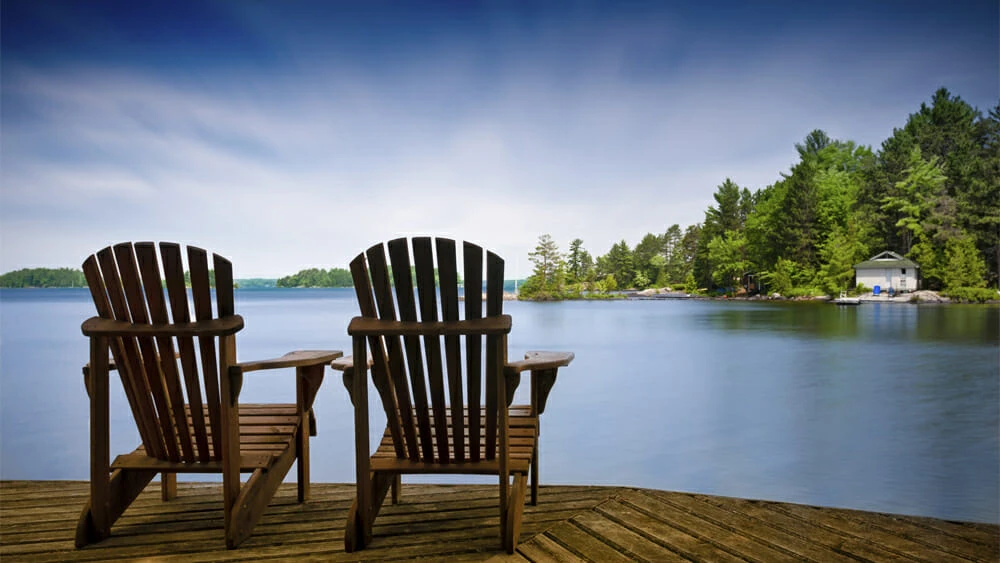
This year's hot summer increased interest in houses and cottages located on the shores of the sea, lake, or river. However, buyers of real estate adjacent to water bodies must take into account the laws that determine the right to use the water body and shoreline, as well as establish construction-free zones.
According to Katrin Aron, CEO of Kinnisvara24.ee, demand for cottages and country houses has been higher than before since the beginning of the coronavirus pandemic, but this year's hot summer further increased interest in properties located on the shores of the sea, river, or lake. "The 'waterfront property' filter is the most popular filter that portal users used when searching during the summer. In addition, keywords such as lake, sea, river, or beach are frequently entered in the search box. People dreaming of a country house or summer cottage by the water should take into account the restrictions applicable to waterfront properties when planning a house purchase or construction, which stem from the Nature Conservation Act, the Forests Act, and the Heritage Conservation Act," Aron pointed out.
The right to use a water body
A water body located on a property belongs to the owner of the property, unless otherwise provided by law. This means that if a landowner's property contains a water body that is not open to public use, it can only be used with the owner's permission. Permission for public use of a water body is presumed to exist if the water body is not restricted or marked in a way that indicates an intent to restrict its use, and the intent to restrict the use of the water body does not appear from other circumstances either.
Public use of a water body includes swimming, water sports, movement on water and ice, fishing, water abstraction, and other use of the water body that is not considered special water use under the Water Act. Movement in water or on ice with a motor vehicle is not public use of a water body and can only be done with the owner's permission.
The water body shoreline must be open to everyone
The shoreline is a strip of land along the shore of a publicly usable water body, intended for staying by the water body and moving along the shore. The width of the shoreline is ten meters on navigable water bodies and four meters on other water bodies.
The shore owner must allow everyone to use the shoreline. If the shoreline is flooded, a strip of land two meters wide from the water level boundary line is considered the shoreline. If movement on the temporary shoreline is obstructed, the shore owner must ensure passage elsewhere on their property, if this is not excessively burdensome for them.
Shore construction-free zone
When traveling across Estonia, one can see several nice cottages that have been built directly on the shore of a water body, but according to today's law, direct construction on the shore is not permitted. The width of the construction-free zone is 200 meters on the sea shore within the city limits of Narva-Jõesuu and on sea islands, 100 meters elsewhere on the sea shore, 100 meters on Lake Peipsi and Lake Pskov, Lake Lämmijärv and Lake Võrtsjärv, 50 meters in densely populated areas, 50 meters on lakes larger than ten hectares, and 25 meters on lakes up to ten hectares.
Katrin Aron also provided some examples of currently listed waterfront properties:
- An exclusive plot at Kakumäe beach, which has a long sea shore and a total area of 6,700 square meters.
- A luxury property on the shores of Lake Peipsi in Rannapungerja – a property registered as agricultural land, which in addition to the lake shore also features a pond and a boathouse, and the purchase includes 2 canoes.
- A scenic last dam lake-side plot in Jõelähtme parish.
- Near the summer capital, land is being sold in Vana-Pärnu on the banks of the Sauga River.
- A large promising plot in Tartu county on the shore of Lake Saadjärv – near a public beach, food shops, and a children's playground.