Ramon Rask: Solving the Housing Crisis Begins with Limiting Short-Term Rentals

The housing crisis is not just a concern for major European cities, but is increasingly affecting Estonia as well. Ramon Rask, partner and sworn attorney at law firm RASK, notes that as early as 2026, we will see the first regulatory steps to improve the availability of residential real estate. The first such measure is an EU regulation coming into force in spring, which concerns data collection and disclosure regarding short-term rentals.
Root cause of the crisis: there is too little supply
"The core of the housing crisis is not in demand, but primarily in the lack of supply. The real estate market has not been supplemented with sufficient affordable residential rental properties," Rask explains.
Over the past ten years, housing prices in Europe have risen by 53% and rental prices by 21%. In Estonia, these figures are 109% and 58% respectively. Construction costs have increased by approximately 23% compared to 2021, and the number of building permits has declined by 22% during the same period. According to Rask, all of this is slowing the addition of new housing stock.
The crisis affects younger people and those with lower incomes particularly acutely. "Close to 8% of EU residents spend over 40% of their income on housing, and in younger age groups, this figure sometimes exceeds 10%." To alleviate the housing shortage in Europe, it is estimated that approximately 2 million new homes are needed each year, along with investments of around 150 billion euros annually.
Airbnb, Booking and other platforms have transformed rental markets
In Europe, the explosive growth of the short-term rental market is seen as a major amplifier of the housing crisis. Many apartments that were previously in long-term rental have moved to hotel-like use through platforms such as Airbnb and Booking. "From politicians' perspective, this part of the housing stock seems to have disappeared from the market – they exist, but not for living," says Rask. In major European cities, an average of 15–20% of housing is on short-term rental, and in some cities, such as Paris and Rome, even more.
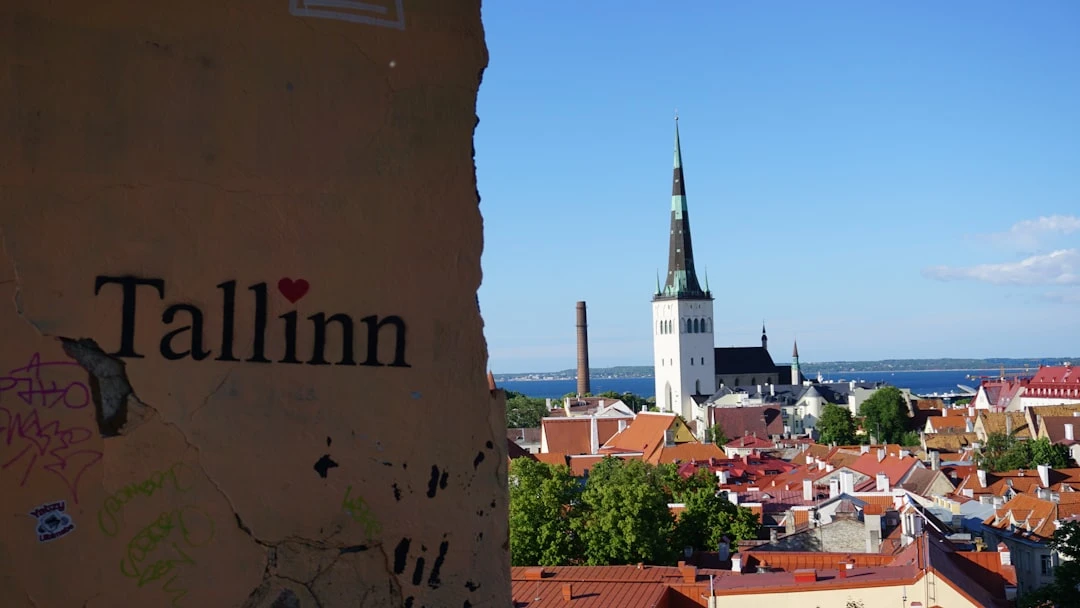
Statistics also confirm that the volume of short-term rentals has grown by leaps and bounds: in 2019, there were 512 million platform-based nights (according to data from the four largest platforms) in the EU, but by 2024, there were already 854 million. "This accounts for approximately one-third of all tourist nights in the EU. In Estonia, the short-term rental problem affects Tallinn's Old Town most painfully," adds the co-head of the construction and real estate division at law firm RASK.
As a result, many cities have begun to impose restrictions on short-term rentals on their own initiative. For example, in certain zones in Amsterdam, an apartment may be rented out on a short-term basis for a maximum of 30 nights per year. Barcelona has announced plans to eliminate all tourist apartment licenses by 2028. In New York, platforms are required to collect and register data.
EU plan: regulation, investment and protection of the vulnerable
In 2024, a commissioner was appointed to the European Union with a clear mandate to address energy and housing issues. At the end of the same year, the European Commission decided to establish a special housing crisis commission (HOUS), after which the situation was mapped over the course of a year, and by the end of 2025, a four-pillar plan was ready:
Increasing supply with the aim of simplifying and accelerating the processing of plans and permits.
Investments aimed at bringing a significant amount of public funding into residential real estate.
Regulation of short-term rentals with the aim of first collecting relevant data and then establishing necessary restrictions based on that data.
Protection of vulnerable groups with the aim of supporting primarily young people, students and representatives of essential professions.
"The intervention of public funding in residential real estate is the EU's strongest tool, which will likely affect the market the most. This creates a publicly funded rental market alongside the traditional rental market," said Rask. Several countries have already tested such models to offer affordable rentals, for example in the Czech Republic.
An important regulation comes into force on May 20, 2026
The most direct impact on Estonia in the near term will be an EU regulation coming into force in spring, according to which data collection on short-term rentals must begin. Unregistered apartments may no longer be offered on platforms, and platforms are obligated to verify this.
Although member states can decide whether and how to implement the system, this flexibility is somewhat limited. "If a country does not implement data collection, it could in the future limit access to, for example, energy efficiency support. Thus, one can assume that these topics will become interconnected: for instance, if you want to receive money to improve a building's energy efficiency, you need to take into account that the rental conditions in that building may be limited," noted Rask.
According to him, new domestic compliance requirements will likely follow the registration of short-term rental spaces over time, such as the requirement that these spaces cannot be used without meeting evacuation and fire safety requirements.
Public money will begin to reshape the market
Following the European example, Rask sees Estonia also having greater potential to use EU funds not only for renovating apartment associations, but also for creating new housing. For instance, he believes there is reason to consider converting vacant office buildings in central Tallinn into residential rental properties, largely financed by European funds.
"Public money is entering the Estonian market, and smart developers will have the opportunity to begin building an affordable housing stock with it. This will compete with the traditional real estate market and will affect prices and accessibility," he predicts.
Short-term rental will lose its current status
In Ramon Rask's view, it will not be wise in the future to build a business model based solely on offering short-term rentals. "Its role will be regularized and diminished, some apartments will need to return to the long-term rental market. The competitiveness of hotels will improve and tourists will once again become the domain of hotels," he notes.
In summary, Europe and Estonia along with it are moving into an era where public money, regulations and short-term rental restrictions will significantly change the current situation. The first changes will reach Estonia in the year that has already begun.
Search
Keywords
Most read articles
- Price per Square Meter of Apartments in Tallinn in 2025
- Apartment Market in Early 2026: Prices Rising, Transaction Activity Remains Modest

- Apartment Market in Early 2026: Prices Rise, Transaction Activity Remains Modest
- Estonian Apartment Prices and Market Expectations in 2025

- Notary Fee and State Fee – Who Pays and How Much?