Radiator Hisses or Won't Get Warm? Bleed It Yourself
Is your home radiator making strange noises or cold at the top? This common concern indicates air accumulated in the system, which prevents heat from circulating properly and increases heating bills. Radiator bleeding is a simple procedure that any homeowner and tenant can safely handle.
How to identify common radiator problems
If a radiator is cold at the top and warm at the bottom, it is usually caused by air trapped in the piping. Air bubbles prevent hot water from flowing evenly and create an unpleasant hissing or gurgling sound. If, conversely, the radiator is cold at the bottom and warm at the top, the problem may be sludge or sediment accumulated in the heating element. Thorough heating system maintenance helps ensure free circulation of the heat transfer fluid and reduces system energy loss.
In the case of a completely cold radiator, you should first check the thermostat and radiator valves to ensure they are not closed or jammed shut. The thermostatic valve typically allows you to regulate water flow, but if opening or bleeding the valves does not help, the building's heating system may require hydrobalancing or professional flushing.
Tools needed and preparation before bleeding
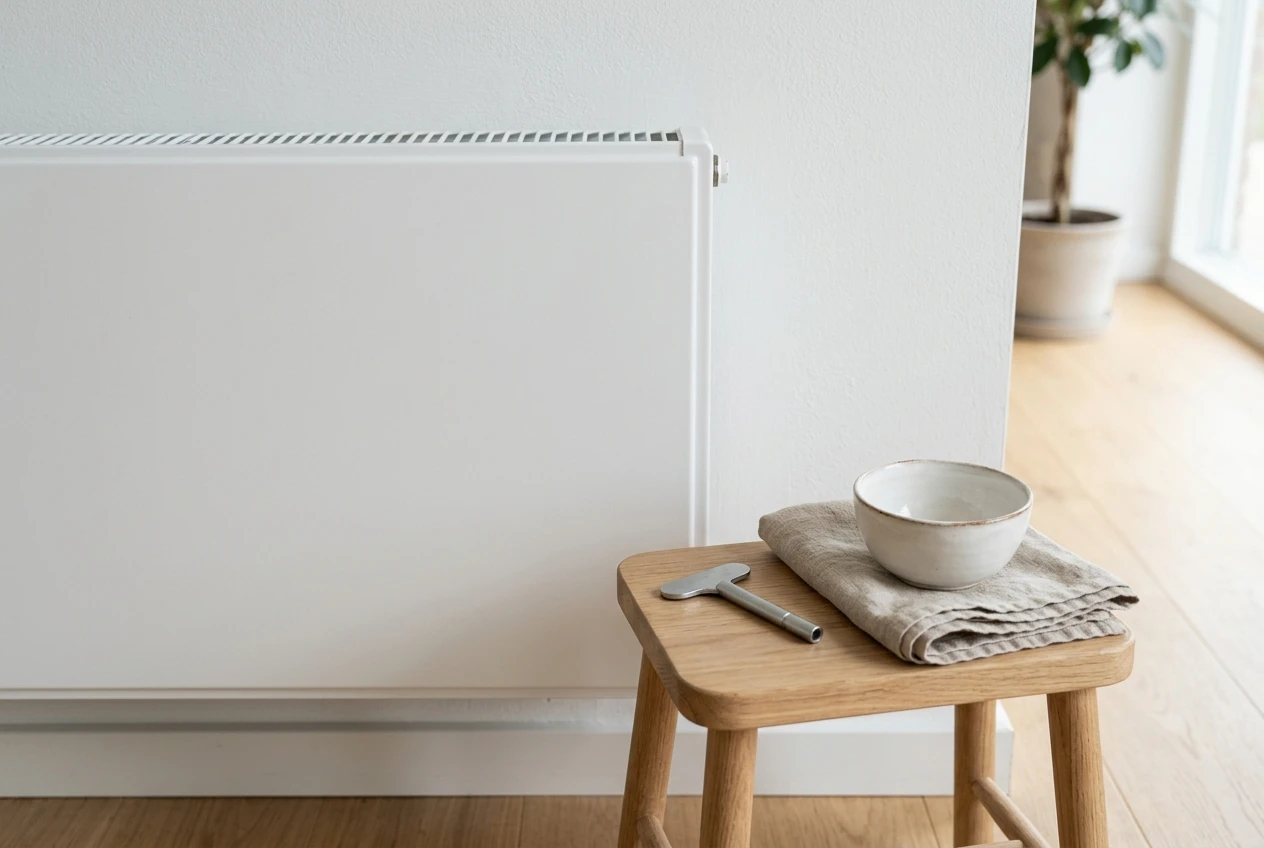
Before starting work, get a special radiator bleeding key, a dry cloth and a small container to catch water. In a private house or apartment with a local heating device, you should turn off the heating and circulation pump before bleeding. This prevents additional air from entering the piping. Also, allow the radiators to cool completely to avoid the risk of burns from hot water and steam.
In a centrally heated apartment building, it is not possible or necessary to turn off the circulation pump on an apartment basis, so you can start bleeding directly at the apartment's radiator. It is recommended to start work on the highest floor of the apartment or building and from the heating elements furthest from the heat source, as air naturally accumulates at the highest points in the system.
Radiator bleeding step by step
Bleeding is a manageable process that does not require special knowledge. First, locate the bleeding valve on the upper edge of the radiator and place a container and cloth underneath to catch any water droplets.
Place the bleeding key on the valve and turn it slowly counterclockwise about a quarter to half turn. Do not remove the screw completely, but open it only slightly until you hear a steady hissing sound.
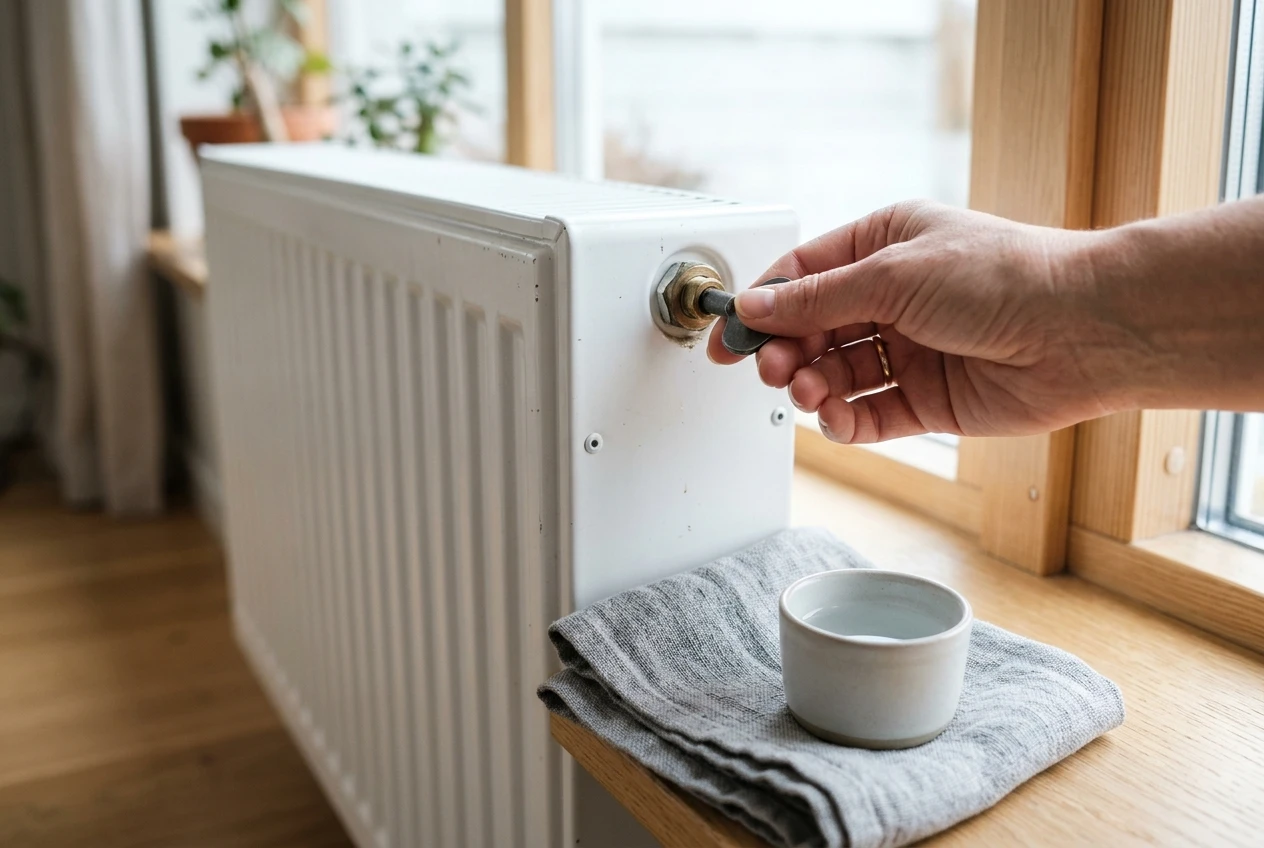
Once the hissing stops and a steady stream of water or drips begins to flow from the valve, turn the valve clockwise carefully to close it. Make sure you do not over-tighten the valve. After bleeding and switching on the heating, in the case of a closed heating system, it is also worth checking the boiler pressure and raising it if necessary.
Responsibility in apartment associations and rental homes
The central heating system in an apartment building is the joint property of apartment owners and its maintenance is organized by the apartment association. If a major renovation of an old house is planned, heating system balancing and renovation should be planned as part of the overall renovation together with the association.
When living in a rental home, minor maintenance and radiator bleeding typically fall under the tenant's responsibilities. In case of serious leaks or damage, the owner or property manager should be notified immediately. When looking for a new home, it is worth evaluating the heating elements and building energy efficiency, as a proper energy label provides a clear overview of future utility costs.
Keep your home warm and heating costs under control
Regularly maintained and bled radiators ensure comfortable indoor climate in your home and help keep heating costs low. If you are looking for a warm and economical home, explore real estate offers on the Kinnisvara24 portal, where you will find a wide selection of energy-efficient apartments and houses throughout Estonia.
Search
Keywords
Most read articles
- Price per Square Meter of Apartments in Tallinn in 2025
- Apartment Market in Early 2026: Prices Rising, Transaction Activity Remains Modest
- Apartment Market in Early 2026: Prices Rise, Transaction Activity Remains Modest
- Estonian Apartment Prices and Market Expectations in 2025
- Notary Fee and State Fee – Who Pays and How Much?