Public Buildings Must Start Producing Solar Energy by 2027
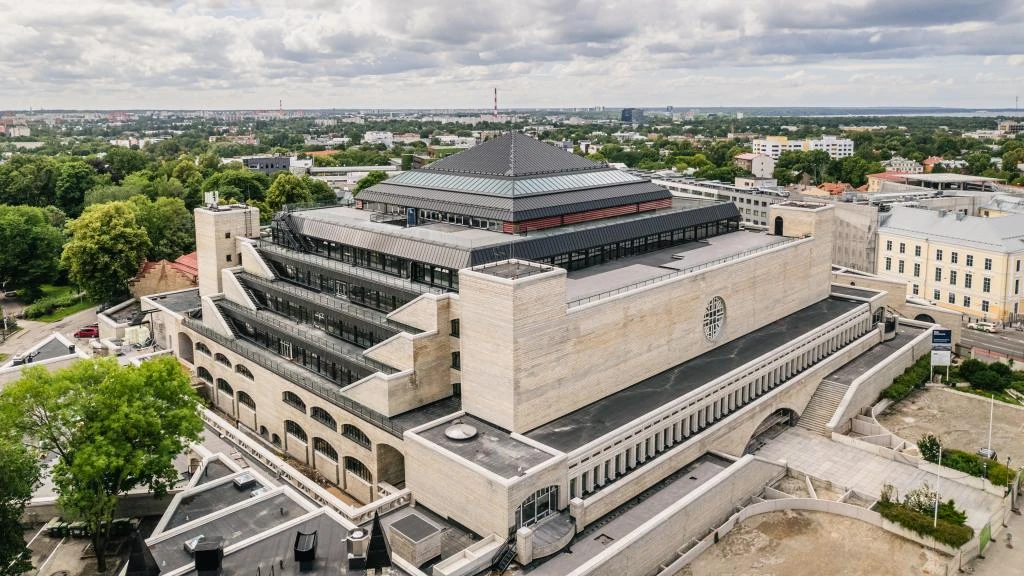
Solar energy production on roofs will become mandatory for all new public buildings in 2026, with the same requirement applying to existing buildings a year later. The obligation will extend to residential buildings by 2029. An exception applies to buildings under heritage protection, where panels or solar roofs cannot be installed.
The accelerated adoption of solar energy is part of the European Union's RePowerEU plan, which aims to eliminate dependence on Russian fossil fuels by diversifying energy sources and accelerating the transition to clean energy.
"The use of solar energy on public buildings is very efficient because their energy consumption is concentrated mostly during daytime hours, allowing the generated electricity to be used immediately. For example, the recently renovated National Library uses approximately 84% of the electricity generated by its Roofit.Solar solar roof for its own needs. In comparison, single-family homes without batteries typically use only 18-30% of their generated electricity," said Andres Anijalg, CEO and co-founder of Roofit.Solar.
For example, the National Library's 542.72 m² solar roof generates an average of 68,302 kWh of electricity annually. The same amount of kilowatt-hours would allow an electric car to drive ten times around the Earth, or approximately 450,000 km.
Since a large portion of the generated electricity is consumed immediately, equipping these buildings with solar panels or solar roofs is not only more sustainable but also significantly shortens the payback period.
It is true that when using solar energy, one must account for the fact that large public buildings are often located in older buildings and therefore solar panels are frequently not permitted due to heritage protection requirements. In many cases, the black steel roof created by Estonians, Roofit.Solar, is the only available solution for buildings under heritage protection, since it has state-of-the-art solar energy-generating technology integrated into the steel roof and is therefore invisible to the eye. Here too, the National Library roof can serve as an example, which received approval from the heritage protection authority, with its solar modules located alongside inactive black steel roof panels, which from a distance are indistinguishable from the solar roof modules. Thus, the solar panels do not affect the building's architectural appearance. The solar roofs invented by Estonians, Roofit.Solar, have been awarded prestigious design awards Red Dot and iF Design Award. Currently, the company exports 90% of its solar roofs and is becoming one of the most important partners for European construction companies in equipping buildings with solar technology.
Search
Keywords
Most read articles
- Price per Square Meter of Apartments in Tallinn in 2025

- Apartment Market in Early 2026: Prices Rising, Transaction Activity Remains Modest

- Apartment Market in Early 2026: Prices Rise, Transaction Activity Remains Modest
- Estonian Apartment Prices and Market Expectations in 2025

- Notary Fee and State Fee – Who Pays and How Much?