Paljassaare Landowner Offers City a Larger Land Area Than Four North-Tallinn Parks
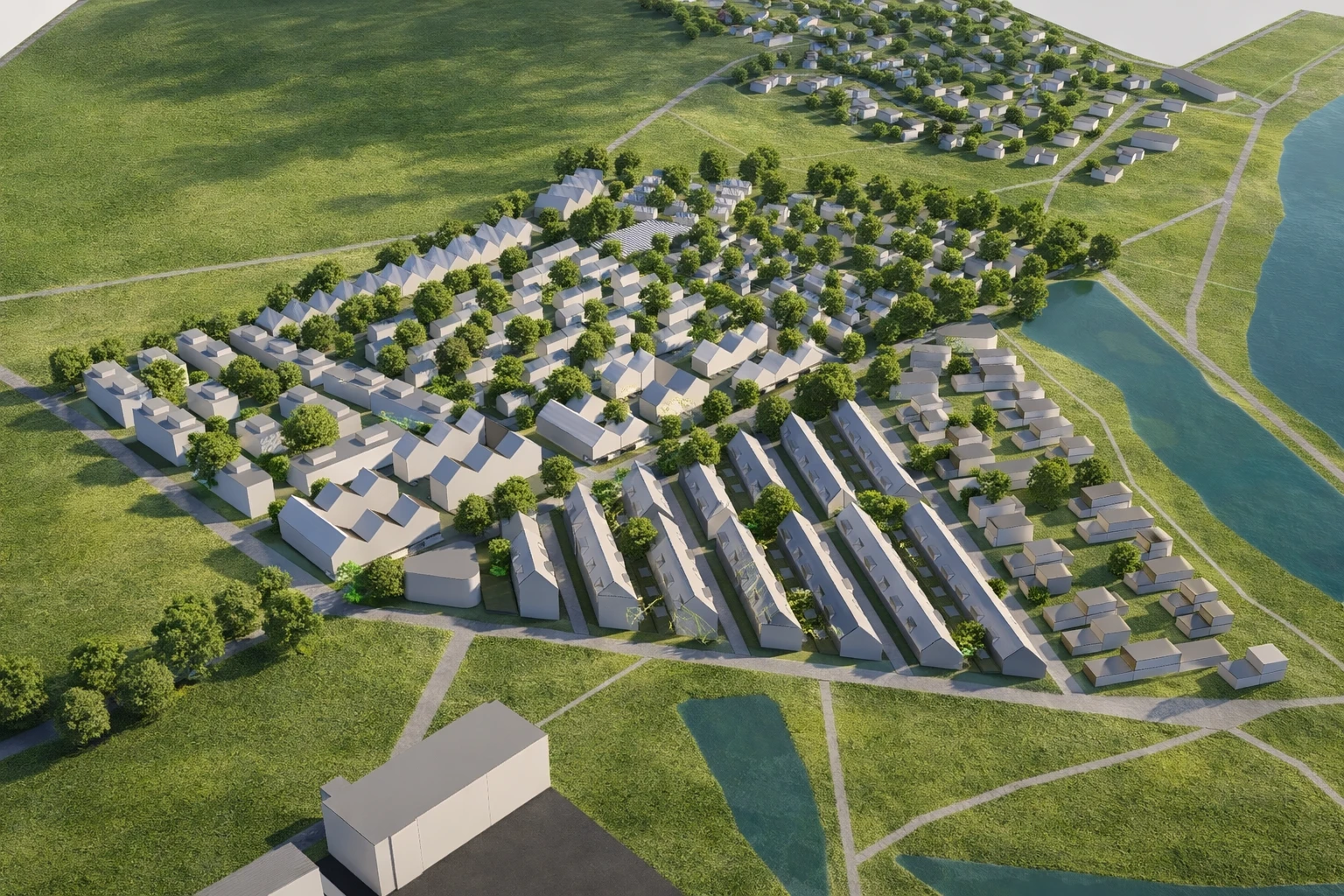
The owner of the Paljassaare põik 16 property located in North Tallinn offers the city a compromise: the city would receive approximately 33.2 hectares of land for nature protection and public use, and terraced houses would be built on the remaining area. The area offered to the city is larger than Süsta, Kase, Kopli and Kalamaja parks combined.
According to the concept created by Muutrum and commissioned by Põhjakalda OÜ, the landowner would transfer two-thirds of the property to the city. With this proposal, the owner hopes to find a solution to a project that has been in the city's planning proceedings for more than 15 years. "We want to reach an agreement with the city that would allow us to build homes for families and open a larger part of the property for nature protection and recreation for city residents," said Kristjan Maaroos, member of the board of Põhjakalda OÜ.
According to the concept, the Paljassaare bird sanctuary would expand by 17.6 hectares at the expense of the property. On the remaining land offered to the city, a public nature park, beach promenade and fitness trails are planned, which would open the previously closed shoreline to city residents.
Approximately one-third of the property is planned for terraced houses, semi-detached houses and single-family homes with their own yards. Põhjakalda OÜ believes that such a residential area would provide families with the opportunity to stay in Tallinn, rather than moving to a neighboring municipality to find a suitable home. The development would bring approximately 2,000 new residents to the area and, according to the owner's assessment, would strain the city's traffic and infrastructure less than the construction of large apartment buildings.
On October 19, the city government set the goal of Tallinn's new comprehensive plan to be a city open to the sea, closer to nature and more family-oriented. "Our proposal does exactly that: it opens the previously closed waterfront, gives nature protection and city residents over 33 hectares of land, and offers homes to families, which are in short supply in Tallinn," said Maaroos.
A Year of Seeking Compromise
Over the past year, Põhjakalda OÜ has actively participated in discussions about the North Tallinn comprehensive plan, presented an alternative concept and sought a solution with the city that would take into account both nature protection and the quality of the living environment. According to the company, its proposals have not been substantively considered so far. Although the city does not rule out residential construction on this property with the new comprehensive plan, the currently planned residential volume is marginal in relation to the size of the property and does not allow for solving the situation in the area as a whole and economically efficiently.
However, the contradiction extends further. Tallinn initiated a detailed plan allowing development on the property in 2010, and in 2017 it was approved by the North Tallinn administrative board and the district administration. During this time, the owner has continuously reduced development plans: instead of the previous solution for approximately 6,000 residents, it is now planned to build homes for approximately 2,000 people.
The new North Tallinn comprehensive plan currently being developed, however, envisages approximately 87% of the property as public green and landscaped areas. According to the owner's assessment, the draft fails to substantially consider both the new, significantly smaller development solution and the results of fresh environmental studies. "The initial assessment of city officials to the updated solution was supportive, but the environmental impact assessment of the comprehensive plan is still based on data from the previous, three times larger solution," noted Maaroos.
According to the Environmental Board, the habitats of protected species are located only in the northern part of the property. According to ornithology expert Mati Kose, the compromise solution is acceptable from the perspective of bird protection if an alternative habitat, i.e. a new bird pond, is created.
"We have changed our plans to meet the city's wishes. We expect the city to seriously consider our proposed solution and to take into account what it gives the city: an open waterfront, a nature protection and recreation area, and new homes for families," said Maaroos.
The city has also emphasized the need for fair treatment of landowners and finding compromises between nature protection and the interests of owners in the creation of the Astangu-Mäeküla protected area, where the acquisition of properties located in the protected area in agreement with owners is envisaged if necessary.
"The same principle should apply in Paljassaare. We are willing to transfer a larger part of our land to the city if an agreement allows us to implement a plan for family homes on the remaining part. In our opinion, a compromise is more reasonable for the city than acquiring real estate," said Maaroos.
No One Wants Court Disputes
According to Põhjakalda OÜ, restrictions associated with designating private land as public green space could mean actual forced expropriation if they deprive the owner of the opportunity to use the property reasonably. The company believes that in such a case, the infringement of property rights protected by the constitution should be fairly compensated.
The warning and demand letter sent to Tallinn on October 15, 2026, is, according to the owner, primarily a legal protective measure. The company's goal is to reach a compromise with the city.
"Our first choice is not court dispute. We advocate for this currently practically abandoned capital area to find a use befitting a developed state. We have a justified expectation to build a residential area here – more affordable family homes that families prefer and expect, and together with the city to create a comprehensive public area that would offer opportunities to spend free time by the sea and give the bird protection area more space," explained Maaroos.
According to him, the city must also have a clear plan for how the private land planned as public green space would actually reach people for use.
"Our preference is an agreement, not compensation," emphasized Maaroos. "The offer to transfer over two-thirds of the property to the city is a concrete step toward that agreement. We hope the city understands and appreciates this."
Search
Keywords
Most read articles
- Price per Square Meter of Apartments in Tallinn in 2025
- Apartment Market in Early 2026: Prices Rising, Transaction Activity Remains Modest

- Apartment Market in Early 2026: Prices Rise, Transaction Activity Remains Modest
- Estonian Apartment Prices and Market Expectations in 2025
- Notary Fee and State Fee – Who Pays and How Much?