Evening Routine and Home Environment for Deep Sleep

Does your home support rest or keep you awake instead? Quality sleep is not a matter of chance, but the result of consciously shaped habits and a healthy living environment that helps restore mental balance and prepare you for a new day.
The impact of light and screens on sleep
Your evening journey to sleep should begin at least an hour before bedtime with screen-free time. Studies from 2024 confirm that the blue light from smart devices suppresses melatonin production and extends the time to fall asleep by an average of 10–30 minutes. Moreover, more than two hours of screen time before sleep negatively affects both the next day's mood and overall alertness. Instead of screens, it's worth preferring dim and warm lighting, which stays below 100 lux, as such a lighting regime accelerates falling asleep by up to 20 percent. Thoughtfully chosen bedroom interior design for better sleep creates a visually calming environment where mental tension can naturally subside and your body can switch to rest mode.
Temperature and air quality as the foundations of rest
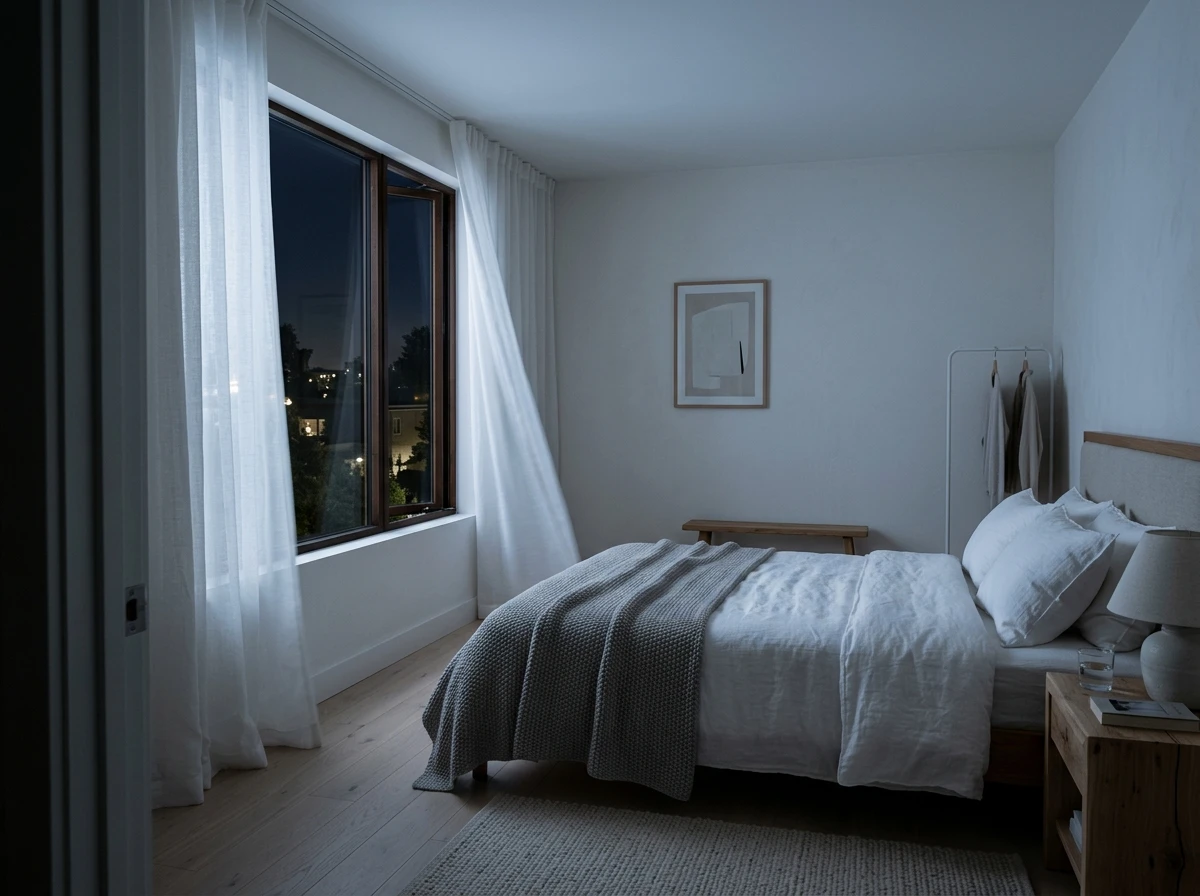
The bedroom air temperature plays a critical role in reaching and maintaining deep sleep phases. The optimal range falls between 16 and 19 degrees, but in Estonian homes the typical temperature is often around 22 degrees, which can significantly shorten sleep duration and increase fatigue the next day. It is also important to monitor air quality and ventilation, as fresh air and low carbon dioxide levels improve sleep quality by up to a quarter. If you live in a noisy area, it is essential to create silence, as 2025 sleep health reviews show that sounds above 30 decibels disturb sleep even without waking you. Effective sound insulation and modern solutions help turn your apartment or house into a private oasis of silence where outside noise does not interfere with your recovery.
Eating habits and timing
Your body's biological clock needs a routine where eating and drinking habits play a central role. Consuming coffee and other stimulants after 2 PM can reduce sleep efficiency by half, while your last major meal should be before 7 PM in the evening. Late dinners delay falling asleep and prevent your body from fully relaxing, as the digestive process keeps your organism active. Instead, create a calming ritual for yourself that gives your brain a clear signal that the workday is over. Whether it's reading a book or soothing music, consistency in your sleep and wake times supports your health and helps you achieve emotional stability.
Home as the center of mental balance
Your home must be a place where you feel safe and cared for, because good sleep begins at home and the conscious choices made there. An organized room free of visual clutter reduces anxiety and allows you to focus completely on full recovery after a stressful day. By creating a fixed evening routine for yourself that includes a cool room and screen-free time, you add an average of 45 minutes to your night sleep and significantly improve your overall quality of life and emotional resilience.

If you feel that your current home does not support your need for peace and quality rest, explore new offers on Kinnisvara24 portal. Find a home for yourself that allows you to create ideal conditions for maintaining mental balance and deep sleep.
Search
Keywords
Most read articles
- Price per Square Meter of Apartments in Tallinn in 2025

- Apartment Market in Early 2026: Prices Rising, Transaction Activity Remains Modest
- Apartment Market in Early 2026: Prices Rise, Transaction Activity Remains Modest
- Estonian Apartment Prices and Market Expectations in 2025
- Notary Fee and State Fee – Who Pays and How Much?