More and more Estonians prefer to buy a home alone
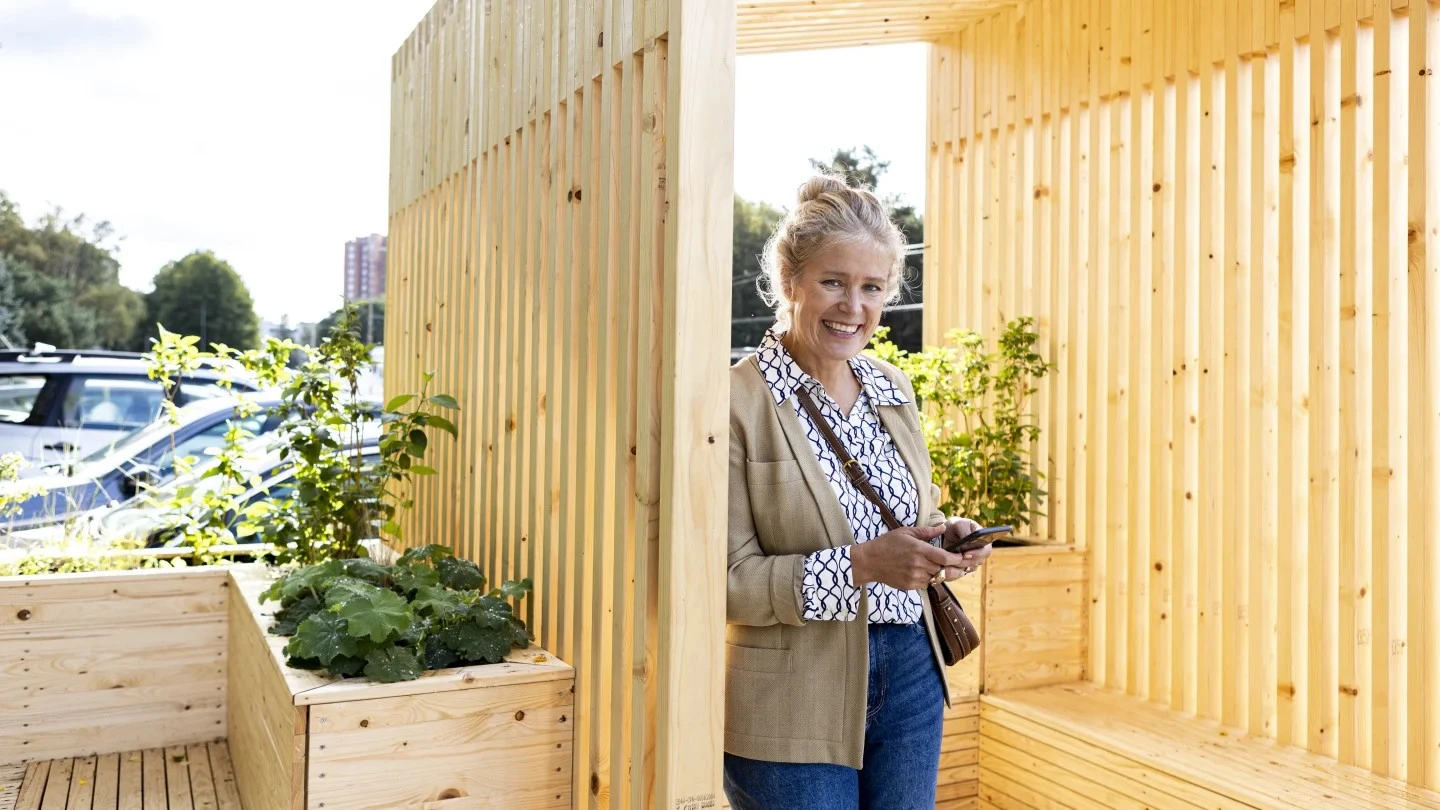
Estonian people are increasingly taking out home loans on their own. While it used to be common for a home to be purchased together with a partner, banks now see increasingly more clients who are capable and even prefer to buy a home independently.
Coop Bank's data shows that if in 2020, 38% of all home loan applicants took out loans together, by 2025 this share had fallen to 28%. On one hand, this reflects people's growing capacity and more conscious choices, but on the other hand, it also reflects regional differences in the real estate market.
"If incomes allow it and there is also sufficient own financing, Estonian people often prefer to buy a home alone, as this gives them greater peace of mind and freedom of decision," explains Karin Ossipova, head of Coop Bank's home loan business line.
People whose income is stable and sufficient increasingly see that they do not need to involve anyone else by their side to purchase a home. She points out that it is often desirable to keep finances separate and to be personally responsible for one's own assets and obligations. "This is especially true for such large assets as one's own home and real estate in general," she adds.
For younger people, it also matters that own financing often comes with the help of parents or relatives, which is why it is desired that the home to be purchased remains solely owned.
In addition to peace of mind, Estonians are also known for their independence, meaning they prefer to manage on their own. Nor do they want to live as adults with parents or other family members as is common in Southern Europe.
She points out that while purchasing a home with a partner is in no way technically more complicated, it requires greater trust and more thoroughly thought-out agreements, especially in situations where relationships could potentially take a turn for the worse.
"In good times, we often don't want to think about what happens if the situation changes. When taking out a home loan alone, at least there is peace of mind that one's home remains in one's hands and one does not have to deal with resolving disputes related to it," she adds.
In practice, there are also situations where adding a co-borrower is not advisable. For example, a partner's income may not meet the bank's requirements or previous payment behavior may be problematic. "Additionally, problems can arise if one wants to take out a home loan with a person who has a short-term residence permit, which does not give the bank confidence that both parties could commit to repayment in the long term," she says.
In these situations, it is wiser for the borrower to account early on for the fact that the home is being purchased and the home loan is being taken out by one person according to their abilities.

Banks are more readily lending to solo applicants
Looking back in time, taking out a home loan alone has not always been as commonplace and accessible as it is today. Previously, banks were more cautious and an individual's ability to obtain a home loan depended more on marital status and a broader support network, especially if the applicant had children. "As more negative examples, there were situations where a loan applicant with children was advised to find a partner to take out a home loan with. Fortunately, those days are behind us," says Ossipova.
Today, banks are much more willing to cooperate with a person taking out a home loan alone and to find solutions that would take into account the specific person's income, obligations, and wishes. "This has opened the door to those who want and are able to purchase a home independently regardless of whether they are single, living with a partner, or raising children alone."
First home as a conscious intermediate step
While taking out a loan together with a partner carries lower risks for both the lender and the borrower, taking out a loan alone can also have several advantages. "If loan payments are often easier to make from two incomes than one, then when selling the property, a person who took out a loan alone does not have to share their sale proceeds with anyone or argue about how much someone has invested in purchasing the home," Ossipova gives as an example.
If a home is purchased for living alone, then one can generally look at a smaller space. "Smaller apartments are cheaper, so less own financing is needed to purchase them and the monthly loan payments are also lower. In most cases, these are also stepping stones for purchasing the next home. Over time, needs change and, for example, when starting a family, the so-called starter home is used as additional collateral, or enough is earned from selling the apartment to afford a new and larger home," illustrates Ossipova.
Home loan applicants who want to purchase real estate for the whole family to live in tend to look more at cheaper second-hand real estate, including apartments and houses needing renovation. "To purchase a home that meets the needs of a larger family, one often has to apply for a loan with a partner," she adds.
The main obstacle to taking out a home loan alone is usually the lack of sufficient income or own financing. "Salaries in Estonia in recent years have risen noticeably depending on the sector, and this has also given many people the opportunity to think about real estate acquisition without co-loan applicants. However, such opportunities are not available to everyone – especially young people and those who want to purchase real estate in Tallinn or Tartu are areas of concern," Ossipova acknowledges.
When taking out a home loan either alone or with a co-applicant, it is also possible to take advantage of various state guarantees and support, for example, EIS housing loan guarantee, EIS rural area housing loan guarantee, and MES housing co-loan.

Buying a home is easier in suburbs and small settlements
In addition to incomes and own financing, one must also consider real estate prices, which differ significantly across Estonia by region. This directly affects how realistic it is to purchase a home with one income.
In Tallinn, on one hand, there are higher salaries, but on the other hand, there is also more expensive real estate. This guides solo home buyers to make considered choices. Depending on incomes, this often means choosing a one- or two-room apartment in new developments, or larger two-, three-, or four-room apartments in older but renovated buildings.
"In settlements around Tallinn, in the so-called golden ring, real estate prices are often more affordable than in the capital, but access to workplaces and services is similar thanks to proximity to Tallinn," says Ossipova. The further you go from Tallinn and other major centers, the more affordable the price level becomes, which opens up opportunities for more people to purchase a home alone, without having to make major compromises on quality of life.
Search
Keywords
Most read articles
- Price per Square Meter of Apartments in Tallinn in 2025

- Apartment Market in Early 2026: Prices Rising, Transaction Activity Remains Modest

- Apartment Market in Early 2026: Prices Rise, Transaction Activity Remains Modest
- Estonian Apartment Prices and Market Expectations in 2025
- Notary Fee and State Fee – Who Pays and How Much?