What's Inside the Wall? Expert Explains
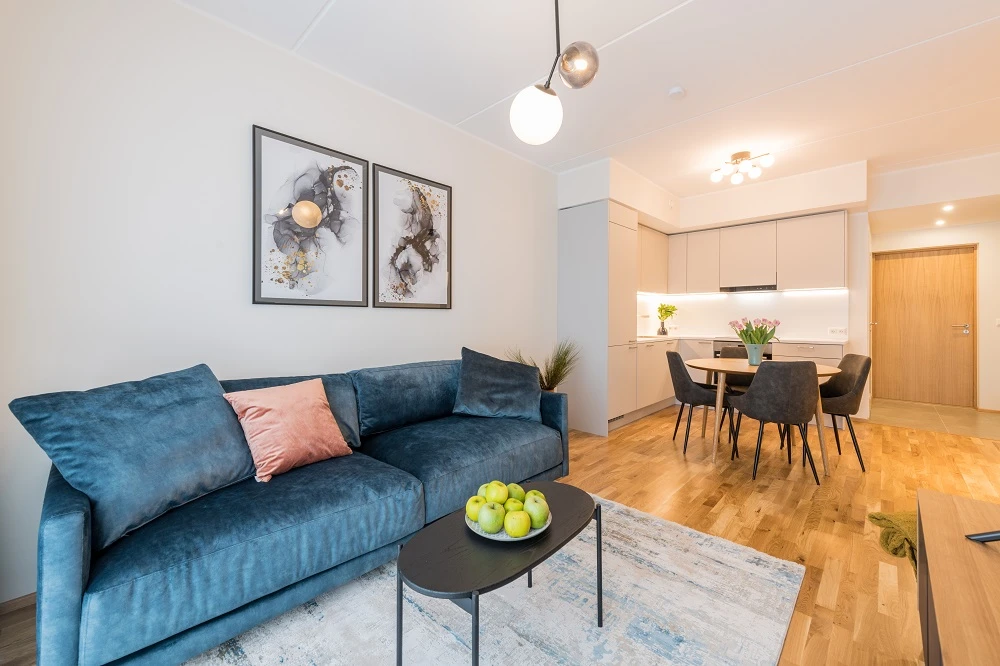
Have you ever wondered while hammering a nail into a wall what might be on the other side, or worried that drilling might accidentally hit an important communication line? But why does a wall sometimes transmit sound? Bonava Estonia's quality manager Tanel Villmäe explains in more detail what is important to know about your home's walls.
First, it's worth remembering that all communications – electrical wires, water pipes and other utilities – always run straight horizontally or vertically from outlets or junction points. They are never placed diagonally. "So if you see where outlets, switches or taps are located, you can be quite sure that communications run straight up-down or left-right from those points, and you shouldn't hammer nails into those areas," explained Villmäe.
Bathrooms seem more complicated at first glance, where outlets and taps are located close together in the wall, but a new mirror still needs to be installed above the sink cabinet. Many new developments have suspended ceilings in bathrooms, which makes it possible to see from the ceiling edge exactly where those water pipes run. Warranty case statistics show that accidental drilling into water pipes happens more often than one might think. Therefore, Villmäe recommends definitely checking in advance that no pipe or wire runs in the desired location.
When buying a new home, it's worth observing how the spaces are architecturally divided, including how rooms are positioned in relation to neighboring apartments. For example, the sound of water flowing easily transmits, so if there's a bathroom behind your bedroom wall, it's worth checking the sound insulation in advance and, if possible, even testing whether you can hear the neighbor through the wall.
It's also worth checking when purchasing a home where the apartment's electrical outlets are located both within the apartment and in relation to the neighboring apartment. If they are positioned directly across from each other, you can be quite sure that what happens behind the wall will transmit through. Villmäe explained that this would be the same as leaving a hole in the wall between two apartments. The outlets and wires themselves don't dampen sound sufficiently.
Walls have multiple functions – interior walls are largely for architectural purposes, while exterior walls play an important role in the structure, thermal insulation and sound insulation. "It's quite common for the kitchen to be located in an interior wall rather than an exterior wall in an apartment. However, this means that plywood, for example, should be installed in the light wall beforehand. This makes cabinet installation easier," agreed Tanel Villmäe.
With exterior walls, you should look at where the lift shafts and stairwells are positioned in relation to the apartment, and if you're buying an apartment still under construction, Bonava's quality manager encourages you to ask the developer how sound insulation is solved with larger noise sources.
Search
Keywords
Most read articles
- Price per Square Meter of Apartments in Tallinn in 2025

- Apartment Market in Early 2026: Prices Rising, Transaction Activity Remains Modest

- Apartment Market in Early 2026: Prices Rise, Transaction Activity Remains Modest
- Estonian Apartment Prices and Market Expectations in 2025

- Notary Fee and State Fee – Who Pays and How Much?