Which Terrace Material Lasts Longest in Estonian Climate?
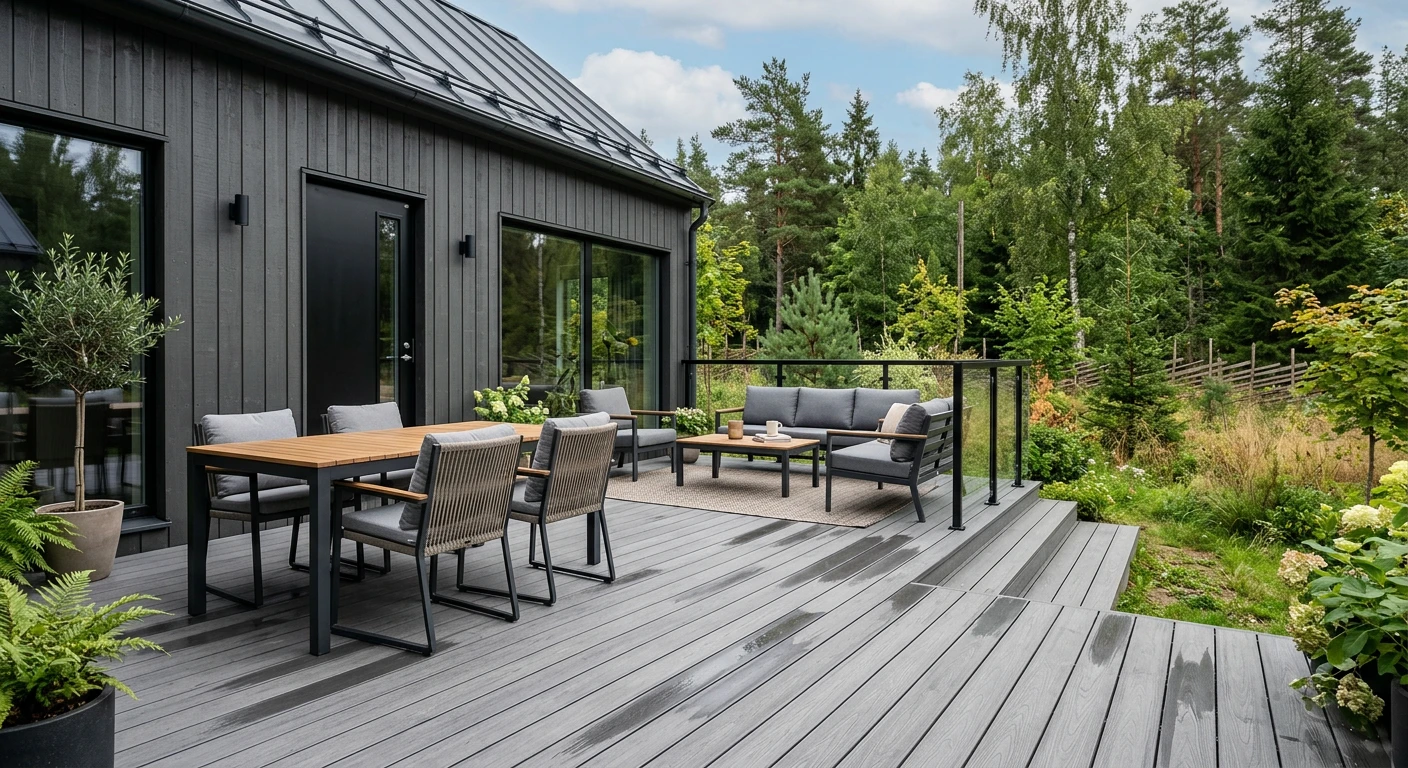
Did you know that Estonia's changeable climate puts your terrace to the test with over a hundred freeze-thaw cycles per year? The right material choice determines whether your rest area stays beautiful for decades or needs costly renovation and unexpected additional expenses after just a few years.
Estonia's climate challenges and material durability
Estonia's maritime climate is one of the world's most challenging tests for terrace materials, offering alternating periods of high moisture stress, heavy snow load, and intense summer UV radiation. Unlike Southern Europe, we experience water freezing and thawing in wood or stone pores dozens of times per year, which can deteriorate the material from within. Temperature fluctuations ranging from -20°C to +25°C require a surface that can maintain its structural integrity even in extreme conditions. Often, it is thorough autumn maintenance that determines the true lifespan of a terrace, but the initial material choice is the foundation for a worry-free summer and preserving your home's market value. Average annual precipitation of 700 mm promotes mold and rotting processes, which is why it is critical to choose a material that does not absorb excessive moisture.
Composite wood as a maintenance-free and durable choice
Composite wood, or WPC, is one of the most popular choices in 2025, often offering a lifespan of 25 to 50 years in Estonian conditions. This material has been specifically developed to withstand moisture and mold, which are the biggest enemies of natural wood. The greatest advantage of composite lies in the fact that it does not require annual oiling or sanding, being limited to regular washing to remove surface dust and dirt. Since composite is a homogeneous and stable material, no cracks or fissures develop over time, making it a safe choice for barefoot walking. By choosing quality, UV-resistant composite with a protective surface layer, you can be confident that your terrace's color tone will remain uniform even after several snowy winters, without the sun bleaching the surface gray.
Hardwood and thermally treated wood require owner commitment
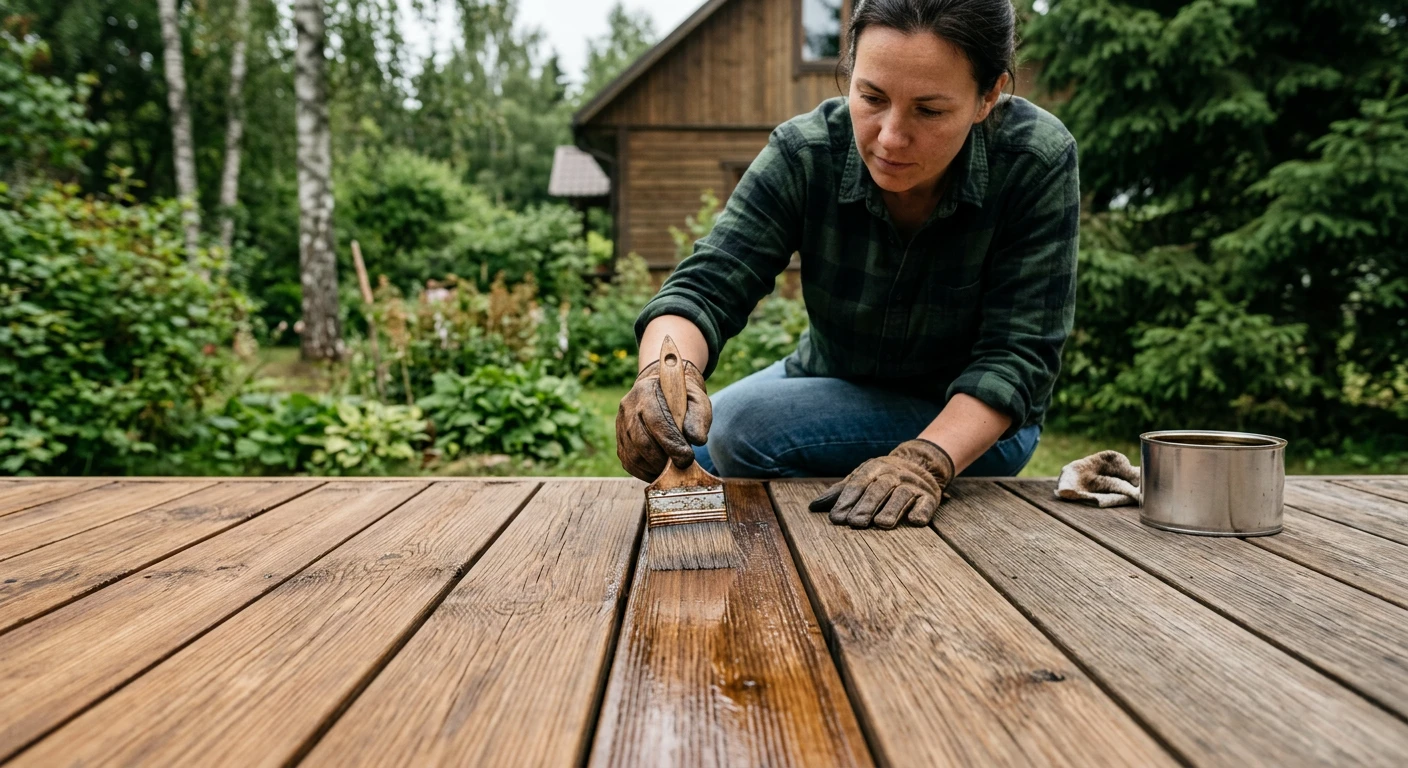
Hardwood and thermally treated wood offer a luxurious and warm appearance, but their lifespan in Estonia's climate typically falls between 15 and 25 years, depending directly on your diligence. Although tropical wood species are dense and naturally more durable, they require at least annual specialized oiling to prevent moisture from seeping between the wood fibers. If you neglect garden furniture maintenance and terrace surface treatment, frequent freeze-thaw cycles can create micro-cracks in the wood, leading to board warping and splitting. Wood material is best suited for those who value naturalness and are willing to invest time in regular protection to maintain the material's shine and prevent biological damage such as moss and fungi.
Stone paving and ceramics are masters of longevity
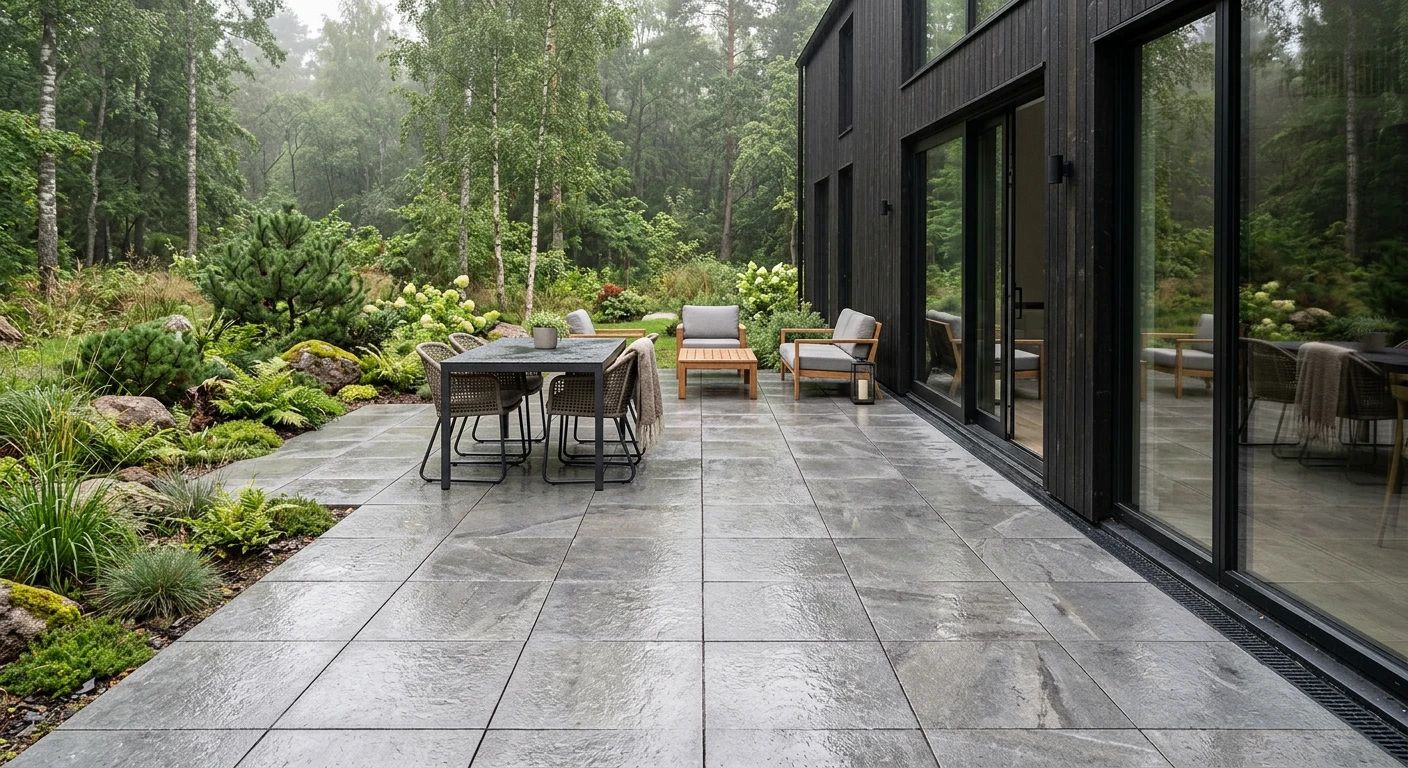
Stone paving and specially designed outdoor ceramic tiles are undoubtedly the longest-lasting solutions, often remaining unchanged for over 30 or even 50 years. Stone withstands moisture and heavy snow loads beautifully, but its durability critically depends on professional installation and drainage. Without a proper gravel base and adequate slope, water can become trapped under the tiles, causing winter frost heave and cracking of the surface. Similarly to how you must regularly maintain your facade and roof before winter, a stone terrace also requires periodic inspection to ensure joint sealing and unobstructed water drainage away from the building's structures.
Quality installation ensures your terrace's long lifespan
Regardless of which material you choose, the end result depends on the quality of the substructure and adequate ventilation. For wood and composite terraces, it is essential to ensure air circulation under the boards to prevent moisture accumulation on the frame, which can lead to rot even with the best surface treatment. If you are planning a more extensive construction project or buying older property, it is always worth analyzing how to renovate an old house so that outdoor rest areas are also long-lasting and safe. It is also important to consider whether to renovate or build a new house if the existing terrace or its substructure has suffered irreversible moisture damage. A terrace built with the right techniques is a valuable investment that increases your home's value and provides quality of life for many years to come.
In Estonia's climate, properly built stone paving with drainage lasts the longest, but composite wood offers the perfect balance between longevity and minimal maintenance hassle. If you want to find a home where terrace work has already been done to the highest standard, or are looking for a suitable plot of land to build your dream rest area, check out fresh and unique listings on the Kinnisvara24 portal.
Search
Keywords
Most read articles
- Price per Square Meter of Apartments in Tallinn in 2025
- Apartment Market in Early 2026: Prices Rising, Transaction Activity Remains Modest

- Apartment Market in Early 2026: Prices Rise, Transaction Activity Remains Modest
- Estonian Apartment Prices and Market Expectations in 2025

- Notary Fee and State Fee – Who Pays and How Much?