Why Is Energy Labeling Important?
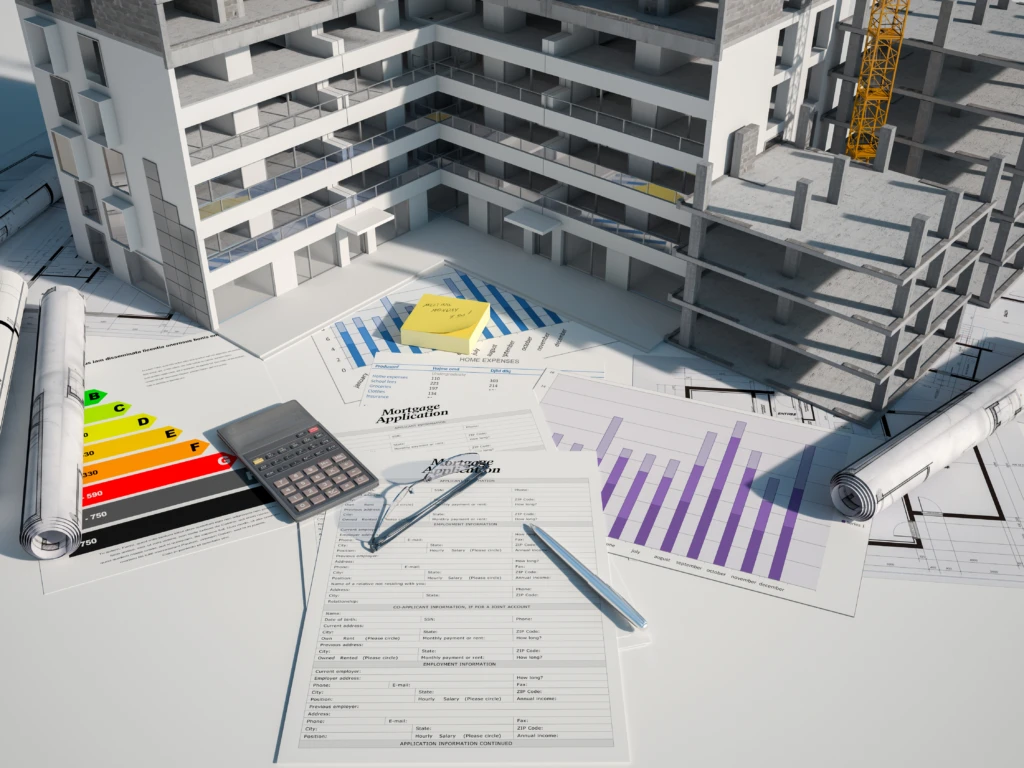
Through Building Stock Renovation to a Climate-Neutral Estonia – Why is the Energy Label Important?
The European Union has set itself the goal of achieving climate neutrality by 2050, and Estonia has its part to play in this. One-third of the energy used in Estonia is consumed by residential buildings. In the coming decades, the greatest challenge for the state, local governments, and property owners will be the renovation of the existing building stock. The aim is to make the building stock more energy-efficient, while at the same time improving the indoor climate of buildings, ensuring the preservation of existing structures, and tidying up the exterior appearance of buildings.
How to do this? The state has created a strategy document "Long-Term Building Renovation Strategy" (REKS) for this purpose. The main objective of REKS is the comprehensive renovation of the building stock built before 2000 by 2050. The strategy, which ensures energy savings, healthy indoor climate in buildings, and quality spatial environment, is estimated to improve the living and working conditions of 80% of Estonia's population. The renovation of homes and workplaces and the demolition of abandoned buildings will make the building stock safer, aesthetically more qualitative, more health-preserving, more accessible to all groups of the population, and more affordable.
What is an Energy Label?
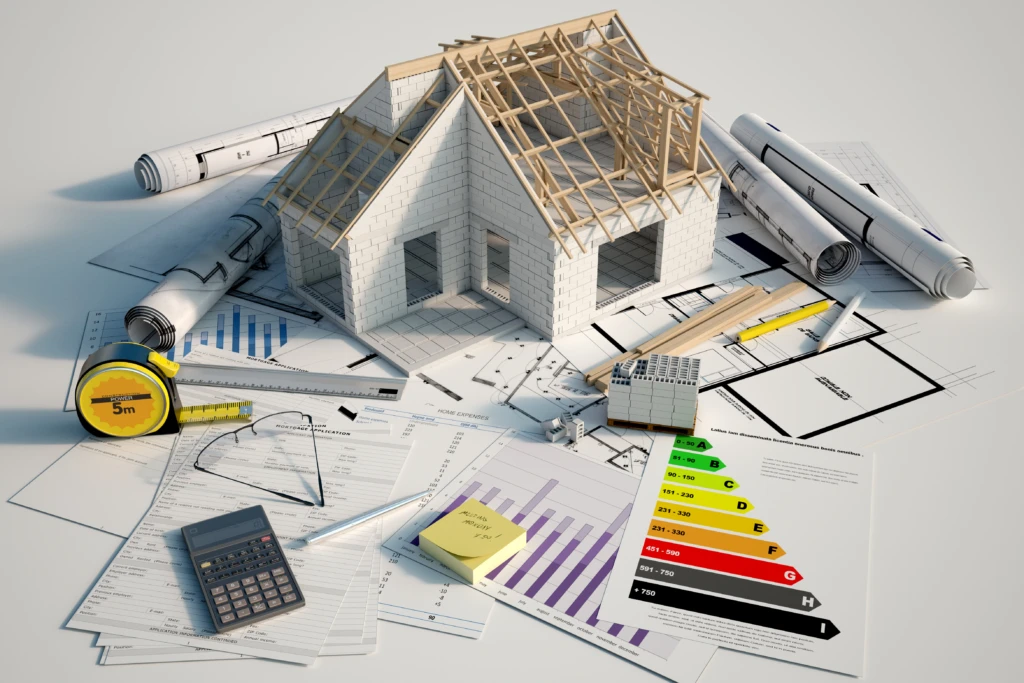
An energy label provides information about the future energy requirements of a planned building or the actual energy consumption of an existing building. Energy consumption is understood as the expenditure required for heating, cooling, hot water, ventilation, lighting, use of electrical appliances, etc. in a building.
The energy label is based on: • energy calculations and simulations (on new or significantly renovated buildings, the so-called ETA-label, with energy calculations based on the construction project). • actual energy consumption (on existing buildings, the so-called KEK-label, with energy calculations based on measured consumption).
Energy labels are issued only through the state building register. Today, this must also be signed by a competent specialist, namely an energy auditor, which means that it is not possible for third parties to enter incorrect labels into the register.
An energy label is issued for a new building following energy calculations based on the construction project. An energy label issued before applying for a building permit is a promise that the building will be built in accordance with minimum energy efficiency requirements. The finished result is evaluated based on the building's construction documentation and the building's air leakage measurement report. By its nature, it is a verification calculation that shows that the minimum energy efficiency requirements continue to be met, taking into account the actual materials and equipment installed in the building. If the result differs from the initial energy calculation, a new corrected energy label is issued before applying for the permit of use. However, the minimum energy efficiency requirements must be met based on the verification calculation as well.
The energy label for planned energy requirements is valid for two years from the completion of the building. After that, an energy label must be issued for the building, which is based on actual energy consumption.
An energy label for an existing building is issued based on calculations based on actual energy consumption data. To calculate the energy label, data on energy consumption (electricity, heating, gas, etc.) for at least one full year is required, but data from a longer period provides a more accurate energy profile. The energy label issued for the building's actual energy consumption is valid for ten years.
The Energy Label is Important When Selecting Property; Additionally, it is Mandatory in Real Estate Listings.
Purchasing real estate is one of the largest investments in a person's life. In order to make an informed choice when buying a home, a real estate listing must contain energy label data, including the energy efficiency number or weighted specific energy consumption and the corresponding class (energy classes A, B, C, D, E, F). Such an obligation comes from Section 67 of the Building Code (EhS). The buyer has the right to demand this. The same applies to renting real estate, i.e., rental listings must also contain information about the building's energy label. The first energy labels based on consumption data were issued in Estonia in 2008-2009, which means that these energy labels are already outdated, and when conducting real estate transactions, a new label must be ordered in such cases. This requirement applies to both single-family houses and apartment buildings. In the case of a real estate transaction within one apartment in an apartment building, information about the corresponding building's energy label must be displayed. The existence of an energy label can be verified through the building register.
Energy Efficiency Requirements for Construction and Renovation
In order to ensure an energy-efficient building during construction, minimum requirements have been established for new and significantly renovated buildings. Energy efficiency minimum requirements apply to the building as a whole. The limit for minimum requirements is based on cost-optimal studies, and minimum requirements are reviewed every 5 years, most recently at the beginning of 2019. From 2020 onwards, the minimum energy efficiency requirement for new buildings is an A-class building, or a nearly zero-energy building. A nearly zero-energy building is a building constructed with technically reasonable energy efficiency and renewable energy technology solutions in accordance with best building practices. Significantly renovated buildings must currently achieve C-class energy efficiency.
Article author: Riina Tamm, Chief Specialist of the Construction Department at the Consumer Protection and Technical Supervision Authority

Search
Keywords
Most read articles
- Price per Square Meter of Apartments in Tallinn in 2025

- Apartment Market in Early 2026: Prices Rising, Transaction Activity Remains Modest

- Apartment Market in Early 2026: Prices Rise, Transaction Activity Remains Modest
- Estonian Apartment Prices and Market Expectations in 2025
- Notary Fee and State Fee – Who Pays and How Much?