What to Do If a Door Won't Close Properly
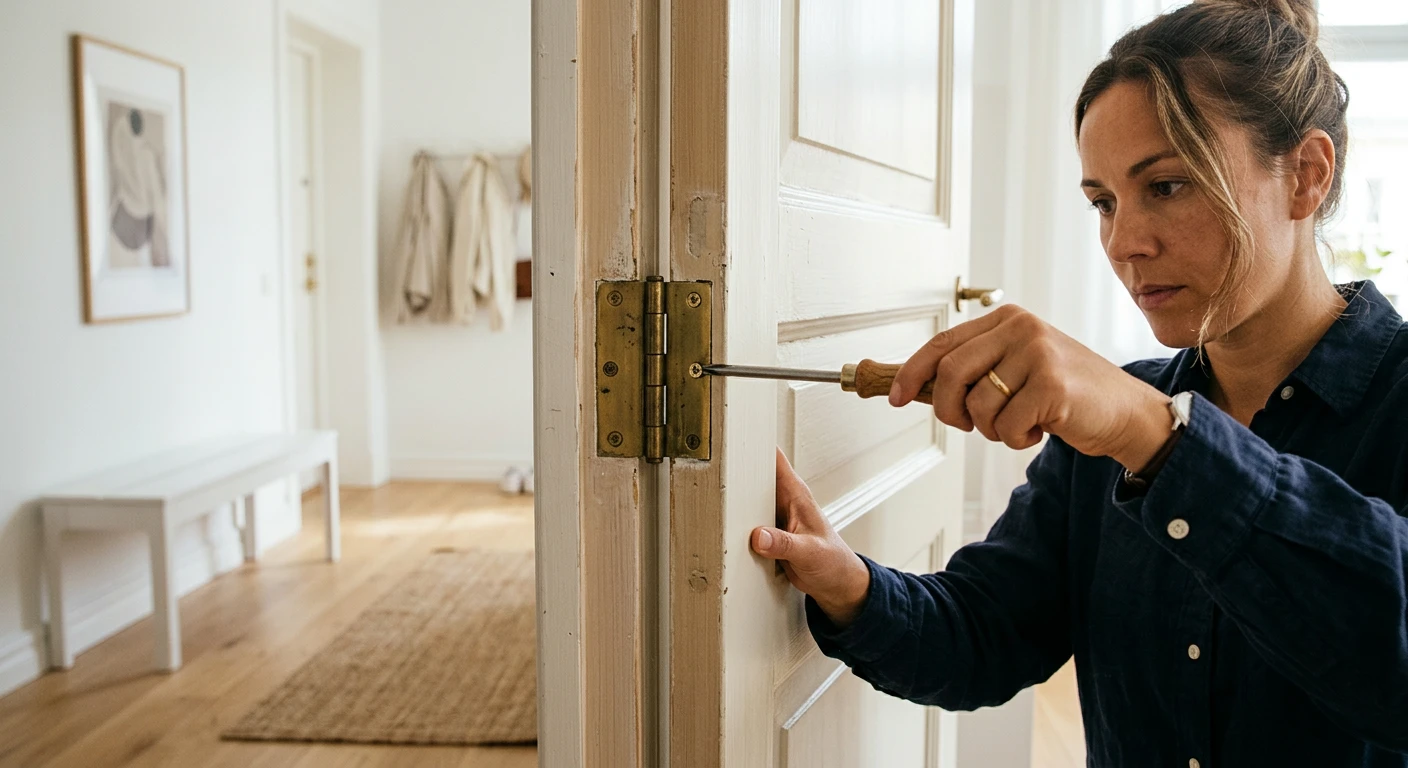
Is your home door sticking against the frame or no longer staying closed? This is a common concern that often hides simple mechanical causes that you can easily diagnose and fix yourself with household tools, saving time and repair costs.
Checking and adjusting hinges
Hinges are the most common source of door problems, being responsible for more than 90% of cases where doors no longer move smoothly. If a door sags or warps, uneven gaps form between the frame and door, preventing it from closing properly. To identify the problem, open the door fully and observe whether it shifts or sags. Often the cause is loose screws, which you can tighten with a screwdriver. If the screw holes are worn, you can fill them with wood glue and toothpicks, and after drying, drill them again. If you want to make doors and floors completely silent, take a closer look at the article explaining how to fix creaking doors and floors.
For more complex alignment issues, adjusting hinges with wooden shims can help. If the door rubs against the threshold, try raising the lower hinge by placing a thin paper or wooden shim underneath it. It is important to avoid using power drills for final tightening to avoid damaging the hinge sockets or over-tightening the screws. Manual screwing ensures better control and prevents permanent damage to the frame.
Air humidity and wood swelling
In Estonia's climate, air humidity plays a critical role in how doors work, and can cause wooden components to swell by up to 15%. This is particularly noticeable during winter and in more humid rooms, where warm indoor air meets cold outdoor air and condensation forms. Wood swollen by moisture can be identified by friction marks on the door edges or in the upper corner. In this case, the first solution is to control indoor climate, keeping indoor air humidity between 40–60%. This is an important topic for those dealing with renovating older buildings, for which you can find more advice in our guide explaining how to renovate an old house.
If the wood has permanently changed shape, you can lightly sand the obstruction with 120-grit sandpaper. After sanding, the surface should be immediately resealed with lacquer or paint to create a moisture barrier and prevent further swelling. For more serious deformations, planing the edges may be necessary, but this should be done carefully, continuously checking how the door fits in the frame.

Aligning the lock and strike plate
If the door moves freely within the frame but won't stay in the closed position, the problem is likely a misalignment of the lock latch and strike plate. Over time, the building's natural settling or hinge wear can shift the lock latch higher or lower than the strike plate opening. To check this, coat the lock latch tip with chalk and close the door to see the exact contact point on the strike plate. If the misalignment is small, you can try enlarging the strike plate opening with a file or shift the plate itself by a millimeter, filling the old screw holes with wood glue.
To prevent mechanical obstructions, it's worth maintaining the lock mechanism regularly. Use graphite powder or special silicone lubricant to keep the parts moving and reduce wear. Avoid over-lubricating with common household oils, which can accumulate dust over time and actually clog the mechanism.

When to call a professional?
Door sticking is not always just a cosmetic issue; it can indicate more serious structural changes in the building. If you notice diagonal cracks around the door frame or if the door jams very suddenly, it may indicate foundation movement. Statistics show that nearly 20% of new buildings in Tallinn experience some settling within the first five years, which affects how doors and windows work. In such cases, it makes sense to bring in an expert to assess the building's overall condition, and for this a thorough pre-purchase property inspection: what it is and what to keep in mind is helpful.
Fire-resistant doors also require special attention, as DIY modifications can void the door's safety certificate. If the door no longer closes completely or gaps larger than 5 mm have appeared, professional repair is necessary to ensure safety. Regular maintenance and quick response to initial problems ensure smooth home life and help avoid costly repairs in the future.
If you want to better understand your home's technical condition or are looking for new and quality property, familiarize yourself with fresh offerings on the Kinnisvara24 portal. Our comprehensive market statistics and wide selection will help you make informed decisions in creating or purchasing your dream home.
Search
Keywords
Most read articles
- Price per Square Meter of Apartments in Tallinn in 2025

- Apartment Market in Early 2026: Prices Rising, Transaction Activity Remains Modest

- Apartment Market in Early 2026: Prices Rise, Transaction Activity Remains Modest
- Estonian Apartment Prices and Market Expectations in 2025

- Notary Fee and State Fee – Who Pays and How Much?