What to Do If Your Basement Floods: First Steps to Limit Damage
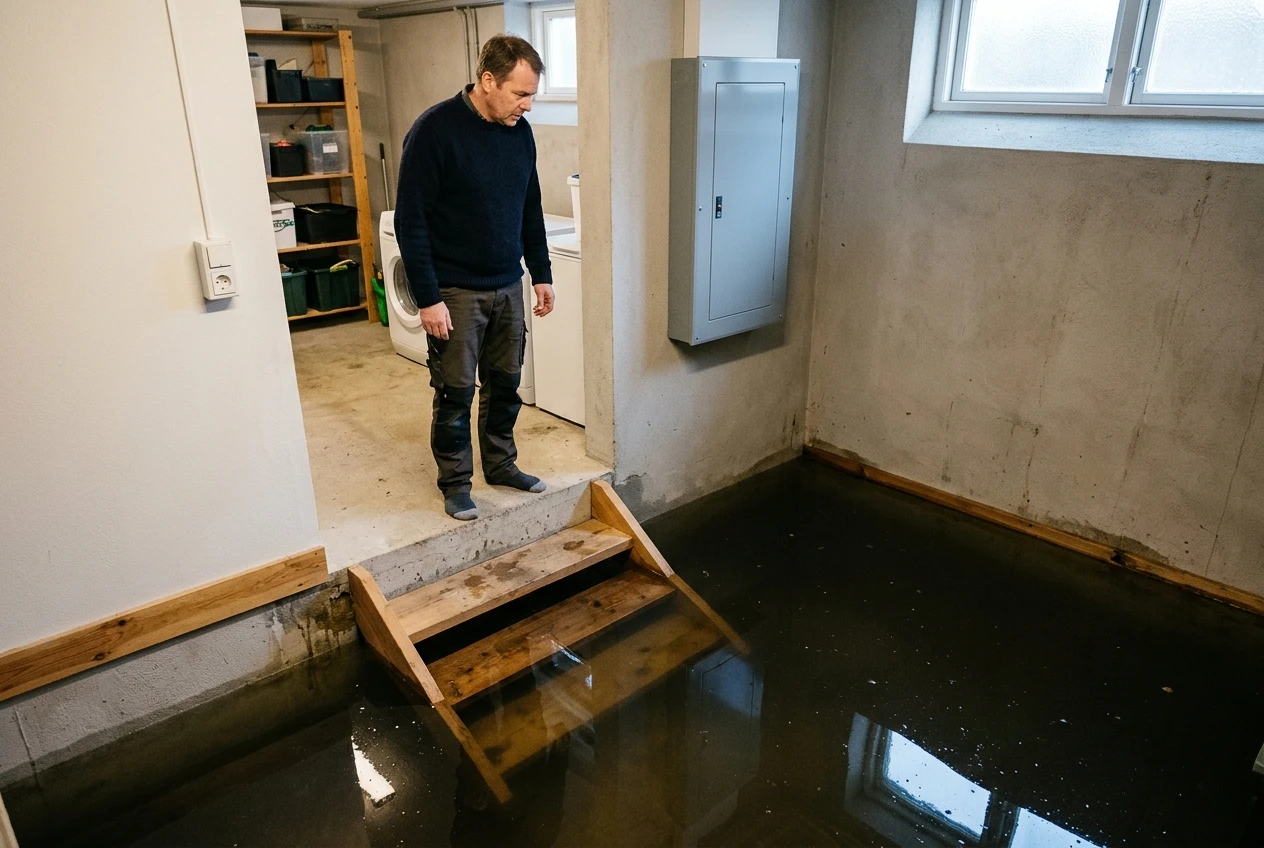
Did you encounter an unexpected flood or a strong smell of moisture when entering the basement? Quick and correct action in the first hour determines whether you'll escape with just a scare or face costly and time-consuming repairs.
Safety begins with checking electrical current
The first and most critical step is to ensure the safety of yourself and your family members, because water and electricity are a lethal combination. If water in the basement has reached electrical outlets or electrical devices, you must not enter the room under any circumstances. In such a situation, electricity should only be switched off from the main breaker if the electrical panel is in a completely dry location. If you suspect an electrical shock hazard or someone has already been injured, call emergency number 112 immediately, as the condition of a person who has suffered an electrical shock can deteriorate dangerously even up to 24 hours after the accident. All electrical devices that have come into contact with water must be inspected by a qualified specialist before being used again.
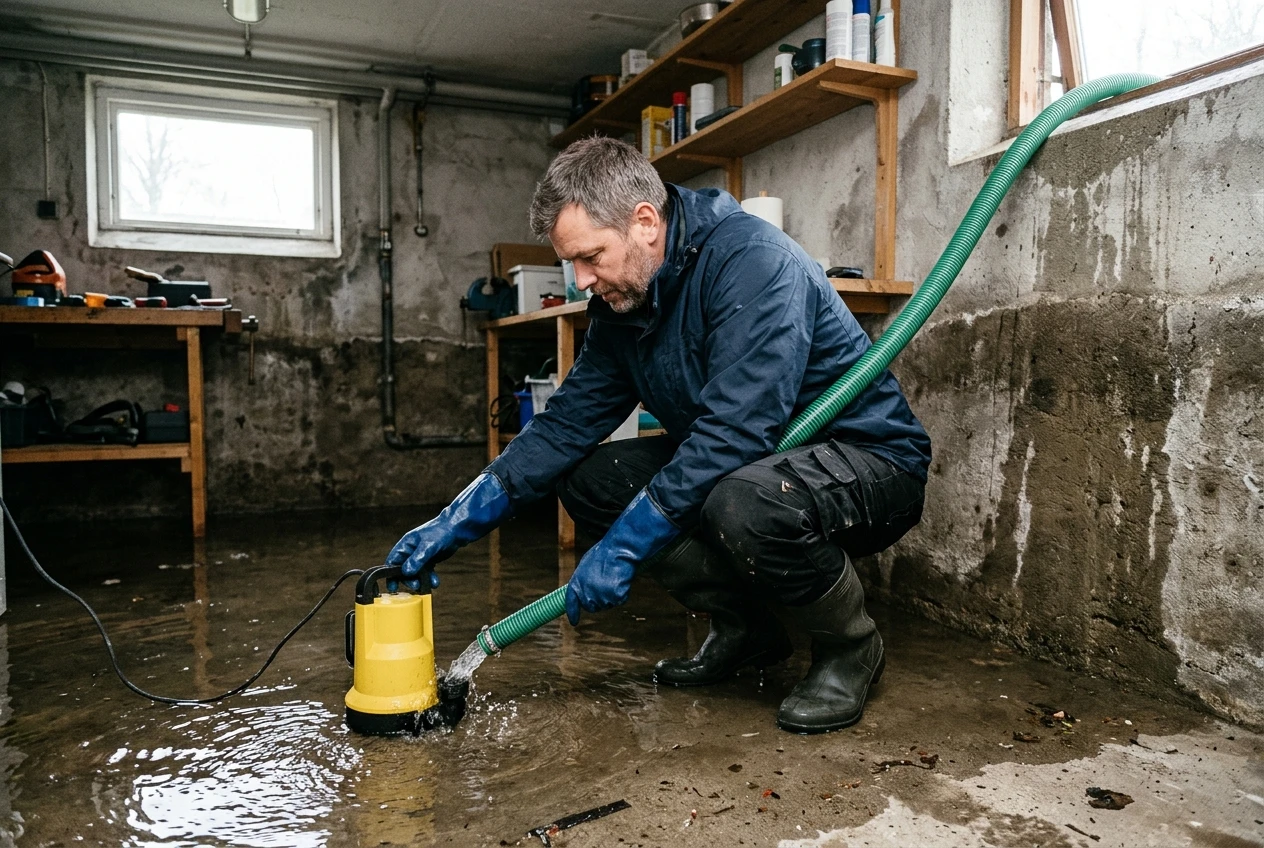
Once electrical safety is assured, you need to assess the source of the water and wear appropriate protective equipment. Floodwater can be contaminated with sewage, which enters the basement from an overloaded sewage system or due to missing backflow preventers. To protect your health, always wear rubber boots, waterproof gloves, and if possible, protective clothing. Since a damp environment promotes rapid mold growth, it is recommended to wear an N-95 respirator and safety glasses during cleaning work to avoid inhaling spores and fumes.
Water removal and protecting structures
When pumping water out of the basement, you must be patient and monitor the external water level to avoid damaging the building's structures. A common mistake is removing all the water quickly while the ground around the building is still saturated with water. If you empty the basement too early, groundwater pressure from outside can push the basement walls inward or cause the floor to buckle. The 2025 Chicago (Illinois) safety guidelines recommend gradually lowering the water level, initially removing only about 30–60 centimeters of water. Mark the new water level on the wall and wait until the next day. If the level has risen again, the ground is still too wet and you need to wait for the external water to recede before continuing the process.
Documentation and tenant rights
Before starting large-scale cleaning work, document the entire situation thoroughly with photos and videos. This is important both for insurance claim processing and to avoid possible future disputes. It is also recommended to regularly check moisture levels after initial cleaning to detect any hidden moisture damage in the building's structures early on.
As a tenant, you must immediately notify the apartment owner or manager, as the landlord is legally obligated to eliminate defects that prevent the proper use of the premises. It is advisable to provide the landlord with a complete documentation of the apartment's condition with photos already during the incident. This helps prevent future disputes and ensures that necessary repairs are done promptly and in accordance with the lease agreement.
Cleaning and mold prevention
Cleaning must be done quickly, ideally within 24–48 hours, to prevent irreversible damage and biological contamination. Remove all wet and porous materials, such as carpets, soft furniture, and drywall, that cannot be dried quickly. Use clean water and regular detergent to wash surfaces, but be extremely careful when using chemicals. Never mix chlorine-based bleach with ammonia, as their reaction produces deadly toxic gases.
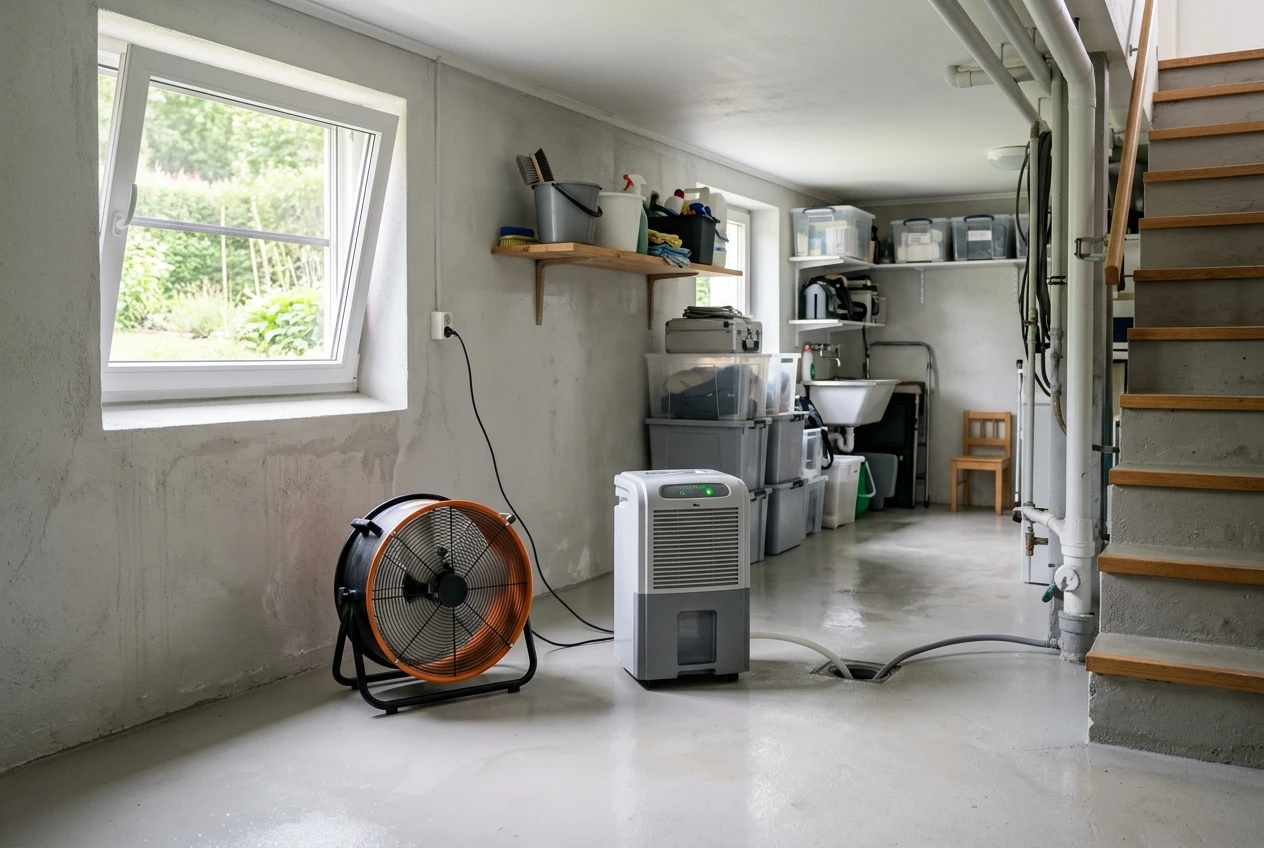
After cleaning, ensure maximum ventilation in the rooms by opening windows and doors and using air dryers. Prolonged moisture in the basement can lead to serious health effects, so it is important to monitor the drying of surfaces until the moisture content of materials has dropped below 15 percent. If you notice suspicious stains on the walls later or smell a musty odor, a more detailed guide that addresses mold removal and prevention is helpful for ensuring a healthy living environment.
The best way to avoid future crises is consistent preventive work and system checks. Regularly inspect your home's sewage system and use simple ways to prevent blockages to reduce the risk of backflow during heavy rainfall. However, if you are looking for a new and safer home or want to check the market value of your current property, you can find the most comprehensive statistics environment in Estonia on the Kinnisvara24 portal and fresh listings for properties in all conditions.
Search
Keywords
Most read articles
- Price per Square Meter of Apartments in Tallinn in 2025

- Apartment Market in Early 2026: Prices Rising, Transaction Activity Remains Modest

- Apartment Market in Early 2026: Prices Rise, Transaction Activity Remains Modest
- Estonian Apartment Prices and Market Expectations in 2025

- Notary Fee and State Fee – Who Pays and How Much?