Making Compost in Spring: How to Get Started?
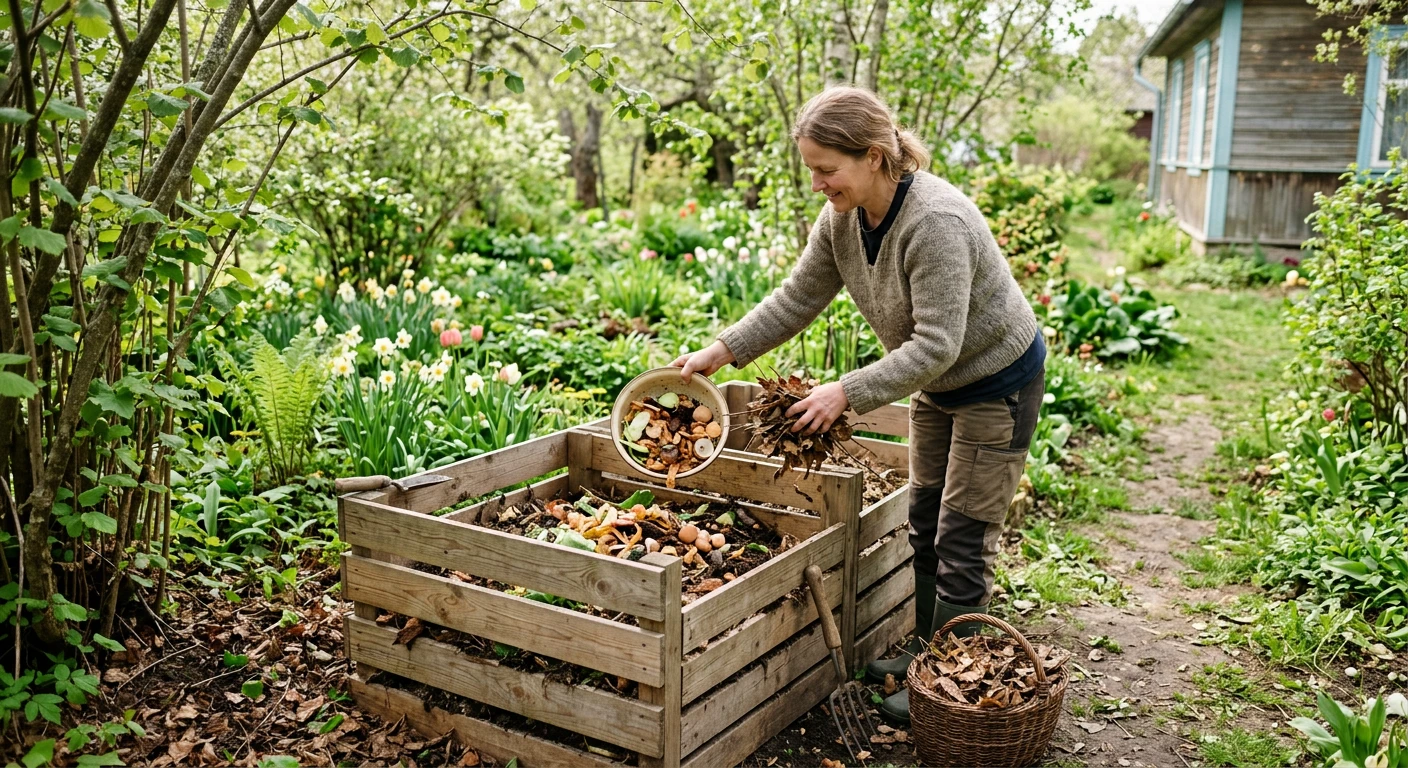
Did you know that your kitchen waste is actually free garden fertilizer just waiting for proper handling? Spring is the perfect time to start home composting to transform bio-waste into rich soil and reduce waste management costs and your environmental footprint.
Choose a strategically suitable location for your composter
The foundation of a successful composting process is choosing the right location, as it directly determines how quickly and efficiently the material will begin to decompose. Place your composter in a semi-shaded spot that is protected from scorching sun and strong wind. This is important to avoid excessive drying of the material, which would halt the work of microorganisms. Ensure that the base surface is level and has good drainage, allowing excess moisture to naturally seep into the ground.
According to Estonian housekeeping regulations, you need to ensure that the composting site is located at least 5 meters away from a neighboring property boundary, unless you have reached a different agreement with your neighbor. It is also important to maintain at least a 15-meter distance from wells and other water intake points to ensure groundwater purity. If you want to improve your garden visually at the same time, remember that healthy and well-maintained shrubs are a valuable addition to property and garden, providing the necessary windbreak and privacy for your composting area.
Layering a compost pile is similar to preparing lasagna
Building a compost pile can be compared to preparing layered lasagna, where each layer serves a specific function. Start with the bottom layer by placing thicker branches and woody stems, which ensure the necessary air circulation at the base of the pile. Then begin alternating between nitrogen-rich or green materials and carbon-rich or brown materials. Green materials include vegetable scraps, fresh grass clippings and fruit peels, while brown materials are dried leaves, sawdust, shredded cardboard and straw.
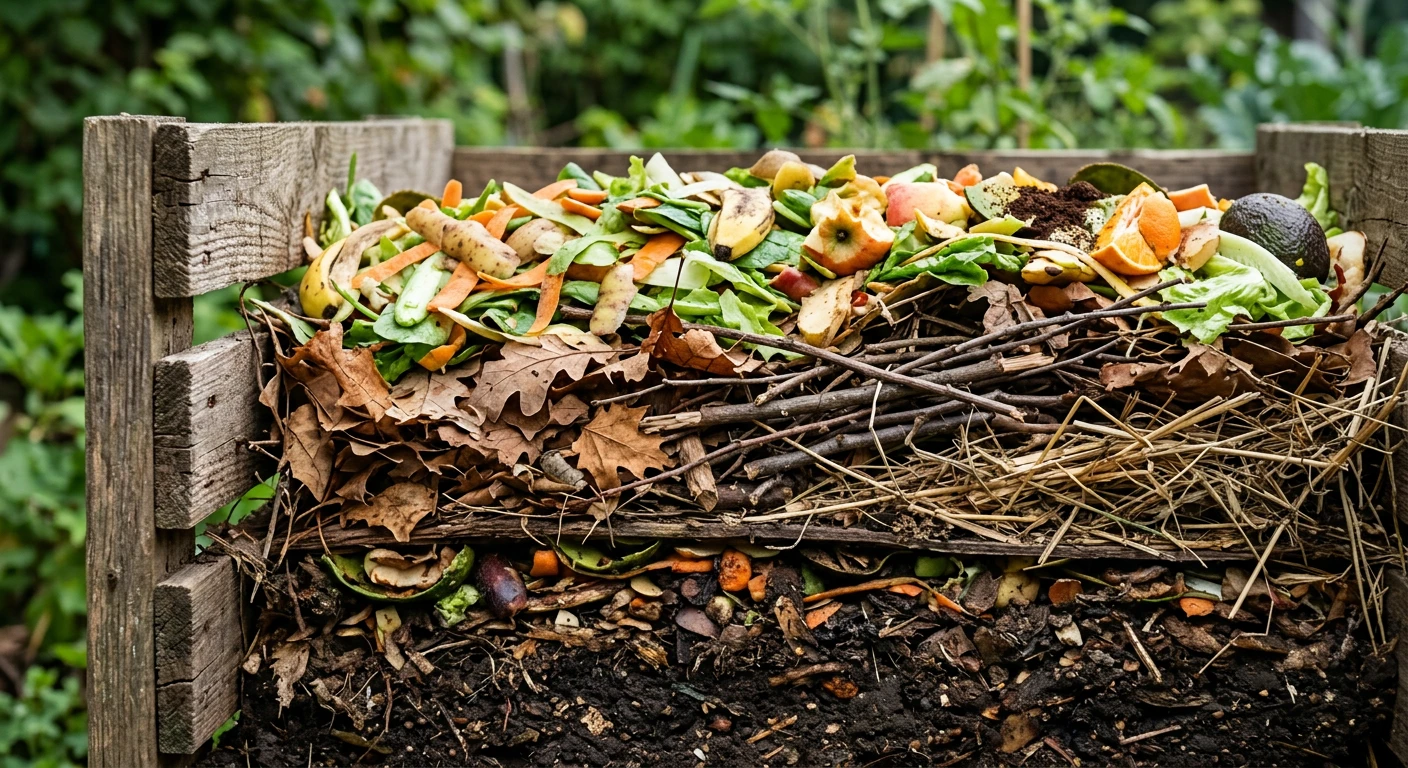
The secret to effective compost lies in the right proportion. Keep the volume of brown material approximately two to four times larger than that of green material. This balance prevents unpleasant odors from developing and ensures an optimal living environment for microorganisms. If you are planning to add new edible plants to your garden this spring, remember that proper greenhouse installation often requires exactly the kind of rich and pure soil that home composting can provide you.
How to avoid common mistakes and keep your compost healthy
Preventing common mistakes will save you time and keep your compost healthy throughout the season. One of the most common problems is unpleasant odor, which usually indicates excessive moisture or too high a nitrogen content. If you notice a bad smell, mix the pile and add dry brown material, such as peat or sawdust. The ideal moisture level of a well-maintained compost should resemble a wrung-out sponge – the material should be moist to the touch, but water should not drip from it.
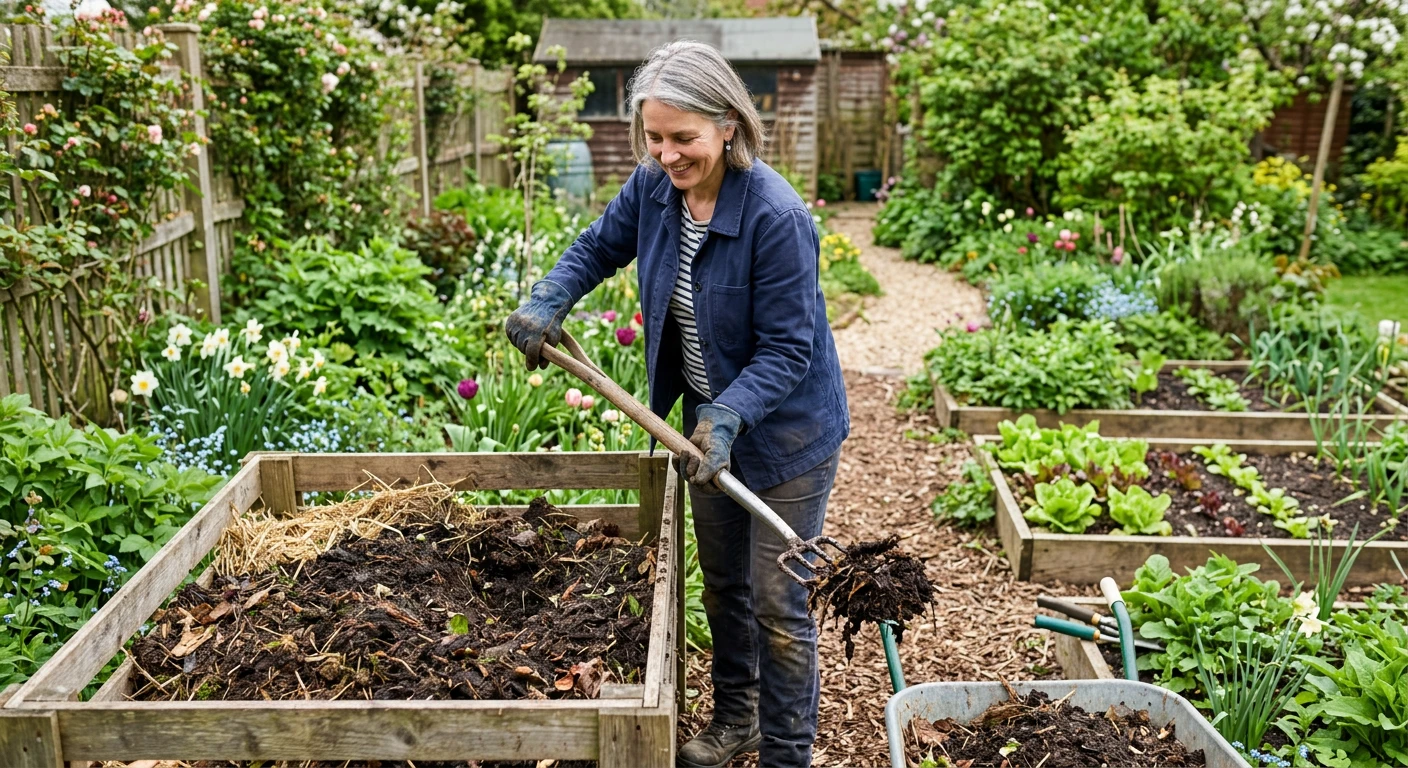
To avoid rodents and other pests, never add meat, fish, dairy products or oily food scraps to your compost. It is also important to shred materials before adding them, as smaller particles decompose several times faster than whole cabbage heads or thick branches. For faster results, aerate your compost regularly by turning the pile over once a week, which significantly accelerates the decomposition process.
Why is composting more important than ever?
Starting in 2025, Estonia must recycle at least 55% of household waste in accordance with European Union targets, and home composting plays a critical role in meeting this goal. Current statistics show that Estonia recycles less than a third of its household waste, so every household's contribution is important. Separate collection of bio-waste has become mandatory, and in many municipalities, abandoning a bio-waste container is sufficient if you have proven home composting.
By creating a functioning system in your garden, you are directly contributing to a cleaner living environment and saving on waste management. Start composting this spring so that by next season you will have rich soil created by your own hands. Find more practical advice on garden and property maintenance in the Kinnisvara24 blog, where we share relevant tips for every homeowner.
Search
Keywords
Most read articles
- Price per Square Meter of Apartments in Tallinn in 2025

- Apartment Market in Early 2026: Prices Rising, Transaction Activity Remains Modest

- Apartment Market in Early 2026: Prices Rise, Transaction Activity Remains Modest
- Estonian Apartment Prices and Market Expectations in 2025

- Notary Fee and State Fee – Who Pays and How Much?