Slip Prevention ABC: How to Keep Your Home Entrance Safe
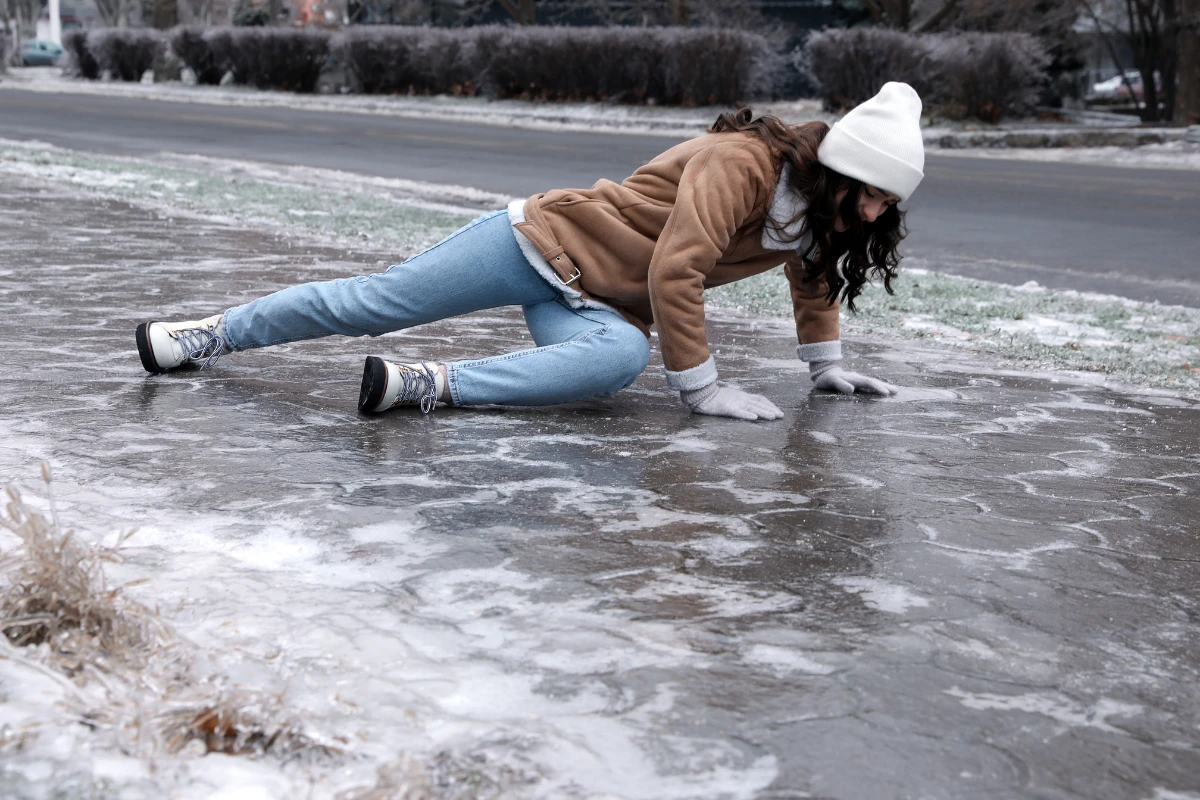
The alternation of sub-zero temperatures with thaws and freezing rain inevitably brings slipperiness and risk of falls. With sufficient foresight and the right techniques, it is possible to keep the home surroundings free of slipperiness and ice without it becoming an excessively burdensome undertaking. Tips are shared by Urve Vanker, service manager at the maintenance service company Krausberg.
The right materials for anti-slip measures
"Mistakes in anti-slip measures are often made right from the start. For example, snow is left unpushed for too long and gets trampled down, creating a base of ice that is much harder to remove later. Additionally, the wrong material is often used in the wrong place or too little anti-slip agent is applied," explains Krausberg service manager Urve Vanker.
The best option for anti-slip measures is to use granite chips (2–6 mm), which are safe for surfaces and vegetation and provide good grip even on cold days. Granite chips do not make surfaces dusty and continue to work even when thaws alternate with freezing, thanks to their fraction size. It is also an environmentally friendly solution, since they can be collected and reused the following winter.
On stairs and ramps, salt (chlorides) should be avoided, as it damages the surface of stone and concrete and is carried indoors on the soles of shoes, making it troublesome to clean later.
If ice has already formed, chlorides or special de-icing agents can be used if necessary, but they should be sprinkled moderately and purposefully. It is worth knowing that salt works best at temperatures down to –10 °C; above that temperature, you should switch to using chips.
The most sensible approach is to keep anti-slip material in a larger box within reach, along with a small shovel and a brush. It is best to store it in a dry room, as this preserves its properties best – moisture does not get in, which can cause granite chips to freeze. An ice scraper is also a good helper in anti-slip work.
Consistency is the most important factor in snow clearance
Fresh snow is light and easily removed, but if you leave snow clearing until the next day, the snow is already trampled down or frozen through. Removing such a layer of snow can take hours of hard work. Therefore, it is worth starting cleaning during the snowfall itself, rather than waiting until all the snow has fallen. Short, regular cleaning rounds are more effective and healthier than one long and exhausting battle.
A snow blower is most effective on larger surfaces, such as driveways, while a shovel or an ergonomic snow pusher is suitable for smaller areas and finishing. With a plastic snow shovel, it is worth choosing a stronger material variant so it does not break in the cold or wear out during the first winter.
Surfaces that need attention
When removing snow, care must be taken that piling it up does not obstruct the visibility of pedestrians or drivers, and that meltwater can drain away later instead of freezing on the walkway. Also, drainage routes should be kept open to prevent ice from forming on the driveway and parking areas. With heated stairs and ramps, it is sensible to ensure they remain dry, so that melted snow does not turn back to ice when the heating is off.
Stairs and ramps are the most risky areas around a house, as the risk of falling is direct. Walkways and railings can be marked with posts or signs so they are more visible from under the snow.
Surface conditions should be checked at least twice a day – in the morning and in the evening. During alternating thaws and cold periods, it is recommended to do so even 2–3 times a day.
A small but impactful tip: preventive wetting of the surface with a chloride solution (provided that the use of chlorides is permitted) prevents ice from adhering and makes the work easier in the future.
Taking care of ourselves and others
Safety starts first and foremost with taking care of oneself. Snow clearance is physical work, so it is important to dress in layers, take breaks, and avoid excessive strain. The back should not be overloaded, and on slippery surfaces, ice cleats should be used to make shoes more secure. In the dark, a reflective vest is also a good idea, as it makes the person working on the street more visible to other road users.
For many elderly people, ice and snow removal is a serious challenge – not for lack of willingness, but due to health and strength. Therefore, it is worth paying attention to the situation of relatives and neighbors. Often, just a helping hand or a bucket of granite chips is enough to make someone's day safer. If an elderly person finds it difficult to shovel snow, it may be worth arranging in advance who will help them or which service provider to contact.
"For example, a condominium or private individual can enter into a contract for maintenance with a professional company that performs snow and ice removal according to a schedule or weather conditions. This way, the surface needing maintenance is continuously monitored, not just when the problem is already there," explains Urve Vanker. "This is also convenient for those who like to travel in winter, so that the obligation to maintain ice and snow removal is not left unfulfilled on the sidewalk adjacent to their property."
An investment for the good of the community
Well-executed ice and snow removal is not just a bothersome obligation, but also actually reduces the risk of accidents. If a homeowner looks beyond their own yard to also watch the sidewalk and, if necessary, offers a helping hand to a neighbor, the whole street becomes safer. Winter will not go away, but acting with awareness makes it more bearable for everyone.
Search
Keywords
Most read articles
- Price per Square Meter of Apartments in Tallinn in 2025

- Apartment Market in Early 2026: Prices Rising, Transaction Activity Remains Modest

- Apartment Market in Early 2026: Prices Rise, Transaction Activity Remains Modest
- Estonian Apartment Prices and Market Expectations in 2025

- Notary Fee and State Fee – Who Pays and How Much?