How to Deal with Street Salt Indoors?
How to protect your home or office floors from road salt, gravel chips and sand is explained by Urve Vanker, service manager at the cleaning services company Krausberg.
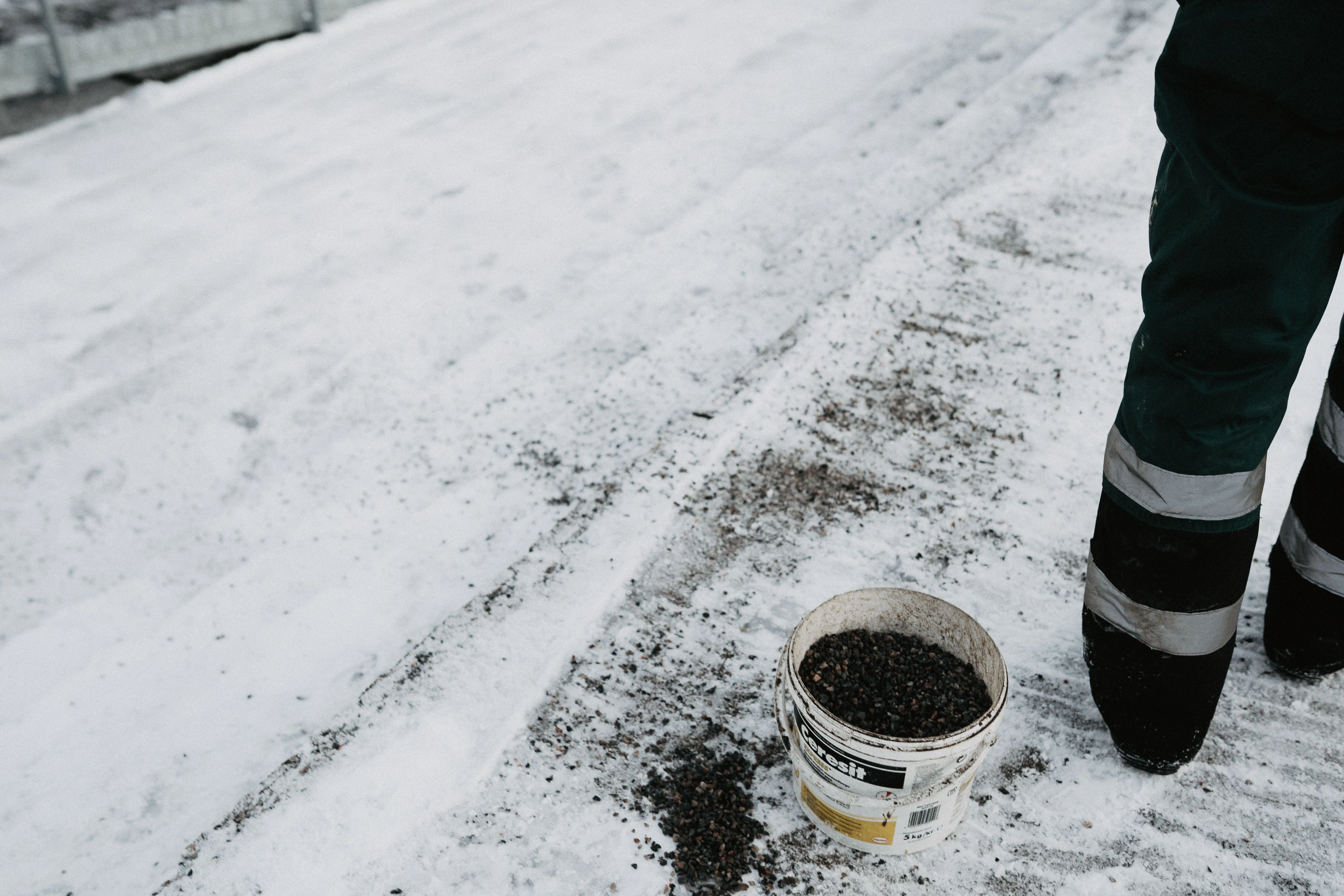
When anti-slip measures are in full swing during cold winter months, road salt, gravel chips and sand inevitably make their way into indoor spaces as well. This brings not just an aesthetic problem: the chlorides carried inside on footwear damage floor coverings, corrode floor wax and leave persistent white streaks and stains on surfaces. In winter, floor protection must begin right at the door. With the right cleaning techniques, you can prevent a large portion of damage.
Outdoors, salt (sodium chloride) and gravel chips are necessary aids that help maintain traction on slippery surfaces. Indoors, that same salt becomes a problem. When the salty snow mixture brought in on footwear melts and the water evaporates, the salt crystallizes again, forming a hard whitish layer on the floor that wears away the surface like sandpaper.
Why is salt so dangerous for floors?
"The combined effect of salt and moisture is one of the biggest enemies of indoor floors," notes Urve Vanker, service manager at Krausberg. Damage typically occurs in three ways:
Chemical corrosion: on wooden floors and parquet, it can penetrate through the lacquer or oil, turning the wood grayish and brittle. On stone floors (especially marble and natural stone), salt can cause dullness and permanent stains that can no longer be removed with regular cleaning.
Wax damage: in public buildings and offices where floors are waxed, salt breaks down the wax structure. The result is a floor that looks dirty and worn, regardless of how often it is cleaned.
Abrasive wear: since sand and gravel chips are also brought indoors along with salt, this mixture acts like sandpaper under the soles of shoes, scratching the floor surface with every step, and salt can then cause damage within these scratches.
Protection starts at the door: the three-zone system
The cheapest way to save your floors is to prevent salt from entering the interior. A single small doormat behind the door is not enough in our climate. Urve Vanker recommends an effective three-stage matting system that can trap up to 90% of dirt.
Zone I (outdoors): in front of the external door there should be a coarse grill or bristle mat, ideally also a special shoe cleaning brush where shoes can be properly wiped clean of snow, gravel chips, sand and other dirt.
Zone II (vestibule): between the two doors or right upon entry there should be a combination mat that scrapes finer sand from shoe soles and begins to absorb moisture.
Zone III (interior): in the foyer or entrance hall there should be a soft, high-absorbency textile mat. Its purpose is to dry the soles from salt water.
"The golden rule is that a person should be able to take at least 3–4 steps on the mat. If the mat is too short, people simply step over it or it fails to serve its purpose," emphasizes Urve Vanker.
How to properly remove dirt?
A typical mistake is to start with wet cleaning of floors in winter without prior dry cleaning. If salt, sand and gravel chips remain on the floor and are rubbed around with a wet cloth, this mixture acts like abrasive paste, scratching and wearing away the floor surface. Therefore, the first winter rule is: before wet cleaning, always vacuum the floor first. Only a vacuum cleaner can remove sharp grit from cracks and corners, where a broom simply pushes it around.
Use an acidic agent: professional cleaning uses special salt removers, at home you can carefully add a little vinegar or dish soap to the cleaning water (but for natural stone, use special cleaning products so as not to damage the surface!).
Don't forget the vacuum: before wet cleaning, always go over the floor with a vacuum. If you immediately start wiping the floor with salt and sand mixture, you will scratch the floor even more.
Change the water frequently: when cleaning a salty floor, the cleaning water becomes saturated quickly. When cleaning with dirty water, you simply move salt from one place to another. This is certainly not a problem for homes, but mainly affects heavily used commercial spaces.
Salt also attacks carpet coverings
If salt water is absorbed into office or home carpet, it dries there into crystals. These crystals are sharp and cut the carpet fibers every time someone walks on the carpet. In addition, salt is hygroscopic, meaning it binds moisture, which is why the carpet feels constantly wet and sticky and gets dirty faster.
"A salt-filled carpet requires chemical cleaning, a regular vacuum cannot get at the salt crystals. That is why it is most important that the mats in the external door zone do their job and changing shoes becomes the norm," adds the Krausberg representative.
Winter does not have to mean damaged floors if you approach indoor cleanliness consciously, stopping salt, gravel chips and sand right at the door and using the right tools when cleaning.
Search
Keywords
Most read articles
- Price per Square Meter of Apartments in Tallinn in 2025

- Apartment Market in Early 2026: Prices Rising, Transaction Activity Remains Modest

- Apartment Market in Early 2026: Prices Rise, Transaction Activity Remains Modest
- Estonian Apartment Prices and Market Expectations in 2025

- Notary Fee and State Fee – Who Pays and How Much?