In order for summer flowers to bloom abundantly, they need proper fertilization. In fact, there is quite a big difference between whether a plant grows in open ground or in a limited growing space in a pot. In open ground, the consequences of our mistakes are simply smaller than in a pot with poorly decomposed growing peat, which requires significantly more and more uniform water when growing plants.
Due to over-fertilization and low water content, the content of nutrient salts in the growing medium often becomes too large and the plant dies. There is no particular difference here whether you use natural or mineral fertilizer. Therefore, before fertilizing, it is always important to check that the soil is sufficiently moist. Rather, the risk of over-fertilization and one-sided fertilization is greater with natural fertilizer, whose composition we do not know and whose nutrient content varies greatly.
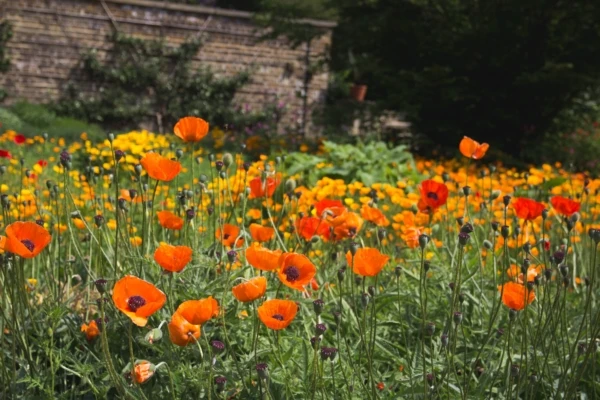
When fertilizing and watering, you must definitely take into account that plants growing in sun and shade have different needs for both water and nutrients.
Sun-loving abundant bloomers are usually greedy. Additionally, when fertilizing petunias, you should prefer slightly better fertilizers that would contain easily absorbable iron and sufficient potassium so that the plant can bloom abundantly until the first frost without getting sick (chlorosis, powdery mildew and gray mold).
With limited growing space and dense planting, plant growth slows down and flowering decreases within a few weeks.
It would be good to mix long-acting fertilizer into the soil already during planting to ensure a minimum amount of nutrients for the plants. It is very convenient to use room and garden plant fertilizer tablets when fertilizing summer flowers. Unfortunately, we no longer follow the normal planting density for summer flowers (for example, instead of planting one plant in a pot with a diameter of 25 cm, we plant three), but prefer for the planting to look beautiful immediately, not only in autumn. But you can always add fertilizer tablets to already planted flower pots or use fertilizer sticks, which provide flowering plants with normal flowering for two months without burning the plant roots.
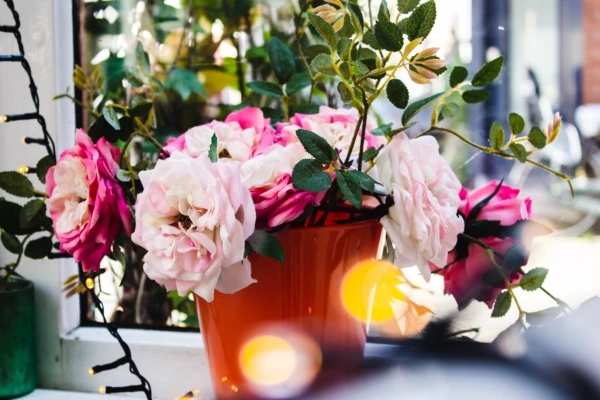
After planting, you can start feeding the plants about a week after planting, unless they are bare-root plants (without a soil ball).
These should not be alarmed with fertilizer before 3–4 weeks. During abundant flowering, summer flowers need additional fertilization with watering fertilizer. When possible, special summer flower fertilizers should be used so that the flowers can bloom and last until the first night frosts. Room flower fertilizer can also be used, but then the application rate may be twice as high. If you used long-acting fertilizer during planting, you can reduce the fertilizer rate to 1/2–1/3. When fertilizing pots by sub-irrigation, fertilizer is added to each watering water, usually 1/3 of the fertilization rate, if there are no other instructions.
Article source: Moodne Kodu