Should You Demolish a Dilapidated House Before Selling the Property?
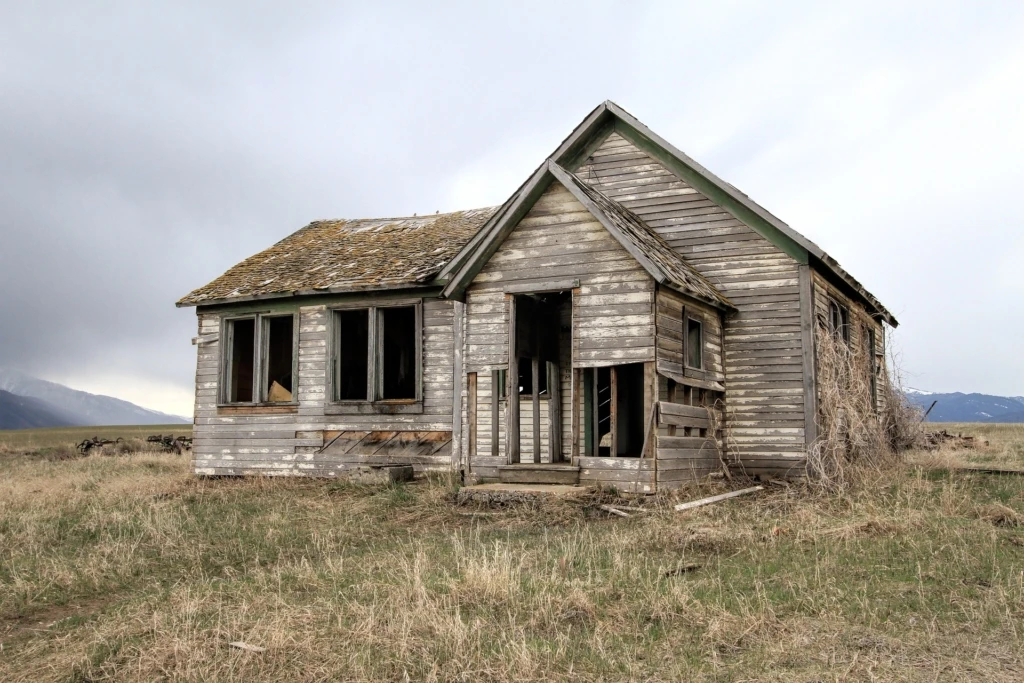
It is common, especially in rural areas, to offer for sale properties with buildings in poor condition. Often it is not possible to easily restore such deteriorating houses and it is more reasonable to undertake demolition work. In suburban areas, the sale of such properties is generally quick and demand for them is high. Mainly because old houses typically have mature vegetation around them, which is often lacking in more urban areas.
Whether to demolish the building on the property and sell an empty plot or offer the property together with the deteriorating building depends on several aspects. From the buyer's perspective, it would certainly be worth considering preserving the existing building and investing in its reconstruction. This may be more economically justified than demolition and designing and building a new building from scratch. We recommend involving a person with construction background in the process, who can carry out a building inspection and provide advice on how it would be most reasonable to proceed and what budget to allocate for different activities.
If the seller chooses to demolish the old building, they must take into account that the demolition of buildings and structures falls under construction activities and is regulated by the Building Act. To demolish a building, a similar process to building a new building must be carried out: a demolition project must be drawn up, coordinated with network operators, and finally a demolition permit must be obtained. At the start and completion of demolition work, notices must be submitted to the local government, and the entire process ends with the submission of a proper waste certificate.
Demolition without a permit is punishable by a fine. The issuance of a demolition permit requires a proper demolition project, an appropriate application submitted to the local government, and payment of the state fee. In the case of a small building (with a building area of 60 m²), a notification must be submitted to the local government – there is no state fee requirement here, but a demolition project must generally still be submitted. A proper demolition project consists of the following parts: technological sequence, identification of the need for shoring, work organization project, possible reuse of demolition waste and environmentally friendly storage.
The complete demolition process can conditionally be divided into stages:
• Preparation, during which the building is disconnected from communications and cleared of its contents. • Demolition of lighter structures – windows, doors, floor coverings, suspended ceilings, internal communications, etc. – with the aim of ensuring better waste sorting. • Demolition of the main structures of the building. • Sorting, processing and disposal of construction waste. • Cleaning up the construction site.
It is easier for the seller to sell the property together with the deteriorating building on it, as it requires no expenses. It also gives the buyer the opportunity to decide whether they want to demolish or renovate the building. However, there are buildings where it is immediately clear upon viewing that their restoration is not reasonable. In such cases, the seller might consider bearing the demolition costs themselves, which would make the property more attractive to buyers.
Much depends on the location, the characteristics of the building and its value. Building a new building usually takes less time than renovating an old one and it may also be more economically justified. When building a new structure, the new owner also has the opportunity to choose a project suited to their wishes and have an energy-efficient building constructed from modern materials.
Search
Keywords
Most read articles
- Price per Square Meter of Apartments in Tallinn in 2025

- Apartment Market in Early 2026: Prices Rising, Transaction Activity Remains Modest

- Apartment Market in Early 2026: Prices Rise, Transaction Activity Remains Modest
- Estonian Apartment Prices and Market Expectations in 2025

- Notary Fee and State Fee – Who Pays and How Much?