Is Firewood Dry Enough? Here's How to Check It at Home

Did you know that when burning wet firewood, a large portion of energy is used to evaporate water, which reduces heat output and creates dangerous soot? If your heating produces more smoke than warmth, it's worth checking the moisture level of your firewood. With a few simple tips, you can ensure safe and energy-efficient heating in your home.
Why does firewood need to dry before burning?
Using dry wood is the foundation of safe and economical heating. When you burn wet wood, a large portion of heat energy is used to evaporate the water in the wood, which means the heating stove produces noticeably less heat. At the same time, burning wet wood creates a lot of smoke and soot, which deposits in chimney flues and creates a fire hazard. The Rescue Board emphasizes in its golden rules of heating that good firewood moisture content must be 20% or less, with the ideal range being 15-20 percent.
To ensure the durability and energy efficiency of heating stoves, it's worth monitoring wood moisture regardless of whether you're heating a traditional stove or a modern fireplace. To achieve effective heat, you should also familiarize yourself with how to plan a suitable heating appliance and choose the right type of fireplace that suits a firewood-heated home.
Home methods for assessing wood dryness
If you don't have specialized equipment on hand, you can assess the readiness of firewood with simple sensory checks. One of the most popular methods is the sound test, where you strike two pieces of firewood together and listen to the sound produced. Dry pieces of wood create a clear and ringing sound, while wet wood produces more of a dull thud.
Also carefully observe the appearance and weight of the wood. Dry firewood shows clear radial cracks on the cut end surface, its bark may begin to peel off easily, and the wood color gradually becomes grayish or lighter. Additionally, a piece of dry wood of the same size feels noticeably lighter in your hand than wet wood. These signs provide a good initial indicator, but for the most accurate answer, it's worth using a measuring device.
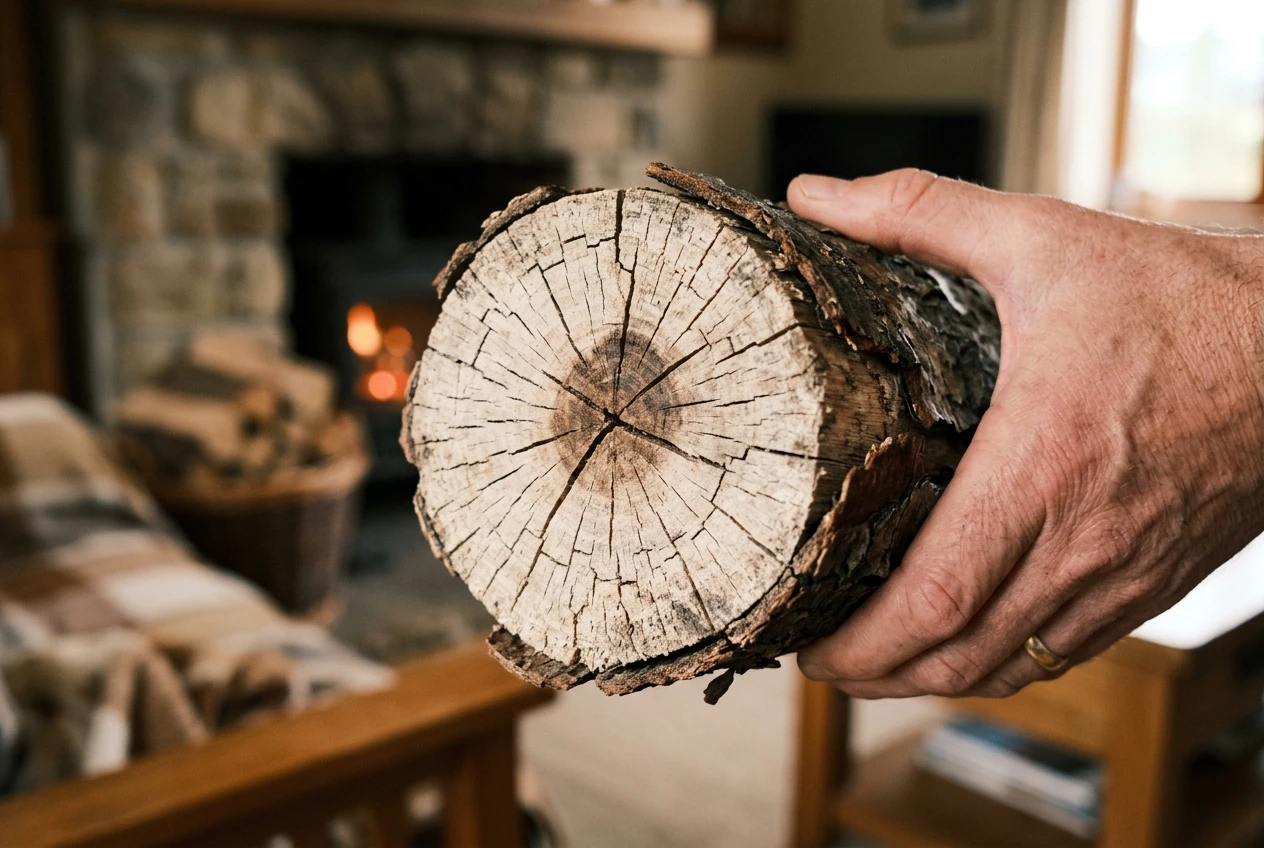
A moisture meter gives the most accurate result
The most reliable answer is provided by a specialized wood moisture meter, which measures water content directly between wood fibers. To obtain accurate measurement results, split the log immediately before testing and measure moisture from the freshly split interior, as the wood's outer surface may have dried even if the log's interior is still wet.
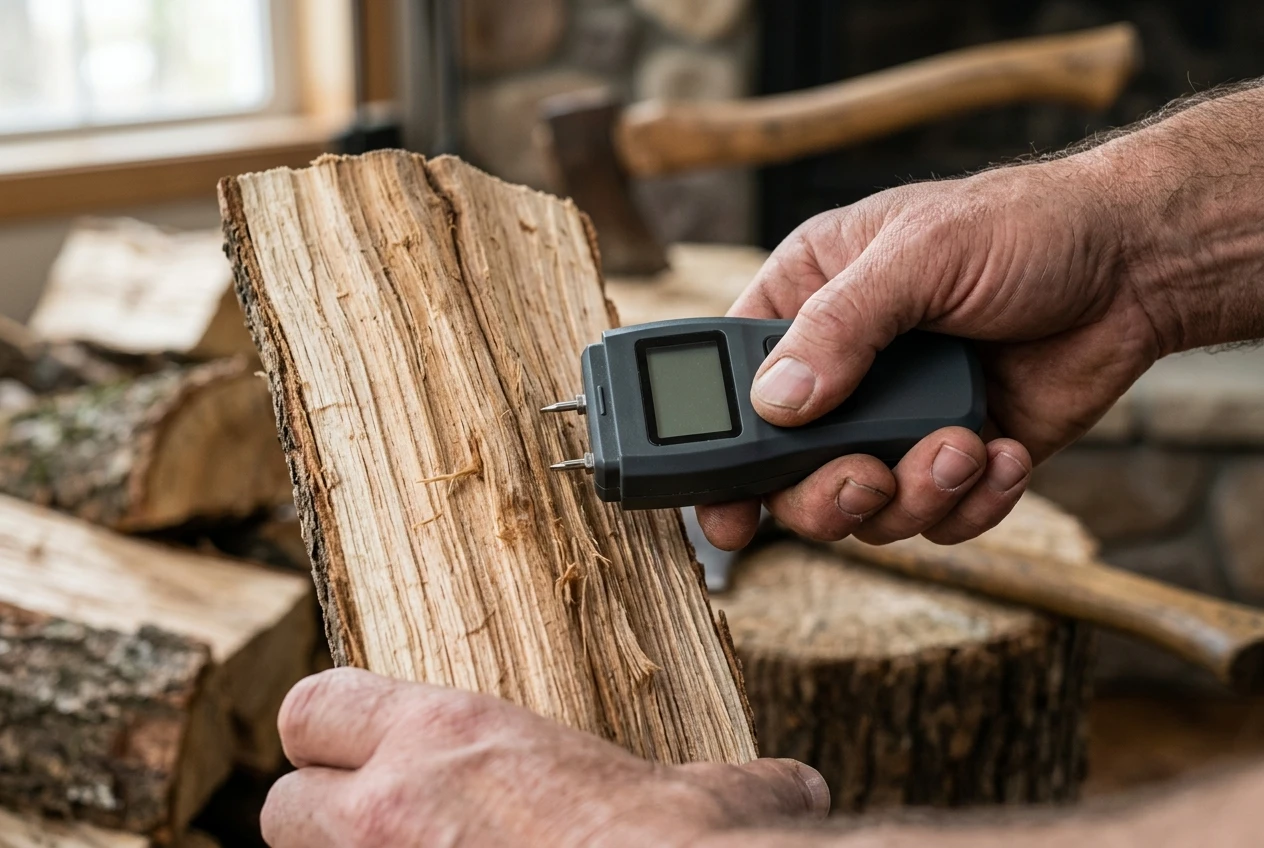
Press the meter's pins into the wood along the grain and take readings from two or three different places. If the device shows 20% or less from the freshly split surface, the wood is completely ready for burning. Such informed monitoring ensures the best heat output and helps keep your heating system in good condition.
A safe heating system provides peace of mind
Burning dry wood is just one part of thoughtful home maintenance. To ensure your entire home stays warm and safe, it's worth systematically reviewing the condition of heating appliances and performing necessary preventive maintenance. Detailed instructions for inspecting heating appliances and piping can be found in the article that explains how to prepare your plumbing and heating system for winter.
In addition to checking fuel moisture, a properly functioning safety system in your home ensures peace of mind. Since safety is important when heating, it's worth reviewing smoke detector installation and ensuring your devices are in working order. Regular heating system maintenance reduces energy costs and ensures longer lifespan of heating appliances.
A warm and economical home
Carefully selected and sufficiently dry firewood ensures clean burning, greater heat output, and helps protect your heating stove. If you monitor the moisture of your logs and maintain your heating system regularly, you create a safe and comfortable environment in your home. If you're looking for a new well-insulated home or want to conveniently sell your existing property, explore the Kinnisvara24 portal offerings and use our platform's helpful advice for making informed decisions.
Search
Keywords
Most read articles
- Price per Square Meter of Apartments in Tallinn in 2025

- Apartment Market in Early 2026: Prices Rising, Transaction Activity Remains Modest

- Apartment Market in Early 2026: Prices Rise, Transaction Activity Remains Modest
- Estonian Apartment Prices and Market Expectations in 2025

- Notary Fee and State Fee – Who Pays and How Much?