In the Commercial Real Estate Market, ESG is Not Just a Green Mindset
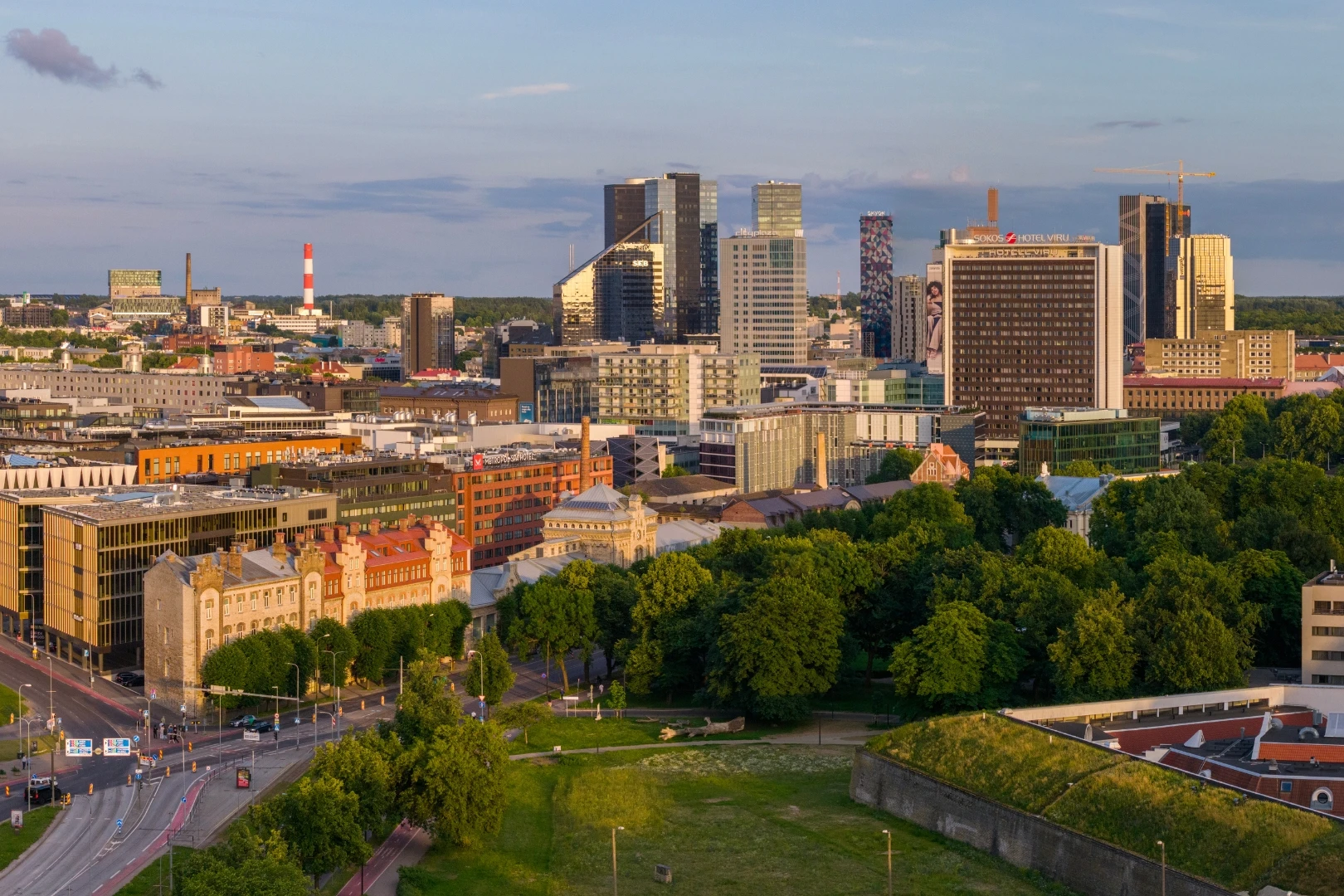
Just a few years ago, ESG in the real estate market was associated by many primarily with environmental friendliness, green certifications, and new A-energy class buildings. For commercial real estate, this not only concerns the building's environmental footprint, but increasingly also the usability of the property, cost-efficiency, financing options, and long-term competitiveness. For a property owner and investor, sustainability rather means the question of how to keep their property competitive and maintain cash flow even ten or twenty years from now. This particularly affects Tallinn's older office buildings.
The market is currently experiencing clear polarization. Companies prefer modern, high-quality, and energy-efficient office spaces, while the vacancy risk for older and lower-quality office buildings is growing. According to Domus Kinnisvara, A-class office space vacancy remains in the range of 7–12%, B-class buildings 10–15%, and C-class office buildings can reach 20–30%. This gives the property owner a fairly clear message that building aging is no longer just a technical issue, but increasingly an economic problem.
Cheaper rent may no longer be a sufficient argument
The traditional competitive advantage of an older office building owner is price. If new office space costs more, you can offer older space at a lower price, but the tenant no longer looks only at the rental price. Total cost of use has become important. If a cheaper rental building has significantly higher energy and ancillary costs, poor indoor climate, and outdated technical systems, the price difference can quickly disappear. Additionally, companies compete for employees and the work environment has become part of the employer's value proposition. For this reason, inactivity in an old building can also become a costly strategy for the owner.
At some point, a negative cycle can emerge: the building ages, some tenants leave, vacancy increases, the owner lowers the rent, and due to declining cash flow, there is increasingly less money for building renovation. A property that was completely competitive ten years ago may begin to lose value rapidly.
Renovation can be an investment, not an expense
Here ESG becomes very practical for the property owner. Improving energy efficiency, updating technical systems, better indoor climate, more flexible spatial solutions, and reconsidering the building's purpose require capital. But when done correctly, these simultaneously affect multiple key components of real estate investment.
The tenant's ancillary costs decrease, the building's competitiveness improves, and vacancy risk falls. The owner gets a better opportunity to maintain or increase rental income. Due to better quality and more predictable cash flow, the property's financing options may also improve, and as a result, the real estate value.
Therefore, the payback of an old building renovation should not be measured solely by the question of how many years the energy savings will repay the investment. You also need to consider retained or increased rental income, lower vacancy, reduced future CAPEX risk, and the property's potentially higher resale price.
Renovation has become increasingly important in Tallinn
Sustainability is receiving increasingly more attention both in the construction of new buildings and in the renovation of existing buildings. According to Domus Kinnisvara's commercial real estate brokers, such activity is increasingly visible in the market, and the Statistics Office's building permit statistics also show the same trend.
In 2023–2025, 103 office buildings received construction permits for renovation, totaling approximately 547,000 m² (new buildings 31, 260,000 m²). For comparison, in 2020–2022 the corresponding volume was 57 buildings and approximately 271,000 m² (new buildings 35, 373,000 m²). This shows that the renovation of existing buildings has become an increasingly important part of Tallinn's commercial real estate market alongside the construction of new office buildings.
The greenest building may be the one that already exists
Not every old building is worth saving. In some cases, the location is wrong, in others the construction creates too many constraints, and sometimes demolition and new construction is economically more sensible. But for an old building in a good location, it's worth doing one thorough calculation before demolition. The question is not only how much renovation costs, but also how much leaving it unrennovated costs.
The most important impact of ESG on the real estate investor may ultimately not be a greener building. It may be lower vacancy, a more satisfied tenant, stronger cash flow, and a property that has value even ten or twenty years from now.
Search
Keywords
Most read articles
- Price per Square Meter of Apartments in Tallinn in 2025

- Apartment Market in Early 2026: Prices Rising, Transaction Activity Remains Modest

- Apartment Market in Early 2026: Prices Rise, Transaction Activity Remains Modest
- Estonian Apartment Prices and Market Expectations in 2025
- Notary Fee and State Fee – Who Pays and How Much?