How to Protect Balcony and Terrace Plants from Early Frosts
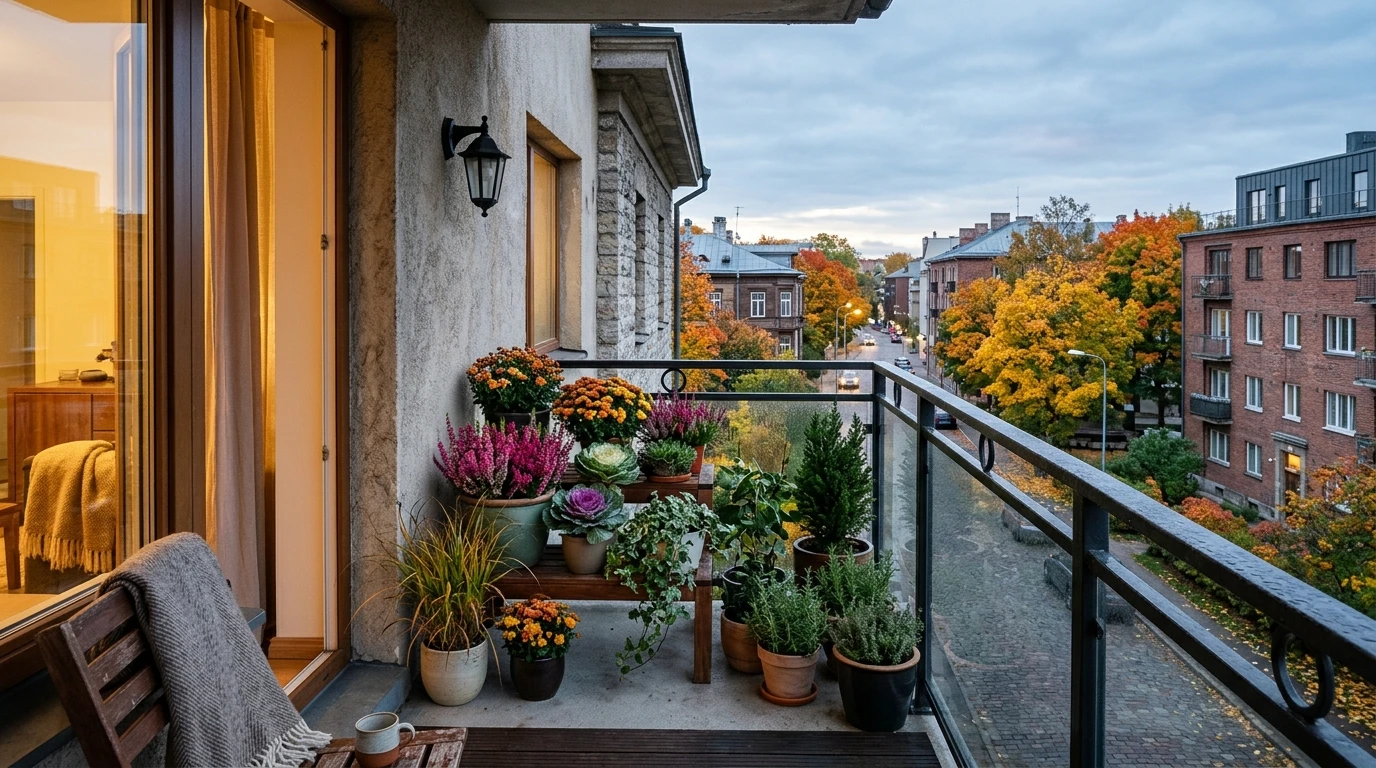
Did you know that night frost can damage balcony plants even when daytime temperatures are around 10 degrees? As the cool autumn months arrive, your potted plants need quick and thoughtful protection to maintain their vitality and provide visual pleasure for as long as possible.
Understand your local microclimate and monitor temperature
In Estonia, night frost is considered a situation where air or ground temperature drops below zero during the active growing period. National weather stations measure air temperature at two meters height, but observations by the Environmental Agency confirm that at ground level and at the immediate height of plants, temperature can be as much as 2–4 °C lower. The microclimate formed on balconies and terraces depends heavily on the floor level, the building facade's thermal insulation, and winds, so it's worth monitoring a thermometer right next to your plants during critical weeks.
Newly planted plants or those with weak root systems are particularly susceptible to frost damage, as are plants that have grown under protective shade. More sensitive species respond even before temperatures drop below zero. For example, in cucumber cultivation, plant growth can come to a complete halt when night temperatures drop below 12 degrees.
Proper covering and grouping of balcony plants
To protect container plants, start by changing their placement. Move pots and plant clusters away from open railings toward the building's thermally insulated wall or into a sheltered corner. For smart planning of balcony spaces and plant placement, you'll find good tips if you read practical small balcony ideas. For additional insulation, you can heap dry fallen leaves or mulch between and around the pots.
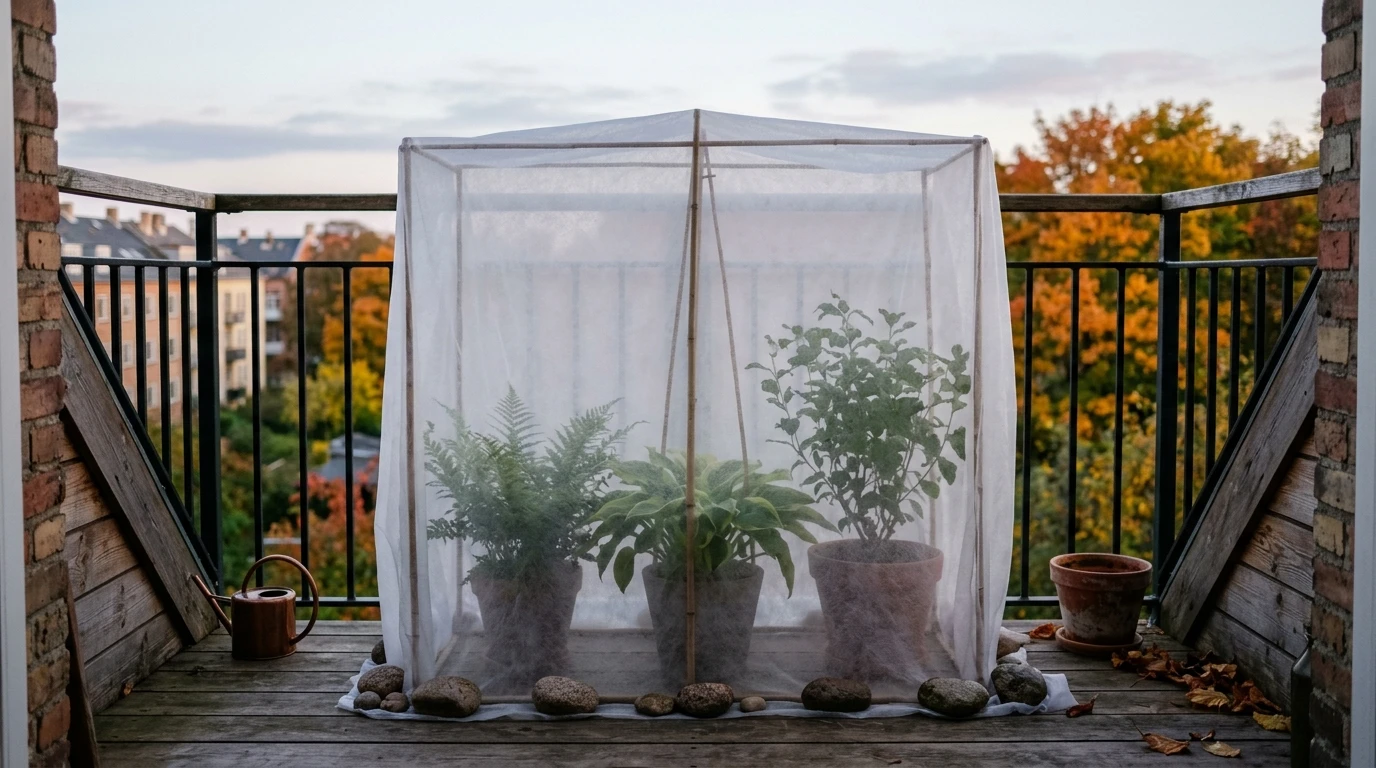
When covering, prefer covers specifically designed for this purpose, an old bedsheet, or woolen fabric, which you place over plants in late afternoon before sunset. Avoid direct contact between plastic and foliage, as plastic conducts cold easily and damages tissues. Support the cover with stakes in a tent-like manner, let the fabric reach down to the ground, and secure the edges firmly against wind. In the morning, remove the cover immediately once the air warms up to prevent leaf sweating or overheating in bright sunlight.
Watering as an effective frost protection measure
Soil moisture level directly affects plant frost tolerance, as moist soil cools and freezes more slowly than completely dry substrate. A plant suffering from dryness is much more susceptible to low temperatures, so water pots lightly before a cold night. At the same time, ensure that drainage holes at the pot bottom are clear, as water standing in overly moist soil deprives roots of oxygen.
Evening watering with lukewarm water helps maintain more uniform temperature around the root system. If frost has slightly damaged leaves by morning and the plant appears wilted, mist it with cool water early in the morning. This reduces the sudden temperature contrast caused by morning sunlight on still half-frozen plant leaves.
Moving frost-sensitive plants indoors
Heat-loving houseplants and tropical species that spent the summer months in fresh air need to be brought in at the right time. Don't wait for the first minus degrees, but bring these plants inside already when night temperatures drop steadily between 5–10 degrees. Before bringing them inside, carefully inspect both the undersides of leaves and the soil surface to prevent introducing pests like spider mites or whiteflies into your home. Clean the leaves and the outside of the pot with running water outdoors, and if necessary, gently wash the foliage with soapy water.
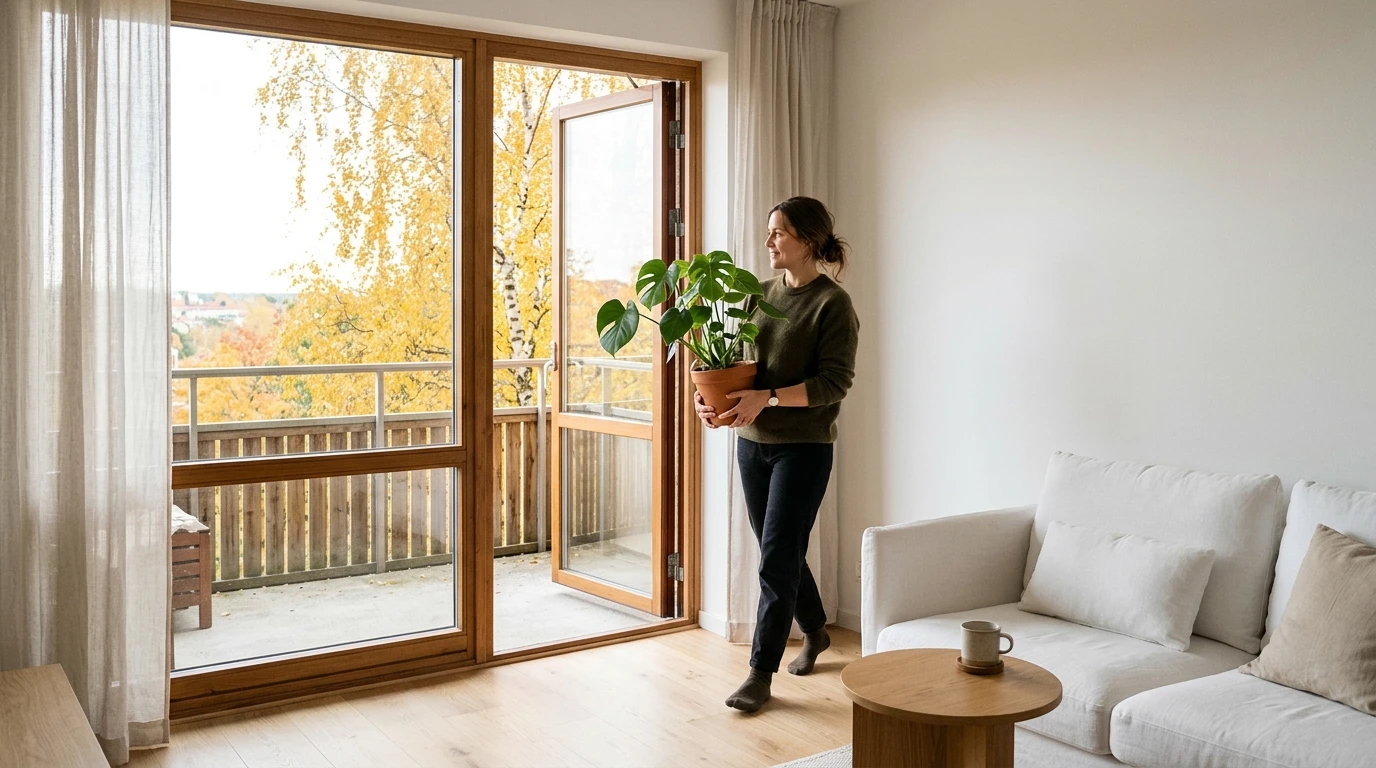
For newcomers to acclimate, keep them a couple of weeks slightly apart from other houseplants in quarantine. Gradually accustom your plants to the drier and dimmer indoor environment by initially placing them near the brightest window and avoiding hot radiators and drafts. This way, your green favorites will retain their vitality until spring.
A well-maintained terrace and a balcony full of greenery add extra value to any home and provide peace throughout every season. If you're looking for a new home with a spacious balcony or sunny terrace, explore the diverse offerings on the Kinnisvara24 portal and find a suitable home today.
Search
Keywords
Most read articles
- Price per Square Meter of Apartments in Tallinn in 2025

- Apartment Market in Early 2026: Prices Rising, Transaction Activity Remains Modest

- Apartment Market in Early 2026: Prices Rise, Transaction Activity Remains Modest
- Estonian Apartment Prices and Market Expectations in 2025

- Notary Fee and State Fee – Who Pays and How Much?