How to Install a Smoke Detector?
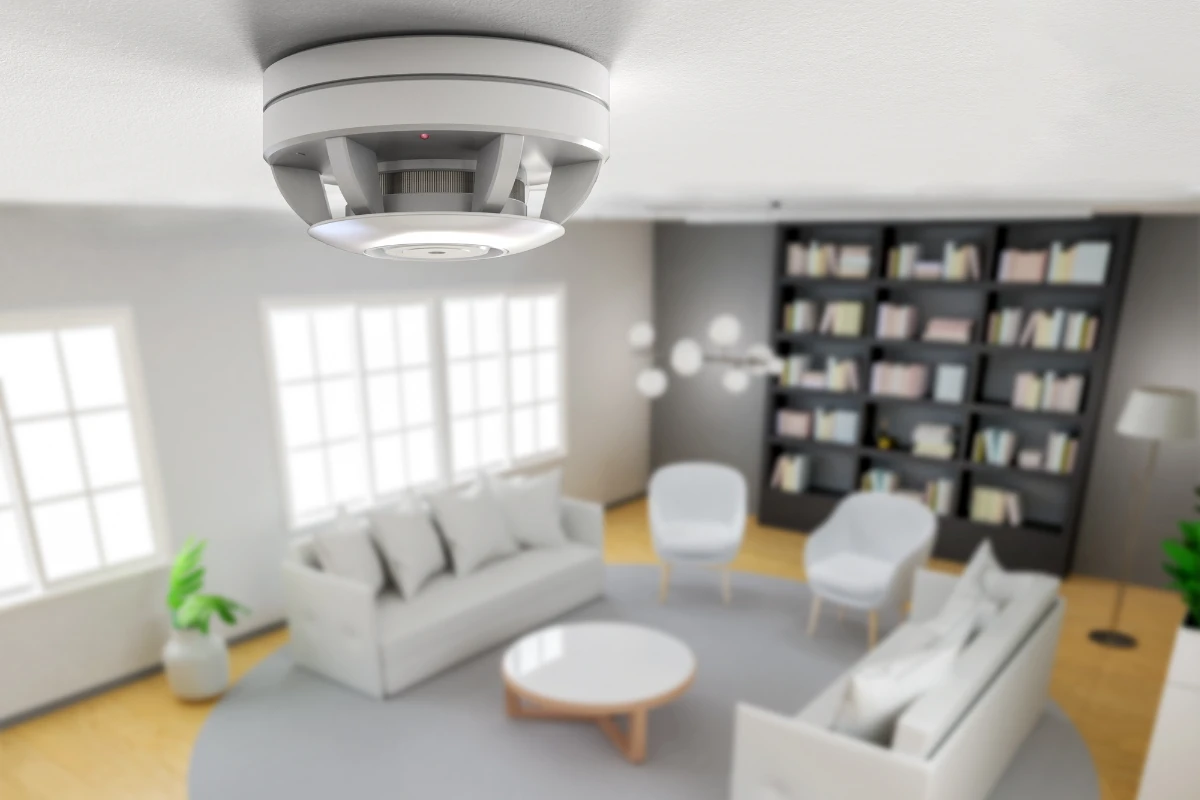
A smoke detector is one of the simplest, yet life-saving devices that every home should have. A properly installed smoke detector ensures early warning in case of fire and provides precious minutes for evacuation. Imagine you're sleeping deeply when a fire starts somewhere in your home – would you wake up in time? A smoke detector ensures that the answer would be yes.
Why is a smoke detector necessary in your home?
Before we talk about installation, it's important to understand why a smoke detector is so crucial. According to 2025 statistics, approximately 13% of Estonian families still lack a smoke detector. Even more concerning is the fact that 80% of fire victims die in homes where a detector is absent.
A smoke detector provides vital early warning, allowing you and your family to reach a safe place before the fire becomes uncontrollable. According to the Rescue Department, every living space must have at least one functioning smoke detector.
A typical fire can become life-threatening in just a few minutes, but the early warning from a smoke detector gives a family precious seconds that can mean the difference between life and death.
Which smoke detectors to choose?
Before installation, it's important to select the right type of smoke detector:
Ionization smoke detectors - respond faster to flaming fires (such as heating system leaks) and are usually more affordable. These detectors contain a small amount of radioactive material that ionizes the air in the detector chamber and creates electrical current.
Optical smoke detectors - better at detecting slow-burning fires (such as when bedding catches fire), less sensitive to false alarms, and work well in kitchens. These detectors use light sensors to detect smoke particles in the air.
Combined detectors - combine the advantages of both types, offering higher sensitivity for detecting different types of fires. Some combined detectors may also include temperature sensors for additional protection.
Interconnected detectors - a networked system where an alarm from one detector triggers all other detectors in the house. This is especially useful in larger homes or multi-story houses where one detector's alarm signal may not be audible everywhere.
In the Estonian climate, choosing an optical detector may often be more sensible, especially if your home has solid fuel heating devices that can cause slow-burning fires.
How many smoke detectors does your home need?
According to law, every living space must have at least one smoke detector. However, the Rescue Department recommends installing a smoke detector on each floor or even in every room for maximum safety.
At minimum, smoke detectors should be located:
In the room before the bedroom or in the corridor
On every floor
In living spaces where people spend a lot of time
Fire safety specialists recommend installing detectors so that the alarm signal is clearly audible throughout the home, even while sleeping and behind closed doors.
If your home uses solid fuel heating devices (stove, fireplace, cooker), in addition to a smoke detector, installation of a carbon monoxide detector is also mandatory.
Proper smoke detector installation
Installation location and height
On the ceiling - The smoke detector should be installed on the ceiling, as smoke rises upward. This is a fundamental physical principle on which the effectiveness of smoke detectors is based.
Correct height - The detector must be up to 0.2 meters away from the ceiling. A detector installed too far from the ceiling may not detect smoke quickly enough.
Central location - Install the detector in the center of the room to ensure optimal coverage. According to official recommendations, a smoke detector's monitored area has a radius of up to 6 meters, covering up to 60 m² of space.
What to avoid during installation?
Do not install the smoke detector above a kitchen stove, as this can cause false alarms. In the kitchen, use optical detectors and install them at least 3 meters away from the stove.
Avoid installation in bathrooms or other damp rooms. High air humidity can cause detector malfunctions and significantly shorten its lifespan.
Do not place the detector near ventilation openings or air conditioning units. Air flow can direct smoke away from the detector, causing the alarm to be delayed or not trigger at all.
Keep away at least 30 cm from walls. Near walls, a "dead zone" can form where air moves less and smoke may not reach the detector quickly enough.
Installation steps
Choose the right location according to the previous recommendations. Check that the chosen location meets all safety requirements and is sufficiently far from potential sources of interference.
Mark the mounting points on the ceiling. Use the mounting plate that comes with the detector as a template to mark the exact drilling points.
Drill holes and secure the base with the supplied screws or plugs. If you're installing the detector on concrete or plaster, use special plugs.
Install the battery (if not already installed at the factory). Make sure the battery is correctly connected and firmly in place.
Attach the detector to the base by turning it clockwise. Most detectors attach to the base with a gentle turn until you hear a mounting click.
Test the detector by pressing the test button - a loud sound signal should be heard. A properly working detector's signal should be loud enough to wake a sleeping person.
Smoke detector maintenance and inspection
A smoke detector requires regular maintenance to ensure its reliability:
Test monthly - Press the test button and make sure the alarm signal works. Mark this in your calendar as a recurring reminder, for example, on the first Sunday of each month.
Replace batteries once a year - Or if the detector starts making short beeping sounds (a sign of battery depletion). Good practice is to change batteries at a fixed time of year, such as when setting clocks.
Clean the detector of dust with a vacuum or soft brush. A dusty detector may not function effectively or may give false alarms. When blowing, you can also use compressed air, but carefully.
Replace the smoke detector at least every 10 years, even if it seems to be working. The detector's sensors age over time and become less sensitive, even if the test button shows the alarm is working.
Professional fire safety inspection is also recommended – especially for more complex systems or larger homes.
Special situations and frequently asked questions
How to avoid false alarms?
Install the kitchen smoke detector far enough from the stove, at least 3 meters away.
Choose a detector with an optical sensor, which is less sensitive to steam generated during food preparation. These detectors are specially designed to reduce the number of false alarms caused by cooking steam.
Use special moisture-resistant detectors in the bathroom that can withstand high humidity and temperature fluctuations.
If false alarms are still a problem, consider using smart smoke detectors that distinguish dangerous smoke from regular steam and dust.
What happens if there's a power outage?
Regular smoke detectors operate on batteries and do not depend on the electrical grid, ensuring protection even during power outages. If you use grid-connected detectors, make sure they have a backup power source, usually a backup battery that activates during an electrical outage.
Many newer smart smoke detectors use long-lasting lithium batteries that can last throughout the detector's lifespan (up to 10 years), reducing the need to replace batteries regularly.
Summary
Installing a smoke detector is a simple but vital step in ensuring home safety. Proper installation – on the ceiling, at the correct height, and in the right rooms – ensures that the detector performs its function with maximum efficiency.
Remember that a properly installed and maintained smoke detector can save the lives of you and your loved ones. If you're thinking about renting an apartment directly from the owner or are buying an apartment in a new development, always make sure that properly installed and functioning smoke detectors are in the living spaces.
If you're preparing a house for sale, functioning smoke detectors also increase the property's value and attractiveness in the eyes of potential buyers. This shows that you have cared for the home's safety and maintenance.
Invest in a smoke detector today and install it properly – it's a small step that can prove invaluable at a critical moment.
Search
Keywords
Most read articles
- Price per Square Meter of Apartments in Tallinn in 2025

- Apartment Market in Early 2026: Prices Rising, Transaction Activity Remains Modest

- Apartment Market in Early 2026: Prices Rise, Transaction Activity Remains Modest
- Estonian Apartment Prices and Market Expectations in 2025

- Notary Fee and State Fee – Who Pays and How Much?