How to Create an Announcement That Captures Attention and Builds Trust

How to create an ad that captures attention and builds trust?
Looking at the listings on real estate portals, their quality is, to put it mildly, uneven. How to create a listing (including text, photos, fields) that generates genuine interest and trust in potential clients? Annemai Tuvike, a broker at Kaanon Real Estate, writes about this.
Listing text
Informativeness
I've noticed that often people write out in detail what a property consists of: two bedrooms, hallway, living room, toilet-bathroom, kitchen. However, if good photos have been taken, then the client can already figure out from the photos (and floor plan) what the layout is like. So the question is, should you really write out again what is already visible from the photos and thus make the text longer? This is especially true for smaller properties; for larger properties, describing the layout is certainly more justified.
Rather, it is important that the text contains information that the client cannot see from the photos and what might interest them about the given property, trying to sense those so-called touchpoints. For example, what are the common charges, utility costs, what furniture/appliances remain in the apartment, how is parking solved, whether the apartment includes a storage room, etc. Also: does the property have more than one heating source? Okay, looking at the pictures you can see from the radiators that there is district heating or a nice fireplace stands out. But many apartments also have electric heating added in different ways, which is mainly in the form of underfloor heating.
It is very important to also mention in the text the existence and amount of renovation fund/loan payments, so the client is immediately aware of the additional costs that come with the property every month in addition to traditional utility costs (water, heating, maintenance fees, electricity, etc.) (if they do).
It is reasonable to introduce the surroundings of the property in the listing. If a client is looking at a house/apartment in an area that is new to them, it is good if they can find out from the listing, even in general terms, how things stand with infrastructure, how far away schools, kindergartens, shops, etc. are.
It is certainly important to highlight in the listing how quickly the new owner can take possession of the property. Sometimes it is indeed the case that the apartment is vacated on the same day, but there are also situations where taking possession of the property may only happen after two or more months. This is something the client should definitely know before coming to view the property, so that both parties don't waste their time in case of incompatibility.
For rental properties, at the end of the text: what needs to be paid when concluding the contract. Generally this includes the first month's rent, security deposit, and if using brokerage services, also the brokerage fee. It is entirely arguable and a matter of taste whether to add exact amounts there as well. From a psychological standpoint, I myself have not mentioned concrete amounts. First, with amounts there is often room for negotiation, and secondly, it works better psychologically if there are no exact amounts right in front of the interested party.
Order of topic blocks
There is no fixed, well-established and universally recognized order for writing topics. It is a matter of individual taste and style. My own practice is to first write about the apartment/house, i.e., the building in general, then comes (utility) costs, parking and storage. Next is the common charges section and surroundings. Of course, the order of topics depends a lot on the property itself. I highlight the property's more valuable details and topics that can appeal to potential interested parties more prominently and/or emphasize them in other ways.
Subheadings and structure
Whether to write subheadings in capital letters, such as UTILITY COSTS, BUILDING, FURNISHINGS, is again purely a matter of the broker/seller/landlord's taste and style. Personally, I do not use subheadings, but I create blank lines between topic blocks, which makes the text structurally better and in my opinion already sufficiently readable.
Text length
It is difficult to say one recommended listing text length, depending on, for example, whether it is a sale or rental, the size of the property, location, and many other aspects. Perhaps larger and more expensive properties do require longer, more detailed descriptions. Instead of writing vaguely and at length though, be specific.
Sales pitch in the text: yes or no?
Certainly informativeness is more important here. You sell/rent a property primarily thanks to photos rather than text, so in my opinion the listing text does not need to be a masterpiece of creative writing with forced turns of phrase. Yes, it is important to stand out, but looking at the general level of listings, you can do this successfully through specificity, correctness, thoroughness, and informativeness.
Language correctness
It certainly positively influences a potential interested party's trust in the listing if there is correct sentence structure and no glaring typos. No one can expect the listing creator to be an Estonian language philologist and errors happen to all of us from time to time, but we could all at least try to ensure there are as few as possible.
Three simple tips for editing text:
- Once you have checked the text yourself and found no more errors, run the text through an Estonian spell checker;
- Check that there are no double spaces (ctrl + f, press space twice and search);
- Have a linguistically more competent friend/acquaintance read the text before publishing it.
Listing photos
What and how many photos to take?
My usual practice is (depending on the property though) one photo from the front of the house and one from the back. For rooms, I don't take more than two photos of one room, unless it is a very large room. Toilet/bathroom: if they are not built together and are not very large, one photo is sufficient, there is no point in more. I have seen listings where there is an apartment, a 20-square-meter kitchen-dining room and 30 photos…
In what order should the photos be in the listing?
The cover image should always be an attractive photo. Usually this is either a nice kitchen or living room with open kitchen. Toilet/shower room and exterior photos of the house should preferably be placed towards the end of the listing. Also, photos of one room should be consecutive, grouping is important.
Also read the article "How to photograph real estate?"
Also read the article "How to take good real estate photos with a mobile phone?"
Floor plan and utility costs photos, sun movement
A floor plan photo should be included, especially for more complex layouts. However, if you can take photos in such a way that the layout reads nicely from the photos, then there is no obligation to add a floor plan photo. Still, I would rather recommend using a floor plan in listings – it certainly won't do any harm.
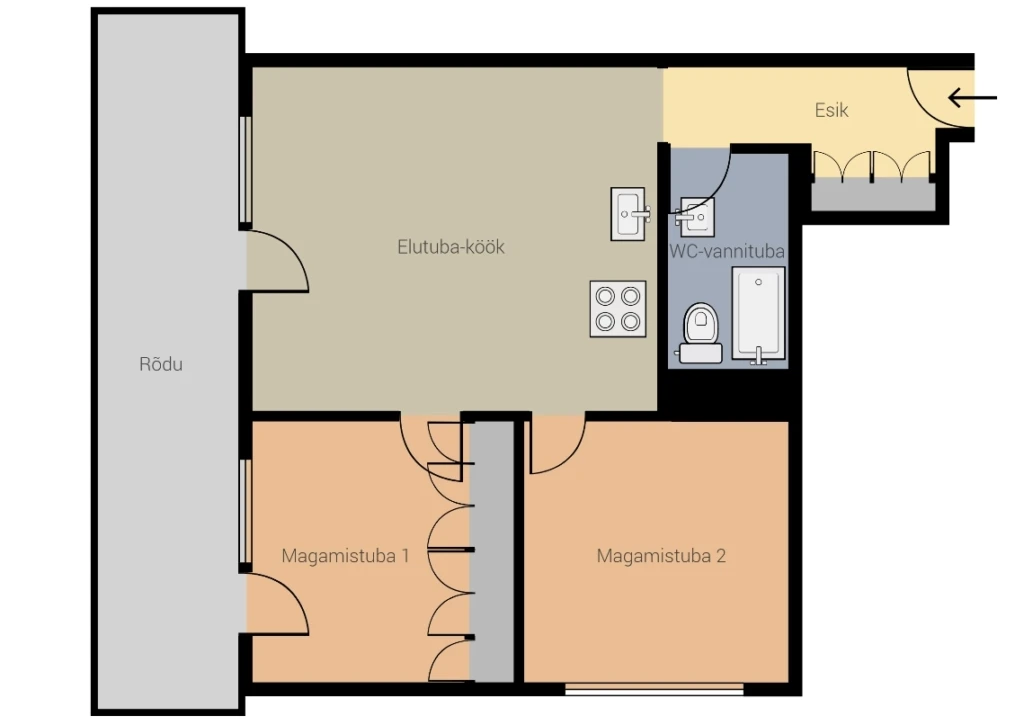
Floor plan example.
For utility costs, I generally make a table with cost items and the amounts for the last 12 months. From there, the client can quickly get a detailed and comprehensive overview of utility costs.
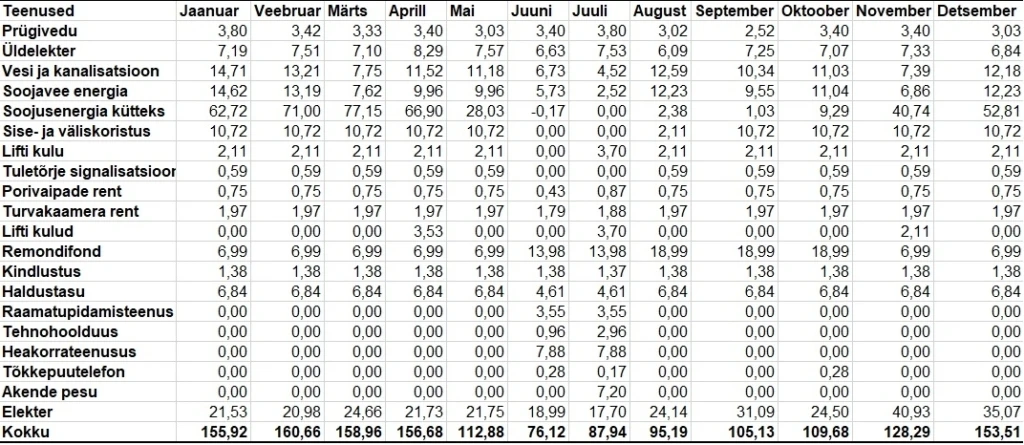
Utility costs table example.
Lately I have noticed that clients have researched more, both in sales and rentals, where the sun rises and where it sets – whether there is evening or morning sun. So I have started thinking about using a sun movement photo in listings. Yes, from that you may not get a complete overview, because it is difficult to understand from photos where, for example, the living room and bedroom windows are located. But adding a sun movement photo is definitely better than nothing. Of course, during an on-site visit you can discuss the sun movement in more detail.
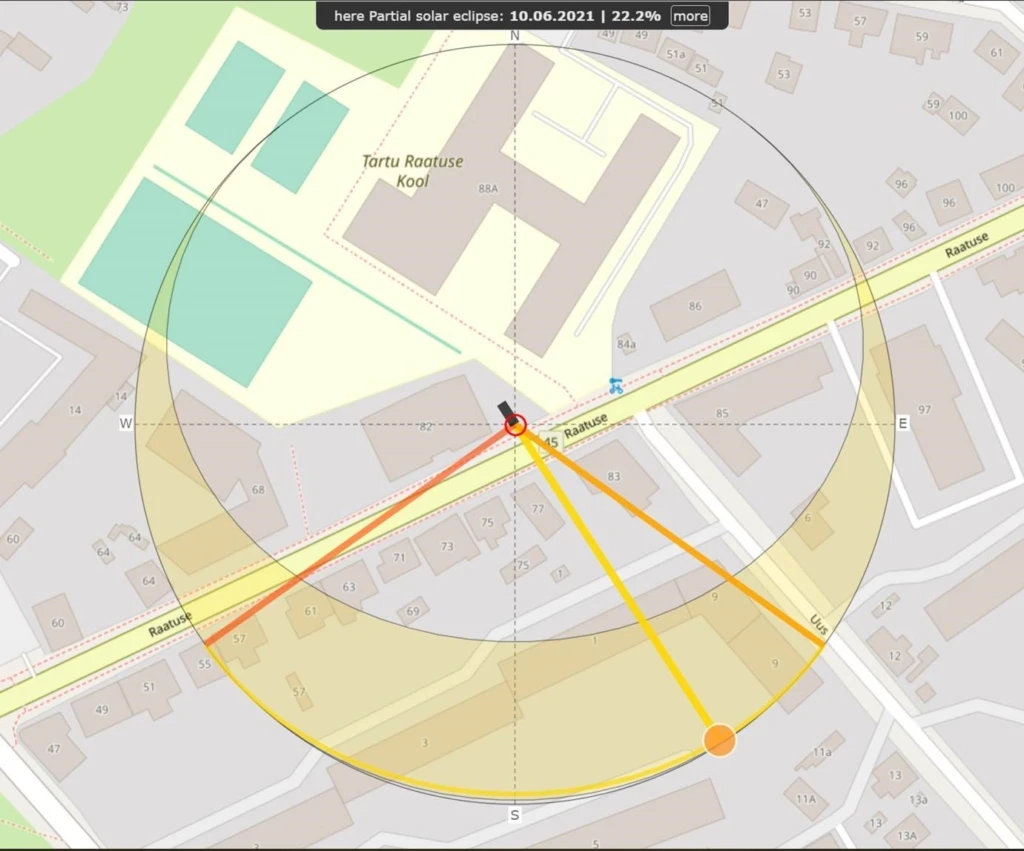
Sun movement photo example.
Virtual tour
If possible, commission a 360-degree virtual tour, for example from Kaanon (see more HERE). From a visibility and differentiation point of view, a tour certainly adds to the listing, which also means a faster path to sale/rental. With a virtual tour, an interested party can get a significantly more detailed overview of the property than with just photos.
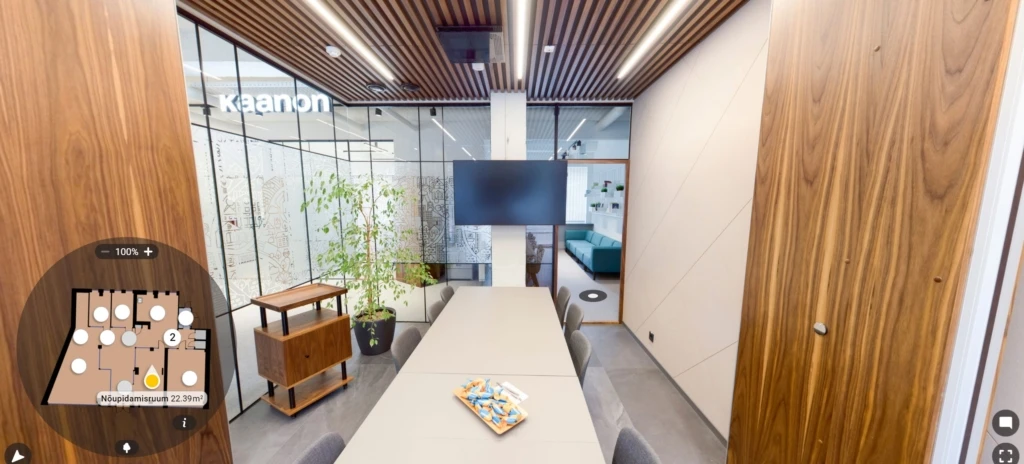
Virtual tour photo example.
Fields and additional activities
Correct price
Indicating a correct and unambiguous price seems elementary. However, I have seen listings where the price is listed as 0 or 1 €… There is confusion: is this meant to be an auction? Or a bidding? Or what?
Sales pitch
The sales pitch is a specially highlighted sentence snippet next to the listing. The sales pitch must be clear, short, and punchy, inviting clients to open the listing. The goal is to find the most important/interesting/appealing aspect from the clients' perspective.
Some suitable examples:
- Low utility costs!
- Separate rooms!
- Renovated apartment building!
- Own lawn or Large property!
- Furnishings included in the price!
- In a nature-filled location surrounded by pines
Tick and fill in as many fields as possible
It is important to fill in and tick as many blanks and fields as possible on the portals, because we really don't know what parameters a potential client will use for their search. If all (or as many as possible) fields are ticked and filled in, then there is a greater likelihood that the property will reach the client's filtered search results.
Be honest
It is very important that the information in the listing is true. For example, it makes no sense to write costs lower than reality or closed net area larger. The property area size in the listing must be the same as in the building register. In order to show a lower price per square meter, closed net area is often added to the balcony and/or storage room areas. On newer buildings, these may sometimes be counted in the apartment ownership composition. If the building register has the balcony and/or storage room area calculated under the residential space data, then write it that way, but in most cases you cannot and should not count these as part of the closed net area.
Additionally, it is not good to mark the property's condition as better than reality. If you are not sure whether the condition is really good, then write "average" instead. When the client comes to view the property, let them be pleasantly surprised instead of disappointed.
Documentation in order!
This does not directly relate to creating a listing, but if it is known that there are shortcomings or open issues in legal matters related to the property, then it is not recommended to activate the listing until these issues are completely or partially resolved. If you put the listing up, a potential buyer quickly gets in touch, but they may only find out when they arrive that the documentation is out of order, then this will very likely cause them annoyance. And this is something nobody needs, as it is known.
Source: Kaanon Real Estate
Search
Keywords
Most read articles
- Price per Square Meter of Apartments in Tallinn in 2025

- Apartment Market in Early 2026: Prices Rising, Transaction Activity Remains Modest

- Apartment Market in Early 2026: Prices Rise, Transaction Activity Remains Modest
- Estonian Apartment Prices and Market Expectations in 2025
- Notary Fee and State Fee – Who Pays and How Much?