How to Build Practical Raised Garden Beds in Your Garden
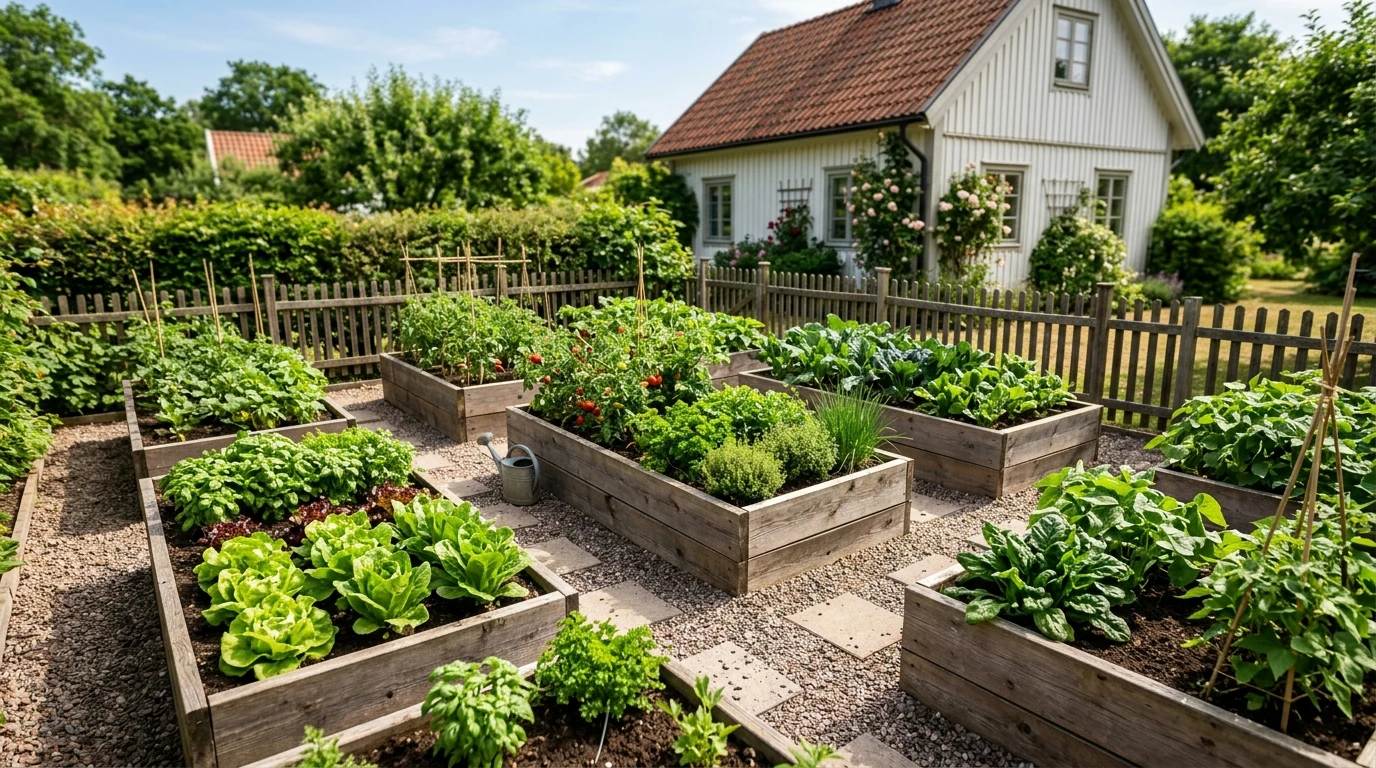
Do you dream of a luxurious vegetable garden that doesn't require constant bending or struggle with poor soil? Homemade raised beds make gardening enjoyable and allow you to create ideal growing conditions in any plot. This guide will help you plan and build durable beds that will serve you for years to come.
Choosing the Right Location and Planning
Building raised beds begins with thorough planning, with the most important factor being sufficient sunlight. Your future vegetable garden should be located in a spot that receives at least 6 to 8 hours of direct sunlight per day to ensure maximum plant productivity. When choosing the location, carefully watch out for nearby buildings or large landscaped and maintained shrubs that don't cast excessive shade on the beds. It is also important that the raised beds are located near an easily accessible water source, which makes watering much easier during hot summer months.
If your plot is slightly sloped, install the raised beds so that their shorter side is perpendicular to the slope. This stepped arrangement reduces the need for extensive excavation and helps prevent valuable soil erosion. To optimize light capture, orient the beds along the north-south or east-west axis, avoiding diagonal placement. If you're just looking for a suitable location to create your dream garden, it's worth exploring land parcels for sale in Estonia, where you can plan all the landscaping from scratch according to your own preferences.
Optimal Dimensions and Ergonomics of Raised Beds
When determining dimensions, the main criterion is your own comfort and accessibility. The general recommendation is to keep the bed width up to 1.2 meters if the bed is accessible from both sides. This allows you to reach the center of the bed without stepping on the soil, which keeps the ground loose and protects plant roots from compaction. If you're building a bed against a wall or fence where access is only from one side, the bed width shouldn't exceed 60 centimeters. As for length, the most common and practical options range from 2.4 to 3.6 meters, but you can freely adjust this according to your garden size.
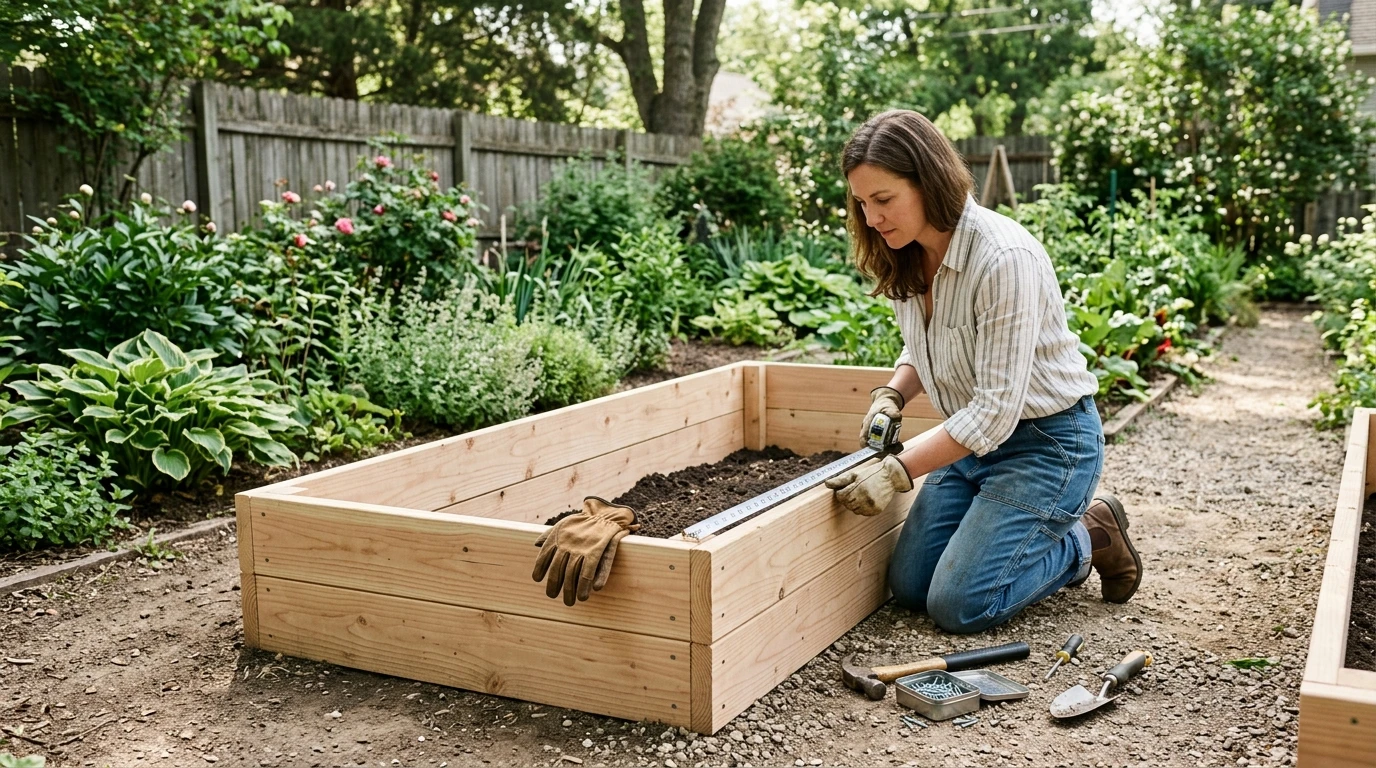
The height of the bed depends on what you plan to grow and what the natural drainage of the ground is like. For normal root development, a bed height of 15–30 centimeters is sufficient, but in areas with poor drainage or for better ergonomics, you can also build raised beds up to 60 centimeters high. Don't forget to leave enough space between the beds for movement. For comfortable work, a path width of 45–60 centimeters is sufficient, but if you plan to use a garden cart or need wheelchair access, the distance should be at least 1.2 meters.
Material Selection and Long-Term Durability
When choosing materials, wood is the most popular and accessible option thanks to its natural appearance and ease of processing. Many DIY builders worry about the safety of pressure-treated wood, but 2024 research confirms that modern deep-treated materials for residential construction are safe for gardening. For example, it has been found that wood treated with copper-containing preservatives does not significantly increase the copper content of vegetables, making it an economical and long-term choice. Alternatively, you can use naturally durable types such as larch or oak, as well as stones and concrete blocks.
Building a durable bed also requires proper stability and protection. If you're adding other structures to your garden, the principles of greenhouse installation can provide good ideas for foundation preparation and ensuring the stability of the wooden frame. Properly built raised beds are not just functional, they also increase the visual value of your property and overall order. To protect the wood from direct moisture, you can use special lining that extends the life of the bed even further.
Filling Raised Beds and Soil Quality
To fill a raised bed, it's not recommended to use just ordinary garden soil, as it can be too dense or have an unsuitable structure. The ideal mixture typically consists of compost and quality topsoil in a ratio of 1:1 or 1:2. The goal is to achieve an organic matter content by volume of 25–50%, which provides plants with necessary nutrients and good moisture conditions. If you're installing a bed on a hard and non-permeable surface, the soil depth should be at least 20 centimeters for leafy vegetables and 30–60 centimeters for tomatoes or peppers.
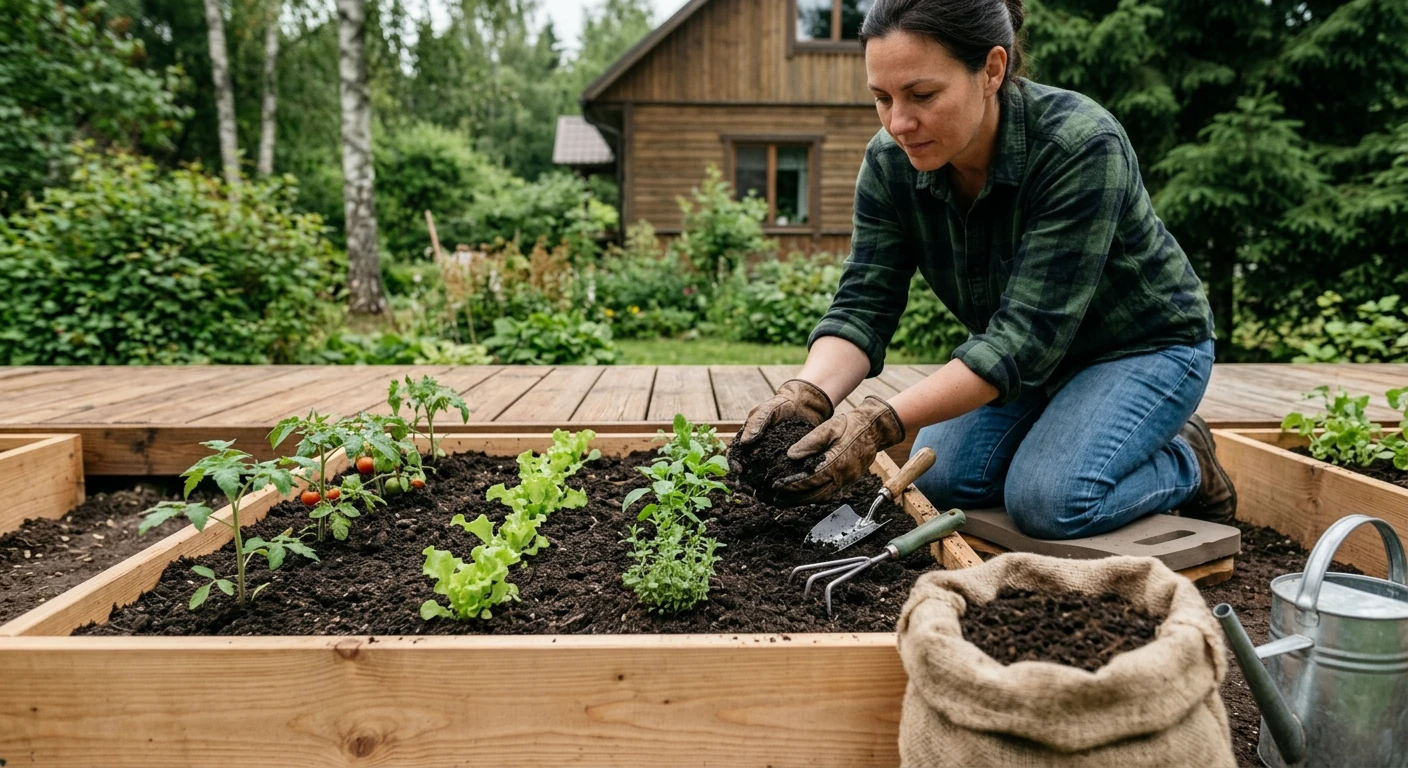
A thrifty gardener can create valuable and rich soil independently by implementing home composting. In Estonia, and especially in Tallinn, there are specific rules for biowaste management that must be followed. Food waste may only be composted in a closed and pest-protected compost bin located at least 3 meters away from a neighbor's boundary and 4 meters away from buildings. Garden waste, such as grass and leaves, can be composted in open bins. Homemade compost is the best way to improve your bed's soil structure and fertility without additional costs.
Garden Value and Next Steps
Well-planned and well-maintained raised beds are a great addition to any home, providing fresh food and aesthetic pleasure. If your current garden is too small for ambitious plans or you're looking for a location with such potential, it's worth checking out houses for sale on the Kinnisvara24 portal or cozy villas in Harju County. A modern and mobile-friendly platform helps you find just the right plot to make your gardening dreams come true.
Start your DIY project today by choosing the best location and drawing up your first bed layouts. Quality materials and the right soil mixture ensure that your handiwork brings joy and a bountiful harvest for many years to come. Find your new home with the help of Kinnisvara24 and create your dream green space that offers peace and satisfaction in every season.
Search
Keywords
Most read articles
- Price per Square Meter of Apartments in Tallinn in 2025

- Apartment Market in Early 2026: Prices Rising, Transaction Activity Remains Modest

- Apartment Market in Early 2026: Prices Rise, Transaction Activity Remains Modest
- Estonian Apartment Prices and Market Expectations in 2025

- Notary Fee and State Fee – Who Pays and How Much?