Half of the Electricity Consumed in Buildings in the Future Will Be Used for Charging Electric Cars
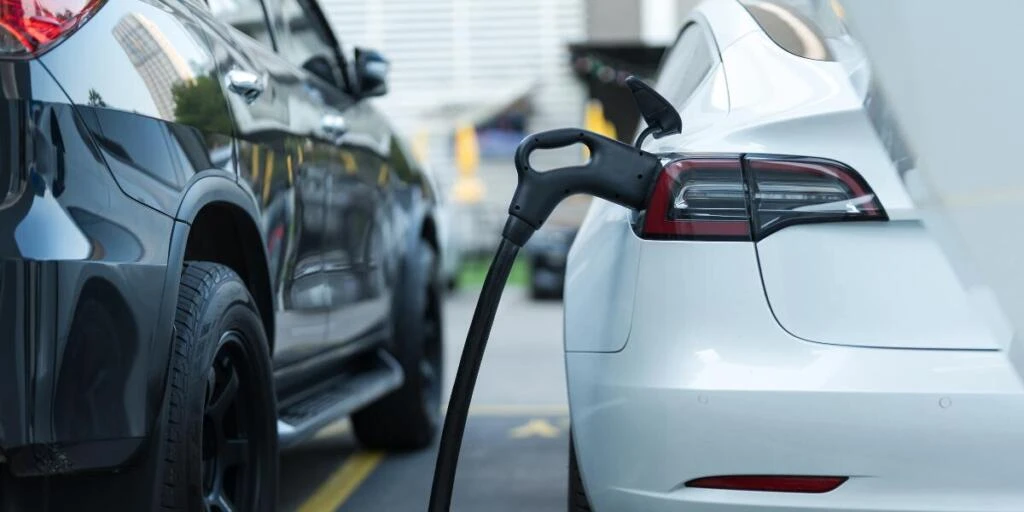
It is projected that the number of electric vehicles in the world will grow sevenfold by 2035 – from 10.5 million (2022) to 74.5 million (2035). According to expert calculations, electricity demand for charging electric vehicles alone will reach 655 TWh worldwide in 2030. Approximately 45 percent of electricity consumed in buildings will then be used for charging electric vehicles. Specialists warn that real estate developers and commercial building managers should prepare for a dramatic increase in energy consumption, which will become inevitable from 2035 onwards, when internal combustion engine vehicles will no longer be allowed to be sold in Europe according to current plans.
"Even today, the purpose of many buildings is gradually changing – they are becoming electric vehicle charging stations as an additional function. Therefore, the energy needs of commercial buildings will double in the near future, as thousands of employees want to charge their electric vehicles every day. Energy shortage in buildings will become a major problem, especially in the centers of large cities. One company may be sufficient with 10-15 charging stations installed in a large office building, but building managers may face serious problems that few real estate managers are thinking about today," notes Ivar Mölder, an engineer at international energy company Schneider Electric.
How to prepare for major changes?
When designing new office and other commercial buildings, developers should take into account future perspectives that differ significantly from today's legal regulations.
"For example, the Estonian Building Code currently requires that 20 percent of parking spaces in real estate projects be equipped with electric vehicle chargers or at least be ready for their installation. It is clear that in 2035, when the number of electric vehicles grows sevenfold or even more, 5-6 charging stations per building may no longer be sufficient. Therefore, when designing new buildings, it would be worthwhile to provide at least the possibility to increase the number of charging stations in the future and to ensure sufficient electricity for charging vehicles," notes Mölder.
The situation is somewhat more complicated with older commercial buildings, as not all of them have the possibility to increase electrical capacities without major investments. "Recently, property managers often receive offers for free installation of electric vehicle charging stations. Enticed by such "free" offers and without analyzing their own electrical solution capacity, owners risk disrupting the entire building's electrical system. During peak hours, such buildings may be left without electricity at all, as all energy is used for charging electric vehicles. Such cases are especially likely when fast-charging stations are used. To avoid this, power grid specialists need to assess the building and local distribution network's capacity to increase power and calculate how many electric vehicle charging stations can be installed in the building. Even if the need for charging stations is not yet great today, it would be good if building owners and managers started doing their homework now – preparing for the future and analyzing their buildings' electrical network capacity and adaptability to e-mobility," notes Schneider Electric engineer Ivar Mölder.
The problem is the main switch capacity. What to do?
Limited main switch capacity in a building is a problem that has come with the digital age and the abundance of new electricity-consuming devices, which many private and commercial property owners face today. According to Ivar Mölder, this problem can be solved in one of three possible ways. One of them is to request an increase in the main switch capacity of your building from the distribution network. However, if this is not technically possible or very expensive, building owners can install either a solar power plant, energy storage batteries, or as a third option, start using an electricity load balancing system.
"Solar power plants allow more energy to be used for charging electric vehicles, but only if the energy produced is consumed on-site at the same time. This does not increase the building's electrical network input power. Batteries are still a very expensive and investment-intensive solution, so it is not yet affordable for many. A balancing system is the optimal way to solve the electricity shortage problem, especially in commercial buildings. We recommend considering it first, as it helps postpone the implementation of other, significantly more expensive measures. In general, a balancing system ensures that buildings do not consume more energy during peak hours than the input power allows, because when exceeded, building managers can receive fines and risk the safety system disconnecting electricity in all charging stations or even the entire building," Mölder points out.
As the specialist explains, after the installation of a balancing system, the building's existing maximum power limit is determined, which the system does not allow to exceed even during peak hours when many different electrical devices are turned on in the building. In such cases, the system distributes only the free electrical energy power available at that moment for charging electric vehicles.
Static or dynamic load balancing. Which is more suitable for larger buildings?
When deciding on projects to install electric vehicle charging stations, building managers often face the question – how to manage electric vehicle charging stations and how to better use existing energy resources.
"In order for charging stations to have their work managed, controlled and monitored remotely, they must first be connected to the internet, which is not difficult. Much more uncertainty arises when deciding which charging method to choose. Individual charging stations can be managed using special mobile applications for electric vehicles or stations, but this method will likely not work in commercial buildings, because a specific employee must be responsible for the overall operation," says Mölder.
For commercial enterprises, there are currently 2 charging station management methods available on the market: static and dynamic load management. "With static balancing, a fixed power level is simply set and distributed to a charging station or group of them, but the total power never changes, even though the building's existing power reserve would allow charging more electric vehicles. We have noticed that users sometimes make mistakes when installing charging stations. There are systems that have a fixed special value for charging electric vehicles, called dynamic. Suppliers tell consumers that the system distributes power dynamically between stations, but hide the fact that the maximum power limit is static. This is like saying that I am moving very quickly while lying in bed because I am flying around the Sun with the Earth. At best, such systems can be called dynamic with static limit settings, but they do not perform an important power management function – they do not allocate maximum power for charging, but distribute the same continuous power to a group of stations. Therefore, the building's energy resources are not used to their maximum potential," emphasizes Ivar Mölder.
Currently, in many buildings that have only a few individual charging stations, the functionality of static charging systems is sufficient, but as the number of chargers grows, buildings will need more dynamic systems.
"Dynamic load management allows optimal use of existing energy, as the system continuously monitors the building's energy consumption and allocates all available electricity for charging electric vehicles. Therefore, this method is optimal for large commercial buildings," explains Mölder.
According to the specialist, a dynamic electricity consumption management system works automatically: it analyzes the building's energy consumption and distributes energy automatically to ensure the building's electrical needs for office lighting, ventilation and electric vehicle charging.
"Complex systems, such as Schneider Electric's EV Charging Expert (EVCE) electricity balancing system, are able to adapt to even the most complex buildings and their internal network structures. This solution allows you to create such a system from the first stations onwards that distributes building energy most efficiently today and can be expanded in the future if the need for charging stations increases," notes Ivar Mölder.
Such a balancing system can also be installed in buildings where a solar power plant already operates or is planned to be installed, as it is able to determine energy consumption and production and take this into account in energy flow management.
"Installing electric vehicle charging stations is not a sprint – it is a marathon. Buildings stand for decades, so it is important to design and implement long-term solutions in them today. The electrical grid is constantly changing, new devices are constantly being connected to it, so when planning buildings it is important to provide for growth opportunities – if two electric vehicle charging stations are sufficient in a commercial building today, you should assess whether in a few years you might need ten times more. In ten years, more than half of all vehicles in traffic will use electrical energy and almost half of the energy consumed in buildings will need to be used for charging electric vehicles," summarizes Ivar Mölder.
Search
Keywords
Most read articles
- Price per Square Meter of Apartments in Tallinn in 2025

- Apartment Market in Early 2026: Prices Rising, Transaction Activity Remains Modest

- Apartment Market in Early 2026: Prices Rise, Transaction Activity Remains Modest
- Estonian Apartment Prices and Market Expectations in 2025

- Notary Fee and State Fee – Who Pays and How Much?