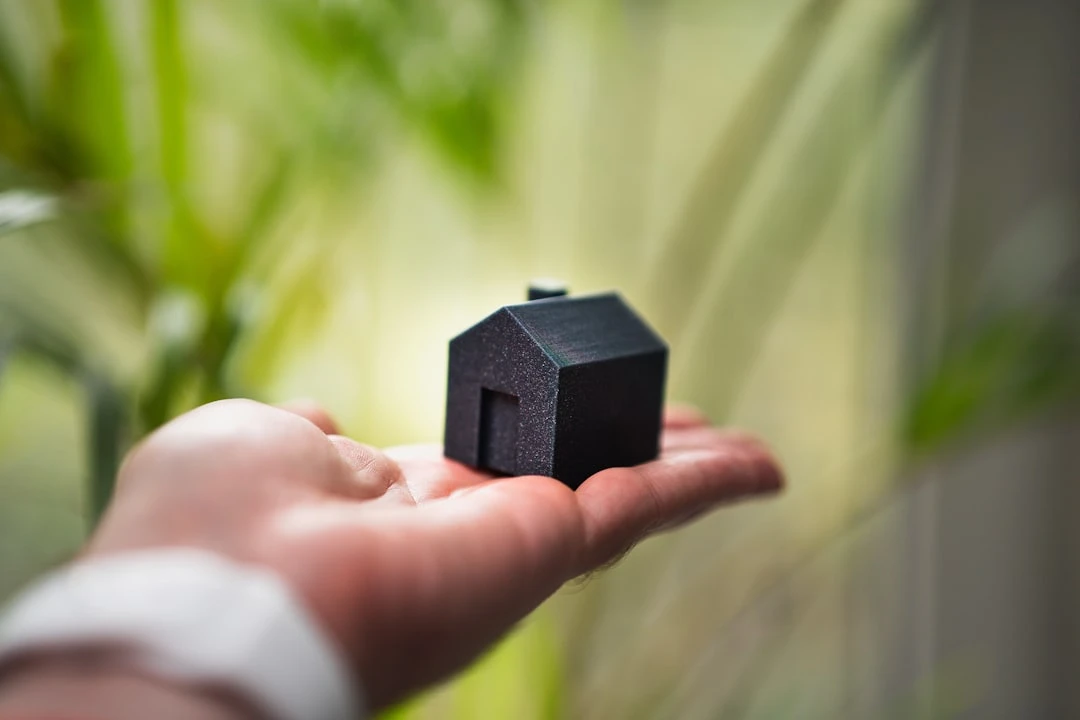
Four Steps to Start Building a House

You dream of your own house, but lack previous house building experience? Real estate experts have outlined 4 steps to get started so that house planning and construction runs smoothly.
1. Set your budget
Before you choose a plot and start planning your house, set the maximum cost of the entire project. "When drawing up a budget, costs need to be thought through as accurately as possible and you also need to account for the fact that material prices are constantly rising," explained Kinnisvara24 CEO Urmas Uibomäe. "Banks currently recommend factoring in a 30-percent budget buffer, so you need to think through your savings or assets that could be used as additional financing for house construction if needed."
When drawing up a budget, you should also set aside the maximum cost of the plot separately. "The prerequisite for building a house with a home loan is that you own a plot or find another financing solution for purchasing the plot. A residential property plot is generally not financed from a home loan," explained Uibomäe.
2. Clarify your loan options
Once your budget is set, it's clear what amount of bank financing you need. However, the size of your own contribution to a bank loan also depends on the location of the plot. In cities, the share of own contribution is generally lower, staying around 10-15 percent. The further from the center you plan to build your home, the higher the own contribution share banks expect – when building a house in the countryside, this can be approximately 30 percent of the total construction cost. "Demand for city homes is greater and the property there is more liquid – this gives the bank confidence that if necessary, the house can be sold further to cover the loan. There is less demand for houses in rural areas and house prices are cheaper, although house construction typically costs the same in the city and in the countryside," explained Uibomäe, which explains the difference in the size of own contribution.
3. Choose a plot
According to Ketlin Jundase, a professional real estate agent at Uus Maa, the two most important criteria for people when choosing a plot are budget and location. "Usually infrastructure is considered – how far away are schools, kindergartens, and the workplace. Most of all, people want to buy plots in the area around the city at approximately 30-40km radius, where there is good infrastructure and connection to the city. The most popular regions are around Tallinn in Harju County and around major regional centers in other parts of the country."
When choosing a plot, homebuilders should check what connections are possible on the plot – whether a central water and sewage network has been developed in the area and what are the conditions for electrical connection. "If the substation is more than 400 meters from the plot boundary, the electrical company typically sells the connection at a cumulative price. However, if there is already an electrical connection in the area and the distance to the plot boundary is not very long, payment is based on amperage. One amp costs approximately 156 euros and one household needs about 20-25A, which costs approximately 4,000 euros, but this price can also change over time," explained Jundase.
Attention should also be paid to the intended use of the plot. If it is not residential land, it is worth inquiring further information from the local municipality. "Legally, residential land is a plot with building rights. You can also build a house on agricultural land, but typically only in sparsely populated areas," explained Jundase. "It is possible to inquire from the local municipality official whether building rights can be obtained for the agricultural land in question under certain conditions."
4. Familiarize yourself with the detailed plan conditions
With a detailed plan on the plot, it is known what can be built on that plot, and the maximum built-up area is also specified. "The county-wide general plan sets out what the general environment should look like in a given area. These general norms are typically outlined in the detailed plan," explained Jundase. "In some local municipalities, it is specifically defined that, for example, houses with gable roofs are preferred, while in another local municipality they are more liberal and leave more choices to the owner."
The detailed plan also marks the maximum number of floors and the percentage of full development of the plot. The plot boundary and the area where the house can be built are also indicated, as well as the size of the house and the number of buildings.
According to Urmas Uibomäe, plots are often sold where the detailed plan has expired. "If a central water and sewage network has been built in an area where a plot originally had local water and sewage, this part must be changed in the detailed plan before construction begins. Through the local municipality, you can invalidate the water and sewage part of the detailed plan and add design conditions for central water and sewage connections."
Find a suitable property for yourself from the real estate portal Kinnisvara24.
Search
Keywords
Most read articles
- Price per Square Meter of Apartments in Tallinn in 2025

- Apartment Market in Early 2026: Prices Rising, Transaction Activity Remains Modest

- Apartment Market in Early 2026: Prices Rise, Transaction Activity Remains Modest
- Estonian Apartment Prices and Market Expectations in 2025
- Notary Fee and State Fee – Who Pays and How Much?