Expert: Three Undervalued Real Estate Areas Remain in Tallinn, Prices Set to Rise
-web.webp)
According to Argo Pillesson, the head of Estonia's largest real estate office Uus Maa, there are currently three areas in Tallinn's real estate market where construction cranes are scarce, but the potential for price growth exceeds other regions.
According to Argo Pillesson, the North Tallinn district has experienced the largest growth over the past ten years, led by the Kalamaja neighborhood, which has now become the most valued district. "The median price of apartments there exceeds 4,500 euros per square meter. For comparison, the median price per square meter of apartments in Kadriorg, the most expensive area in the Old Town district, stays around the 4,000 euro mark," said Pillesson.
"Tallinn's most expensive new developments are rising along the so-called golden mile of the waterfront, starting from Talsinn, past Kalaranda and Noblessner, and eventually reaching the end of the Kopli peninsula, and one might think that the industrial landscape there or older residential areas are a relatively safe investment. On a large scale, this is also true. If Volta and Sitsi streets and their surroundings are renovated and a green area running through the district is created in the form of a butterfly park, then the value of the surrounding property will also increase. However, a considerable part of the future potential has already been factored into the prices of the entire Kopli peninsula, and one must take into account that there are still warehouses and industrial areas there that need to be looked at from windows for years to come. Additionally, with each new development added to the Kopli peninsula, traffic congestion increases, which given the street network there, is already quite tense," said Pillesson.
"However, there are some areas in Tallinn where location and infrastructure, surrounding developments, and new job opportunities emerging in the vicinity provide good conditions for faster future price growth," said Pillesson.
"One such area is the Keldrimäe neighborhood around Central Market. Although it has a good location, this area is inconspicuous and has so far seemed to be cut off from the city center by Liivalaia Street. The Arteri quarter with 3,000 jobs extended the Maakri business quarter across Liivalaia, and Central Market will have a very significant impact in the future, which could become a similar attraction center to Baltic Station after its planned renovation. If the city makes a decision regarding the renovation of Liivalaia Street, it could give Keldrimäe an additional positive boost. Therefore, this is certainly an area where, in a long-term perspective, there is significant price growth potential," said Pillesson.
According to the head of Uus Maa, another largely undiscovered gem is the Sikupilli neighborhood, which is being rapidly developed by the Ülemiste City and Fahle quarter development and the completion of the Rail Baltic main terminal. "It is also very important that Sikupilli is crossed by a tram line between the city center and the airport, and there are high-paying jobs nearby in Ülemiste city," added Pillesson.
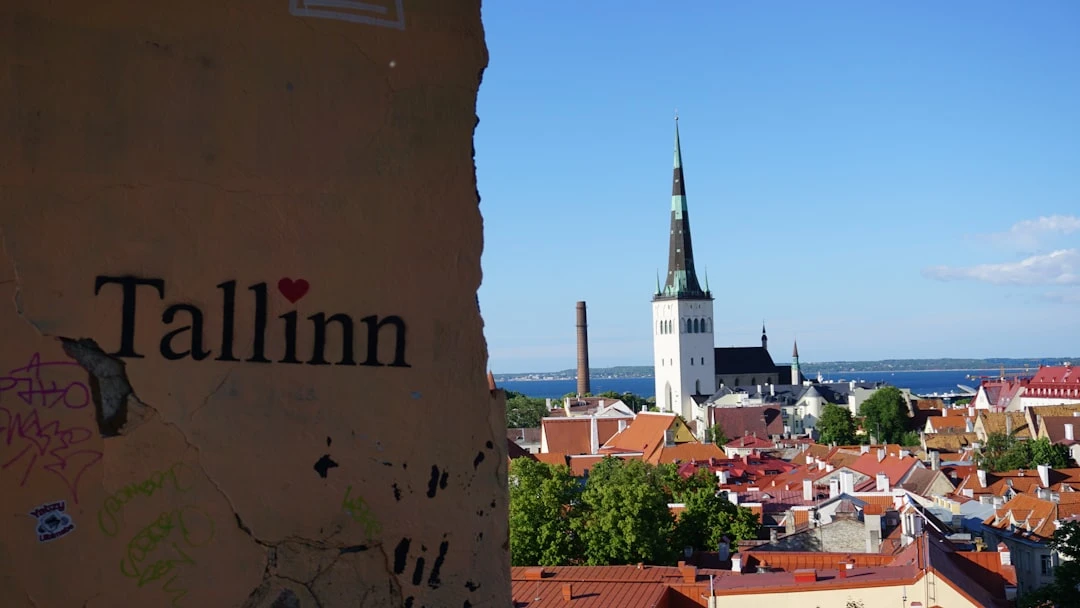
"Thirdly, we can point out Tallinn's Old Town. Many foreigners, especially Finns, bought apartments there in the nineties and early 2000s, who are now selling them due to generational change, economic situation, or geopolitical tensions, which has also created good buying opportunities. A well-maintained Old Town apartment can be obtained at a price of 3,500 – 4,000 euros per square meter, which is similar to the price level of suburban new developments. Nothing new will be built in the Old Town and it will always remain truly valuable," noted Pillesson.
"There are also places elsewhere in Estonia that await changes or where rapid growth has already occurred – major jumps are mainly related to infrastructure construction or the emergence of specific jobs. A good example is the city of Tapa, which made a major jump in real estate prices in the second half of the 2010s along with the expansion of the local military base. Recent years provide the example of Paide city in Central Estonia, which has likely been significantly affected by the construction of a four-lane road. While on average Estonian real estate prices have risen over the past five years by 50%, roughly in line with inflation, growth in Paide has been twice as fast. Paide is also an interesting example of how sports can influence the real estate market. The internationally ambitious football club Paide Linnameeskond operates there, under whose leadership a modern sports complex is being built in Paide. This has increased interest in the city in general and increased local demand for quality living space, which significantly affects a fairly small market," added Pillesson.
Search
Keywords
Most read articles
- Price per Square Meter of Apartments in Tallinn in 2025
- Apartment Market in Early 2026: Prices Rising, Transaction Activity Remains Modest

- Apartment Market in Early 2026: Prices Rise, Transaction Activity Remains Modest
- Estonian Apartment Prices and Market Expectations in 2025
- Notary Fee and State Fee – Who Pays and How Much?