Expert: Three Traditional Materials Disappearing from Estonian Construction Sites
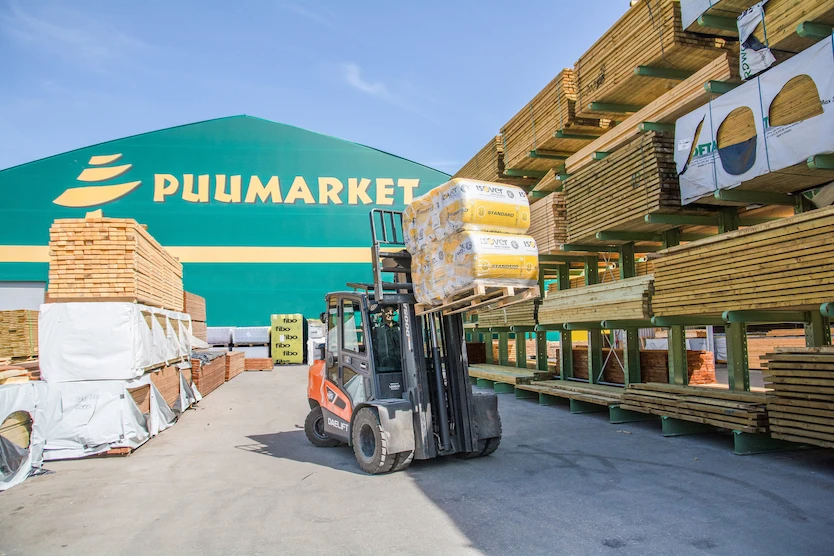
According to Toomas Pärtel, chairman of the board of Puumarket, the Baltic region's largest timber retailer, unplaned sawn timber, which was most widely used in previous years, has gone out of fashion and is being replaced by more precise and safer planed wood. Similarly, the share of raw and untreated timber materials in construction has also decreased significantly.
According to Toomas Pärtel, the share of partially processed materials is decreasing and construction is using higher quality materials than before. "For example, 2/3 of construction timber is planed, but a decade ago rough and untreated sawn timber was the most common. In Scandinavian countries, unplaned material is no longer used at all, and this change reached Estonia more widely 5-7 years ago. We can offer both materials, but modern construction timber should really be planed," said Pärtel.
"Planed or calibrated material is easier to use than ordinary sawn timber and is more precise and straighter in dimensions. First, it is planed to be straighter, and secondly, it has gone through double inspection during processing, which filters out non-standard material. The edges of planed material are generally rounded and thus more convenient for builders and don't damage surfaces. There is essentially no price difference between the two materials, or it is minimal. Considering that work with straight and smooth material is faster, it is likely that construction with finished material will ultimately be even more economical," explained the expert.
"Planed wood looks beautiful and people sometimes wonder why such clean material is put into walls, but building standards have simply advanced. Rougher sawn timber is more often used for support structures – for example, foundation beam casings and sometimes also as roof substrate boards," said Pärtel.
According to the head of Puumarket, so-called semi-finished products are generally disappearing from construction. "For example, the use of raw timber has been clearly replaced by dry material. Dry wood is straighter and more precise and so to speak, it moves less in later use. Similar to planed wood, there is no significant price difference and wet material is rather purchased out of habit," said Pärtel.
"The third material, which was very common in the past and is now beginning to disappear from use, is untreated construction timber. In damp locations, material treated with wood protection lasts several times longer than ordinary timber and pays for itself," noted Pärtel.
Search
Keywords
Most read articles
- Price per Square Meter of Apartments in Tallinn in 2025
- Apartment Market in Early 2026: Prices Rising, Transaction Activity Remains Modest

- Apartment Market in Early 2026: Prices Rise, Transaction Activity Remains Modest
- Estonian Apartment Prices and Market Expectations in 2025
- Notary Fee and State Fee – Who Pays and How Much?