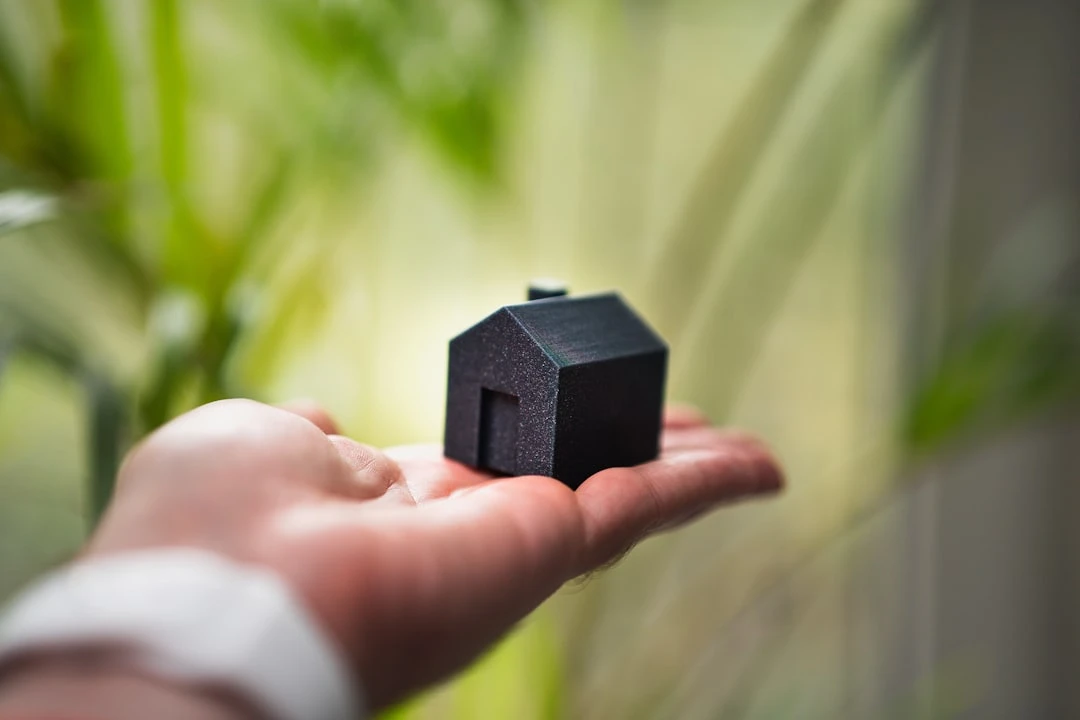
Expert explains: what Estonians long for in their home gardens
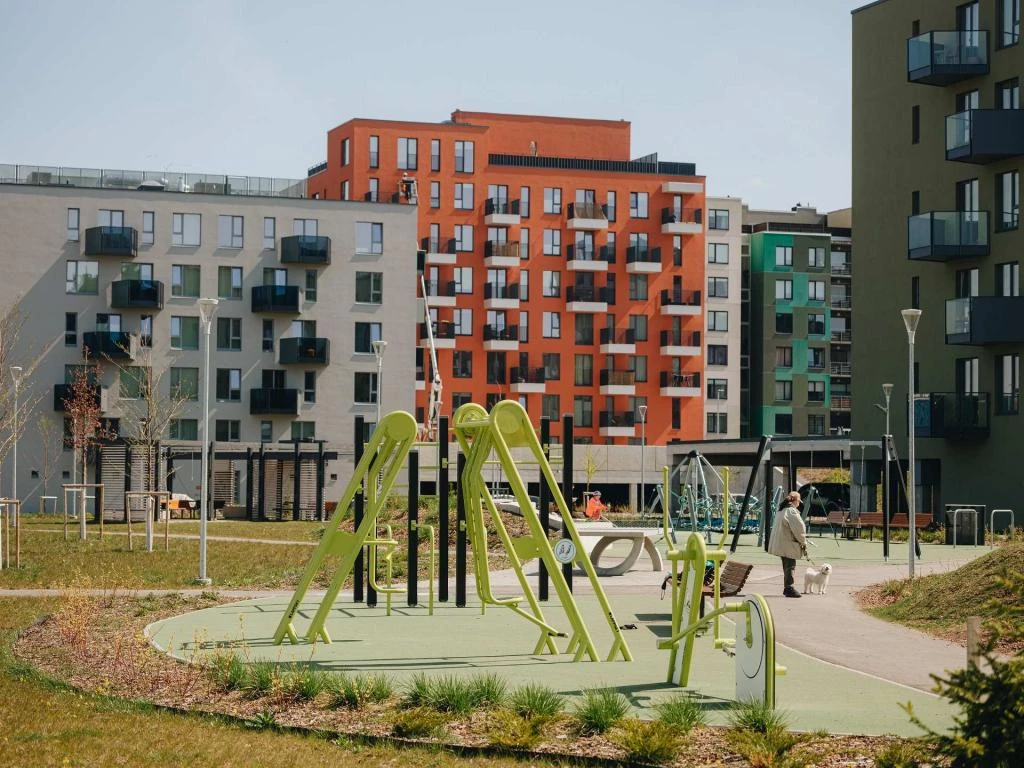
Increasingly, new developments are being created as integrated living environments where outside your home's door there is space for both solitude and community activities with neighbors. Bonava landscape architect Eda Vane explains what the characteristics of a well-planned courtyard area are and what principles are used to create them.
Various surveys have shown that Estonians have a strong desire to own a home and dream of living in their own house one day. "It's very Estonian to strive towards moving from an apartment to a townhouse and then someday from there to a real house of your own. We mapped out exactly what those advantages are, what people long for when it comes to their own house," explains Eda Vane, describing how Bonava's courtyard concept originated.
"People long for the ability to safely send their child outside their front door to play, they long to be able to relax outside on their own, but also to grill with friends or neighbors and maybe tinker with some garden work," adds Vane. All of this can be done even when living in an apartment building through well-planned courtyard design.
To achieve this, the landscape architect divides outdoor space into more private and semi-public areas, which allows residents to spend time outside alone, for example reading a book or working in a garden office. At the same time, certain correct design techniques bring residents together to interact with each other and children of different ages can play near home. "And at the same time, the apartment association is the one who takes care of maintenance and residents don't need to worry about mowing the lawn every week, like they would in a private house," smiles Vane.
Children safely in courtyards
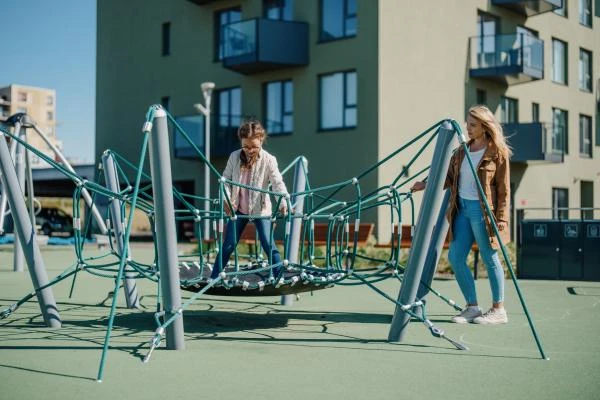
"For me, one important characteristic of a good courtyard area is when you don't notice cars," says Vane. This means that to ensure the safety of children and pedestrians, and also to create a more welcoming environment overall, residents' vehicles are parked away from pedestrian areas, for example in an underground parking garage or in a landscaped and separated area. It is particularly important that when exiting the stairwell entrance, a pedestrian doesn't end up directly in the traffic zone and that children's play areas are separated from traffic. "And I definitely avoid fences and railings and use landscaping to separate zones. After all, no one feels good even in a cage. In addition, this teaches children independence and creativity and encourages activity together with parents," explains the landscape architect.
Sustainable plant life year-round
Landscape architects plan diverse vegetation into courtyards in such a way that there is something to see and notice throughout the entire year and the changing seasons. "Evergreens, decorative branches of some deciduous shrubs and many grasses remain visually pleasing even in winter," describes Vane. Trees, shrubs and flowers are not just a decorative element, but vegetation and green roofs also help prevent excessive summer heat and the creation of heat islands in the summer, and flowering plants provide food and shelter for insects, which in turn bring birdsong to your window.
Interior courtyards with their denser vegetation, sound-absorbing materials and well-thought-out design function as buffers against external noise. "Walking in such a yard, you wouldn't realize that actually there are major thoroughfares and busy city life just a few minutes away," says Vane.
Logical and accessible pathways
"What is the first question in your head when you visit a building where you've never been before? – Where is the entrance? A building whose entrance is clearly identifiable, well-lit, where the courtyard area's network of sidewalks leads to it, and which is highlighted with landscaping, makes a welcoming impression," describes Vane another principle that guides courtyard design. The pathways give the entire courtyard area its structure and ensure that a resident or visitor clearly sees how they can comfortably reach the entrance, the playground and other courtyard zones. It is also important that paths and entrances accommodate people with mobility difficulties. "Universal design means, for example, seamless sidewalks where it is comfortable to move with a stroller, wheelchair or even a small child on a bike," explains Vane.
The safety of the courtyard area and its usability during dark hours is ensured by lighting the main movement directions and entrances. "With functional lighting, light shines downward, precisely where it is needed – it doesn't shine up into the sky and space and into other people's windows or the birds living in the trees. Light pollution should be avoided," says Vane. Warm and soft light doesn't tire, different lighting solutions, such as light strings and pathway lights, create a cozy atmosphere.
A stronger community
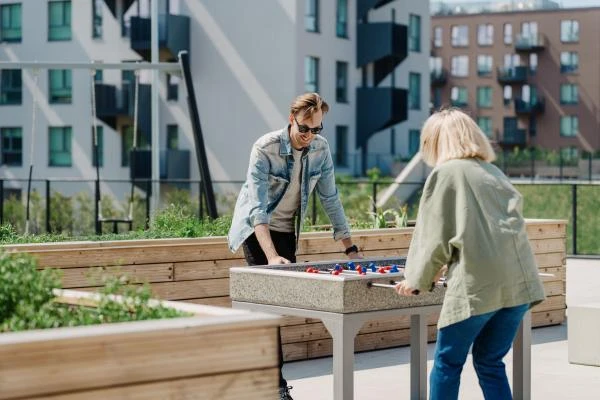
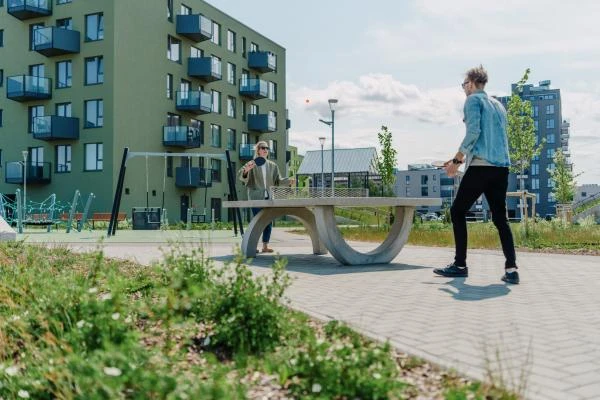
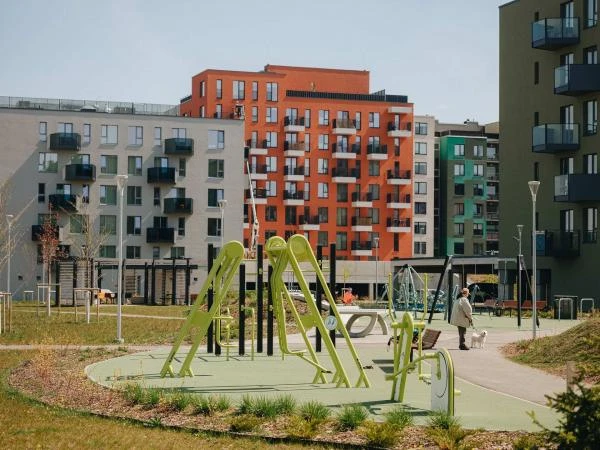
An apartment building courtyard no longer means just a sandbox and a bench between parking spaces. Playgrounds, training areas, community gardens and grilling or picnic areas bring neighbors together and provide activities for different age groups. "Benches, seating areas and other outdoor amenities that are set up outdoors seem to extend living spaces, encourage interaction and in this way strengthen the sense of community," explains the landscape architect.
Courtyard areas designed on these principles, which are safe, accessible, diverse and green, are an important added value for apartment building residents and part of a better quality of life. And there's no need to move to a private house to enjoy it.
Search
Keywords
Most read articles
- Price per Square Meter of Apartments in Tallinn in 2025
- Apartment Market in Early 2026: Prices Rising, Transaction Activity Remains Modest
- Apartment Market in Early 2026: Prices Rise, Transaction Activity Remains Modest
- Estonian Apartment Prices and Market Expectations in 2025
- Notary Fee and State Fee – Who Pays and How Much?