EXPERT ADVICE: How to Solve Electric Car Charging in an Apartment Building?
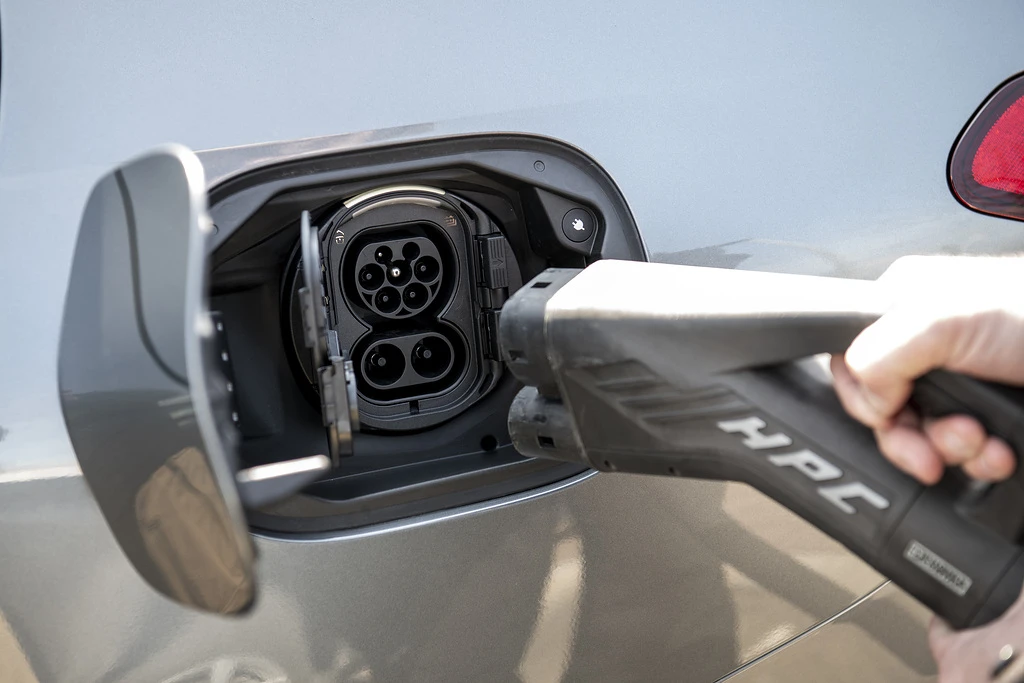
Creating electric car charging options in an apartment building is not limited to just installing chargers – smart automation is also needed to protect the electrical system from overload. Alan Vaht, a member of the board of AS Terminal, explains that in addition, the apartment association must find a fair solution for sharing charging costs.
Charging options depend greatly on parking possibilities – whether the apartment building has open-plan parking or private parking spaces. In open-plan parking, where parking spaces are not permanently tied to specific apartments (as is the case in most older buildings), the most suitable solution is to install a shared charger that can be used by all apartment owners and guests.
If an apartment has a specific and private parking space, then an electric car owner can install a personal charger that is used only by that space. Others do not have the opportunity to use this charger.
Electrical Power Management
Most Estonian apartment buildings were built during the Soviet era, which is why their electrical grids are not adapted for large additional loads. For example, typical panel buildings in Mustamäe, Lasnamäe, and Tartu's Annelinna may not be able to handle electric car charging during peak hours.
In a typical 60-apartment building, the main breaker size is approximately 160 amps, which must cover the entire building's electrical needs. Individual apartments typically have 16-amp breakers, based on the assumption that not all apartments use electricity at full capacity simultaneously. Adding electric car charging can, however, create problems, especially when multiple cars are charging at the same time.
One of the most important questions is how to avoid overload and distribute power fairly. Apartment buildings where nighttime electricity consumption is low can take advantage of available capacity for electric car charging. For this purpose, a special automation system has been created that manages the load of charging devices and helps prevent situations where the main breaker trips due to overload. For example, the automation can limit charging power if necessary or schedule it for nighttime, when other electricity consumption is low and electricity prices are lower.
Such an automation system also makes it possible to install multiple electric car charging points in buildings with 160-amp main breakers. The system is capable of distributing power among up to 100 chargers. If a building's 160-amp main breaker uses only 20 amps at night, the system can provide chargers with the remaining 140 amps to use at once.
Fair Accounting of Charger Electricity Consumption
For the apartment association and apartment owners, it is extremely important that the accounting of charger electricity consumption is fair. Innovation in this field is advancing rapidly. It is important that apartment owners who do not use an electric car and do not plan to install a charger do not have to pay for the costs of electric car owners. Only those who actually use the charger pay for charging.
There are two solutions for charging billing: apartment association billing and third-party billing. In the case of apartment association billing, the association handles it itself, but this can cause problems because the distribution of electricity costs may prove unfair. For example, everyone may pay a common average fee, even though one car owner may be charging during expensive peak hours and another during cheaper nighttime electricity hours.
In third-party billing, the charging service provider takes over the entire billing process, making it possible to precisely track who and when used electricity, and issue corresponding invoices. For example, a car owner using zero-price electricity at night can receive a financial benefit, while those charging during peak hours pay a higher price. With such a system, a separate invoice can also be presented to a guest who uses the apartment building's charger, and charging of work vehicles is also billed separately. Currently, only eTerminal offers such a solution in Estonia.
If an apartment association is considering creating electric car charging options, it must definitely plan a system that allows dynamic load management and fair distribution to prevent overload and ensure fair billing.
Charging Options in Apartment Buildings Presented at Electric Car Exhibition
Alan Vaht, a member of Terminal's board of directors, will discuss charging options in apartment buildings in more detail on October 11-12 at the Electrobility 2024 electric car exhibition at the Estonian Exhibitions Center. Visitors will have the opportunity to get acquainted with the latest electric car models and participate in test drives. In addition, the exhibition will widely share information about various charging and financing solutions. Over the two days, numerous presentations will take place on the exhibition stage, covering charging myths, potential problem areas of used electric cars, electric car safety, discussions on Chinese cars and electric vans, and much more. All interested parties can register free of charge for the Electrobility exhibition through the Piletilevi platform until Thursday evening; a ticket costs 10 euros at the venue.
Search
Keywords
Most read articles
- Price per Square Meter of Apartments in Tallinn in 2025

- Apartment Market in Early 2026: Prices Rising, Transaction Activity Remains Modest

- Apartment Market in Early 2026: Prices Rise, Transaction Activity Remains Modest
- Estonian Apartment Prices and Market Expectations in 2025
- Notary Fee and State Fee – Who Pays and How Much?