Expert Advice: 9 Essential Steps in Planning a New Kitchen
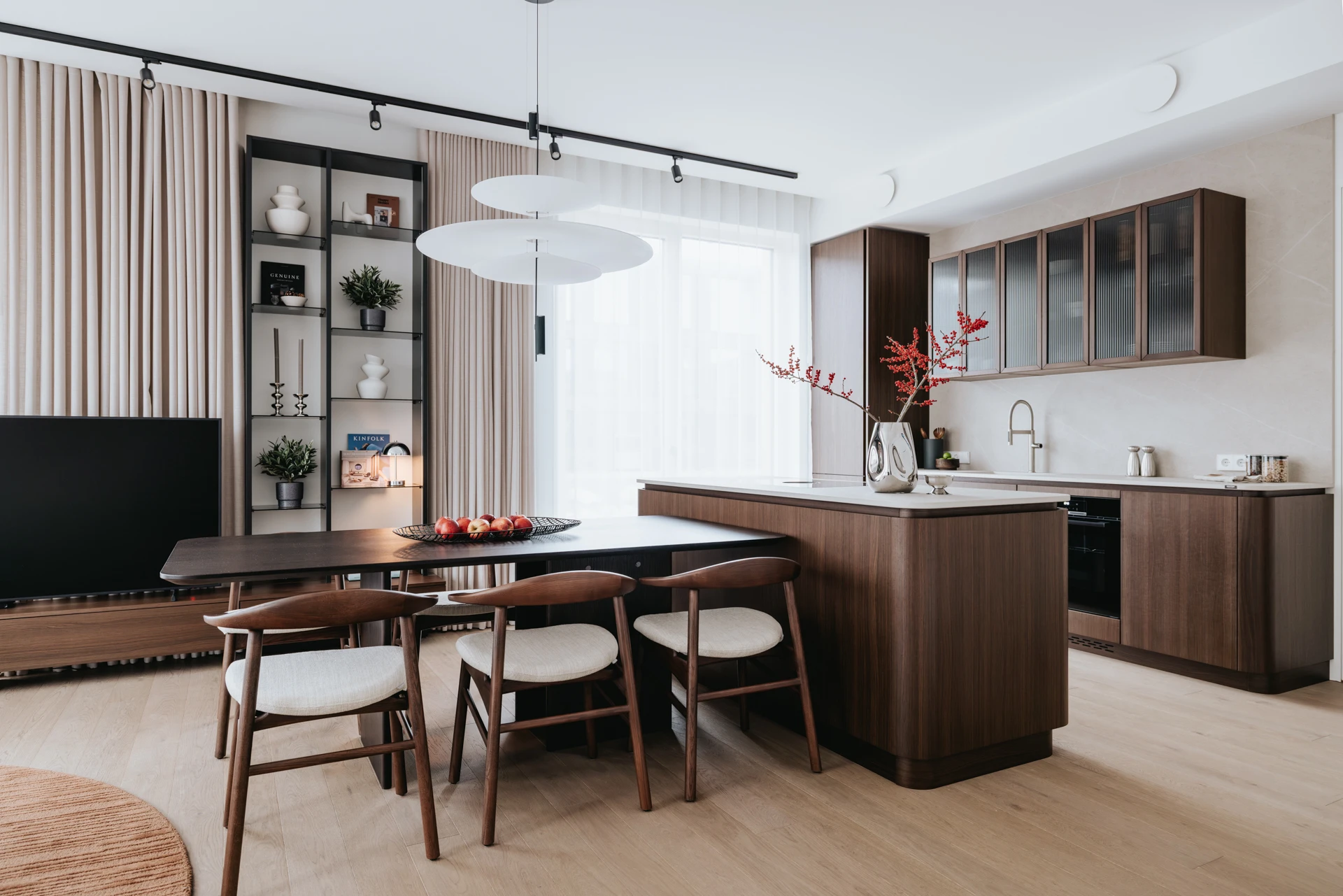
When creating a new home, kitchen planning can turn out to be a bigger challenge than expected. There is a lot to decide and choose in the kitchen, and even the smallest mistakes can become annoying later on. That is why Liven's creative director Alina Kester recommends following nine steps when planning a kitchen, and by keeping these in mind, you can truly make the kitchen the heart of your home.
"The most important thing is to start kitchen planning as early as possible, because the water and electrical systems of a new home, and in some cases also the suspended ceiling solution, must be coordinated with the kitchen. If the kitchen has not been thought through in detail while water pipes and electrical connections are being installed, it will be difficult to change anything later. Particularly important is the location of water and sewage connections, as the placement of the sink and dishwasher depends on this. Otherwise, the kitchen design will depend on the connections, when it should be the other way around," said Liven's creative director and board member Alina Kester.
The layout and shape of the kitchen determines where it makes sense to plan electricity, lighting, and water connections. At the same time, it is important to think through how the kitchen will be used and how you move around the space. The most important thing is to ensure a comfortable movement triangle between the refrigerator, sink, and stove. According to Alina Kester, when planning a kitchen, you should make sure that movement between these three points is not obstructed – for example, a kitchen island should not be located between the refrigerator and sink, and the open door of the dishwasher should not obstruct movement.
"This same movement trajectory also determines the kitchen's lighting. Downward-falling light should not end up behind your back when using the kitchen, otherwise you will create a shadow with your body that interferes with your work. Therefore, it is not wise to install a lamp in the ceiling between the cabinet and island, because when working at either end, the light would come from behind. Work surfaces, stove, and sink need task lighting, and a dimmable pendant lamp can be installed above the dining table or kitchen island, because when cooking food and enjoying wine, the expectation for light intensity is different," added Alina Kester.
Once movement and necessary connections in the future kitchen have been thought through, Alina Kester recommends the next step is to choose the materials and technical solutions used in the design. There are many options, but Alina Kester recommends considering the family's lifestyle and habits in addition to style preferences, so that the kitchen in your new home would be as comfortable and user-friendly as possible. Smart material choices can mean preventing a large amount of cleaning work, and clever technical solutions can mean a smoother routine and cohabitation.
"By familiarizing yourself with different options, it is worth thinking about what is important for your family, what is actually used in the kitchen, and what would add value there daily. With a smaller kitchen, it may turn out that two burners are enough instead of four, and the dishwasher can also be a smaller size. So that a kettle, coffee maker, or toaster does not occupy valuable work surface, it is possible to use a separate small boiler and mixer solution for hot water, and plan a separate cabinet for small appliances. The latter is very convenient, for example, when the earlier-rising family member wants to make a smoothie in the morning – the cabinet door muffles the blender noise," noted Alina Kester.
Although there are endless kitchen furniture design solutions, Alina Kester recommends focusing first on the choice of cabinet doors, facades, work surfaces, and backmaterial. The properties of materials affect the kitchen's ease of use, durability, and also how easily signs of use show on it. A ceramic surface, for example, is very durable and withstands water, heat, and various food items, but in a kitchen island where people sometimes sit or eat, it may feel somewhat cold.
"Acrylic, quartz, and ceramic are the best work surface materials, because with them it is possible to both sink the stovetop and have an under-bonded sink, which gives a clean and minimalist appearance. Wood and high-pressure laminate are more affordable, but they must be protected from water, and the sink and stove must be surface-mounted. The only surface where you can place a hot pot and cut with a knife is ceramic, but its downside is the risk of cracking from a strong impact. When choosing colors, keep in mind that smooth and single-colored surfaces show fingerprints and dust better, while surfaces with stone and wood patterns are much more forgiving in this regard," added Alina Kester.
Less important than appearance is not the contents and organization of kitchen cabinets. When planning these, Alina Kester recommends taking paper and pencil and drawing out what things need to be stored in the kitchen cabinets, where something would fit, and what will be kept in each drawer or cabinet. It is also good to think about your current kitchen – which items do not fit well and which are inconvenient to get from the cabinet?
"It should be as easy as possible to access everything you need daily, which is why in modern kitchens, drawers are increasingly preferred instead of hinged doors for the lower cabinet area. In Liven's kitchens, for example, we use tall full-side drawers, where you can place dry goods without worrying that pasta will spill out from between the rails or cereal boxes would be scattered around the cabinet," said Alina Kester.
When major decisions have been made, Alina Kester recommends familiarizing yourself with various smart solutions that help prevent small problems in the kitchen and increase ease of use. For example, it is worth planning an electrical connection to the kitchen island, thinking through the placement of fire safety equipment, and with integrated appliances, keeping in mind that in the future you may need to access them for repairs.
"In addition to placing small appliances in a cabinet with separate outlets, it is worth thinking about other details that make kitchen use more convenient. For example, a drawer planned under the sink provides space for cleaning supplies and keeps the sink area clean. Hidden outlets and charging ports add value to the kitchen island, with a stove it is worth exploring models with integrated air purification systems, and space can also be saved by placing a freezer in a separate storage area or under the work surface," explained Alina Kester.
Before ordering a kitchen, it is worth thinking through the entire solution multiple times. Small appliances must have enough space, the chosen materials must match the family's habits, and the kitchen as a whole must remain comfortable and easy to maintain in daily use. According to Alina Kester, the decision-making process can also be made easier by using various digital visualization tools, with which you can compare different shades, materials, and solutions before making a final choice.
Search
Keywords
Most read articles
- Price per Square Meter of Apartments in Tallinn in 2025

- Apartment Market in Early 2026: Prices Rising, Transaction Activity Remains Modest

- Apartment Market in Early 2026: Prices Rise, Transaction Activity Remains Modest
- Estonian Apartment Prices and Market Expectations in 2025

- Notary Fee and State Fee – Who Pays and How Much?