Electric Car Charger in an Apartment Building: What You Need to Know
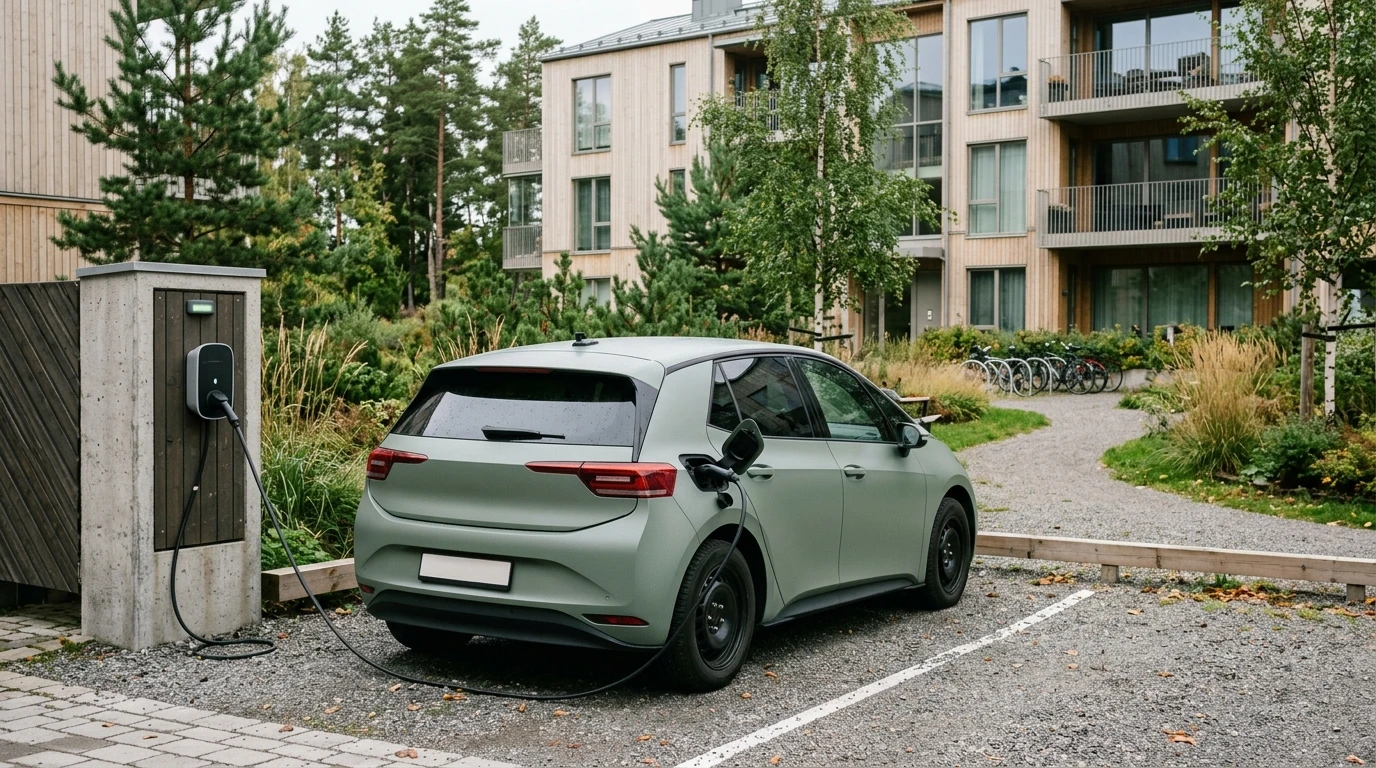
Does electric car charging in a residential apartment building seem too complicated or expensive? Read how a condominium association can legally install a charging point, distribute grid load costs fairly, and increase the convenience and value of your home.
Personal or shared charging point in an apartment building
The choice of electric car charging solution in an apartment building depends mainly on the building's parking arrangements and the boundaries of private property. If your apartment includes a dedicated and permanently allocated private parking space, you can install a personal charger. Such a device is used only by your vehicle and other residents cannot access it, which allows you to connect the entire system directly to your needs.
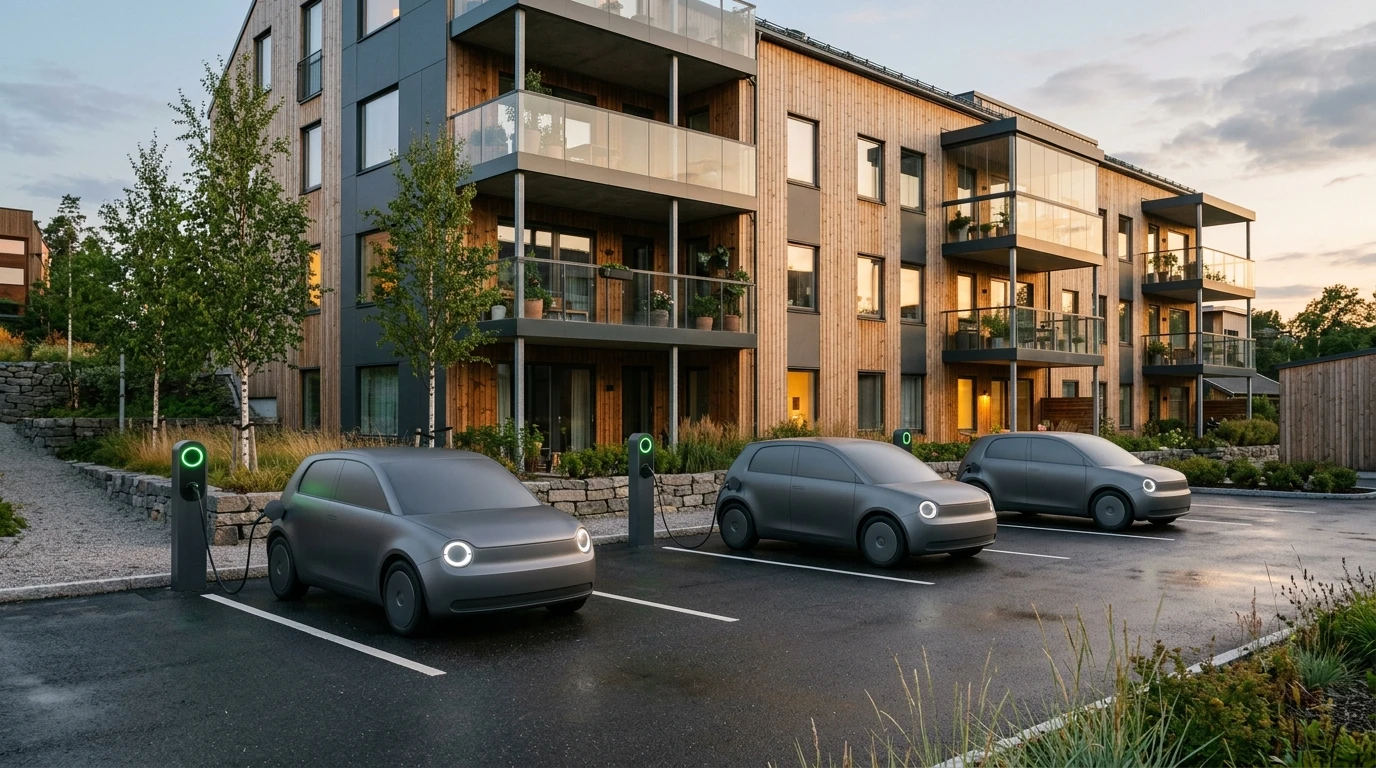
In apartment buildings with open or shared parking areas, where spaces are not permanently divided among individual apartments, the most practical option is to install a shared charging point. A shared charger provides all residents of the building and their guests with a convenient opportunity to charge their vehicles when needed. A modern and well-thought-out technical solution significantly improves quality of life and provides excellent ideas for increasing home comfort.
Legal requirements and condominium association approval
Installing an electric car charging point requires careful planning in an apartment building, as the building's electrical system and outdoor territory are jointly owned by apartment owners. If you want to install a personal charger that draws power from your apartment's electrical panel, you must obtain written approval from the condominium association before starting work. Installing shared charging infrastructure for the entire building is decided at the condominium association's general meeting, where the decision must be approved by a majority of apartment owners who own more than half of the joint property shares.
According to the Building Code, installing charging infrastructure in an existing apartment building requires submitting a building notice to the local government at least ten days before construction begins. Once work is completed, a usage notice must be submitted at least ten days before the charging point is put into operation. In new apartment buildings with more than ten parking spaces, cable duct installation to each parking space is mandatory during construction. If you are looking for accommodation with modern technical systems, familiarize yourself with Kinnisvara24's selection of new developments.
Technical readiness and dynamic load management
Condominium associations often worry that charging multiple electric cars simultaneously will overload the building's electrical system or require expensive increases to main protection. However, energy experts and network operators confirm that charging capacity can be created without increasing the existing connection capacity. Since domestic electricity consumption peaks in early morning and evening and drops to a minimum during night hours, available power can be successfully directed to car charging.
The smartest technical solution is to install a dynamic load management (DLM) system. This technology monitors the apartment building's total energy consumption in real time and directs power to chargers only when that power is not being used in residences. The daily electrical needs of apartments always take priority, and the automation system automatically distributes the remaining available energy equally among all charging vehicles, ensuring safe and optimal charging speeds.
Electricity metering and fair cost sharing
A transparent and fair billing system ensures complete peace of mind in a condominium association, as each apartment owner wants to pay only for the energy they have consumed. Modern charging devices automatically identify users before each charging session using an RFID card or mobile application. The system records the exact amount of kilowatt-hours consumed and associates it with a specific user.
Management software compiles monthly data and automatically adds the consumed electrical energy amount to the apartment owner's monthly utility bill. This way, the association's accounting is always clear and billing is convenient. The presence of modern charging systems significantly increases property value, which is useful to keep in mind when undertaking pre-purchase property inspection and technical systems assessment.
Installation costs and support opportunities for condominium associations
Building charging infrastructure includes cabling work, purchasing smart charging devices, and installing a load management system. To help ease the investment, the state supports condominium associations in developing infrastructure. In 2025, a special measure opened through the Environmental Investment Centre, which allows condominium associations to cover at least 60 percent of eligible project costs.
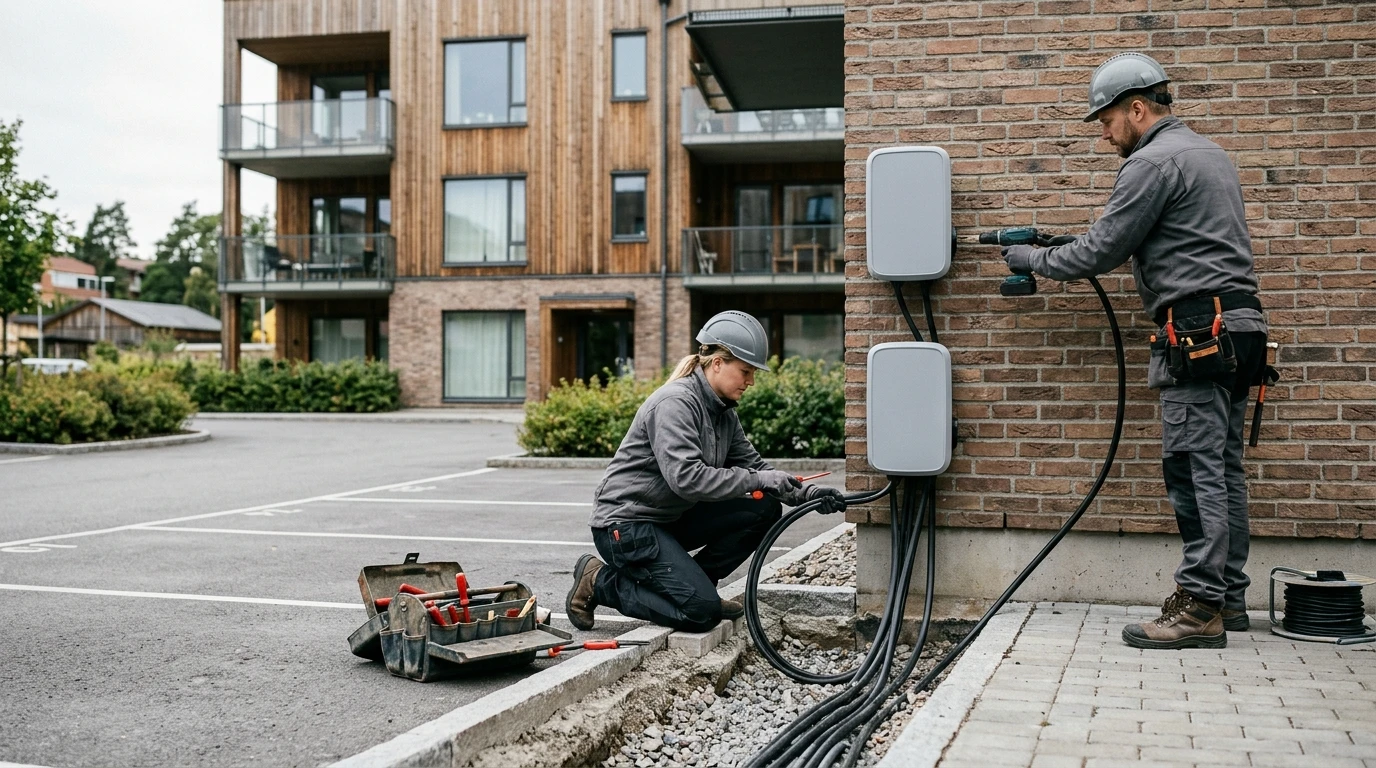
Support can be applied for by condominium associations located outside Tallinn and Tartu cities, whose buildings were constructed before March 10, 2021, and have at least ten parking spaces. State support covers design, construction, load-sharing system, and charging device costs according to established rates. More detailed requirements and conditions are found in the electric car charging infrastructure support regulation. If you are looking for a new home where smart charging options already exist or can be easily established, explore Kinnisvara24's apartment sales and rental listings.
Installing an electric car charging point in an apartment building is a straightforward step when carefully planned, which increases property market value and ensures daily convenience. Modern load management devices and clear legislation enable creating a safe and fair solution for all residents. If you want to find a home with suitable parking options or familiarize yourself with the latest real estate market offerings, find your dream living space on Kinnisvara24 portal.
Search
Keywords
Most read articles
- Price per Square Meter of Apartments in Tallinn in 2025

- Apartment Market in Early 2026: Prices Rising, Transaction Activity Remains Modest

- Apartment Market in Early 2026: Prices Rise, Transaction Activity Remains Modest
- Estonian Apartment Prices and Market Expectations in 2025
- Notary Fee and State Fee – Who Pays and How Much?