Expert: Environmentally Friendly Materials Are Making Wood Maintenance Increasingly Important
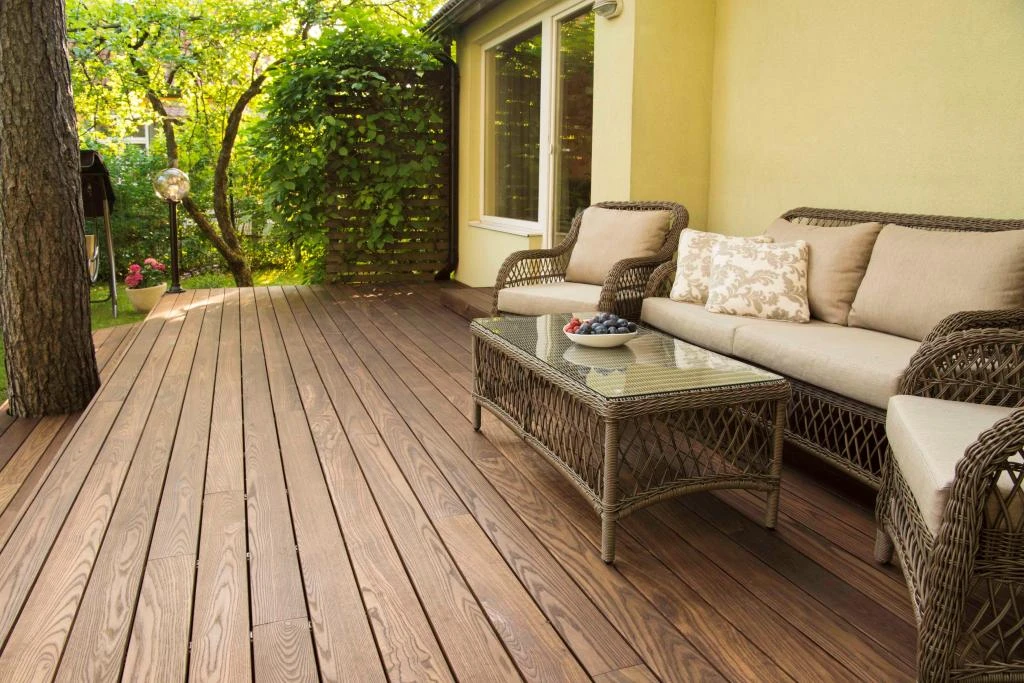
According to Mari-Liis Mihkelson, the head of Puumarket's Tartu branch, the largest timber retailer in the Baltic states, wood treatment products have become increasingly environmentally friendly, but this has made maintenance intervals significantly shorter than before.
"In the past, a product could be maintenance-free for decades, but now some wood materials need to be treated more thoroughly every three years, façades for example every four years, and in some cases even every ten years. Regular impregnated wooden terraces should be oiled every year. The exception is thermally treated wood, which requires less maintenance, and some wood cannot be treated in the first years because, for example, European larch contains a lot of resin and doesn't absorb treatment products immediately," said Mihkelson.
"That's why people have started using more thermally treated wood, which is initially more expensive to purchase, but then requires little further care. Thermally treated wood turns from brown to a beautiful slate gray over a couple of years, which many people expect and prefer as a natural and relatively maintenance-free result. However, if one wishes to preserve the original brown tone, then it should be oiled with tinted pigment oil once a year, and the board will look new again," added Mihkelson.
"Due to low maintenance requirements, composite materials are increasingly being used for both terraces and wall boards, which consist of a mixture of wood and artificial materials to increase durability. Composite material can be maintained for refreshing with a special cleaning concentrate, but essentially regular washing is sufficient for all maintenance," added Mihkelson.
New trend: more special and second-grade materials are being used
According to Puumarket's branch manager, Estonians previously believed mainly in the highest quality class of wood, but now other grades are being used increasingly. "Actually, for a garden house or cottage, second-grade wood with knots and occasional defects works very well. On the other hand, this also gives the wood more character, and material with knots is used quite consciously in interior design to add a rustical accent. Some boards are deliberately given a special appearance – for example, thermally treated boards are brushed to give them a natural and slightly worn appearance," said Mihkelson.
"In addition to being close to nature and rustic, materials with very special appearances are also fashionable – for example, using darkly charred wood to add an accent and to be combined with other materials. Overall, for example on façades, different materials are used together – plaster, concrete and wooden boards," added Mihkelson.
"Estonian house façades are becoming more interesting over time. More and more people are brave enough to place façade or wall boards diagonally instead of the conventional vertical or horizontal arrangement. Or the façade is made entirely from meter-long board pieces, which leaves a segmented and interesting overall impression," said Mihkelson.
"In terms of colors, Estonians are still rather conservative – in rural areas, yellow and pastel tones remain the most common, in newer neighborhoods a lot of gray-tinted boards are used, which are sometimes made more interesting with brighter details," added Mihkelson.
Search
Keywords
Most read articles
- Price per Square Meter of Apartments in Tallinn in 2025
- Apartment Market in Early 2026: Prices Rising, Transaction Activity Remains Modest
- Apartment Market in Early 2026: Prices Rise, Transaction Activity Remains Modest
- Estonian Apartment Prices and Market Expectations in 2025
- Notary Fee and State Fee – Who Pays and How Much?