EXPERT WARNING: If Cleaning Is Difficult, You're Doing It Wrong!
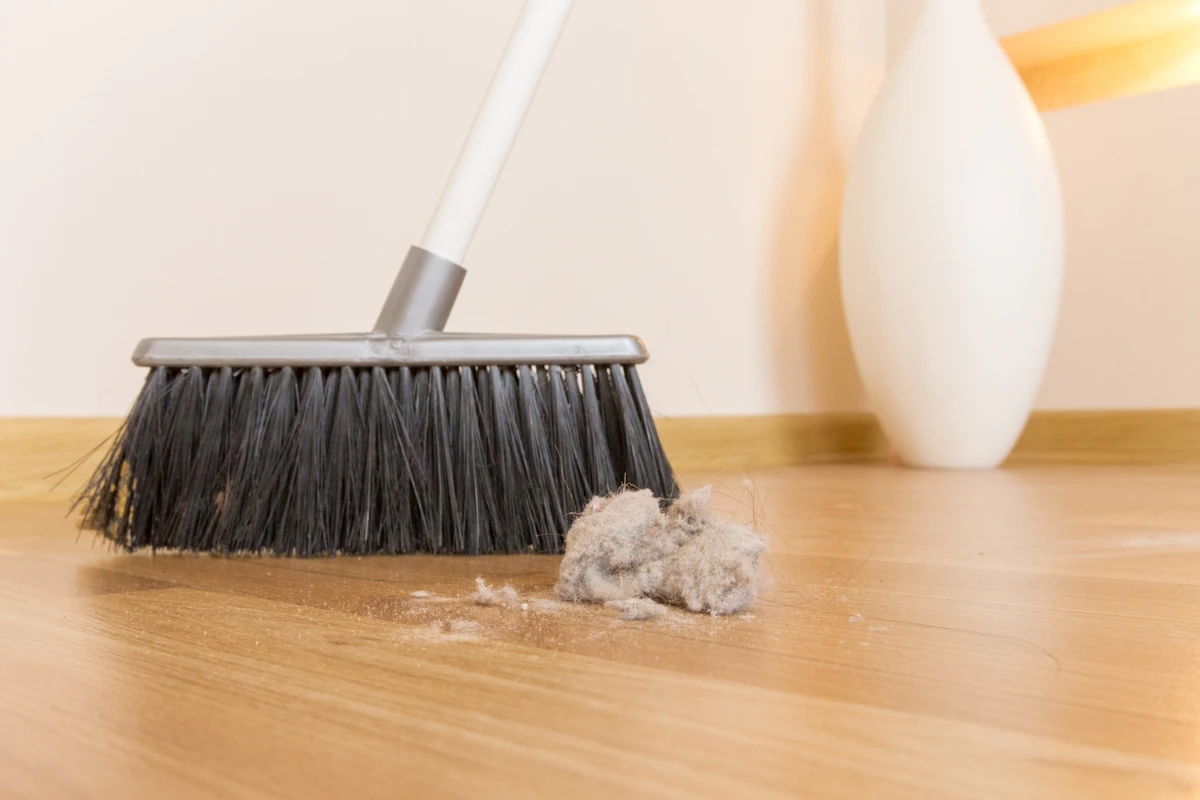
Household cleaning is generally considered a tedious, even exhausting activity – but according to experts, this is far from inevitable or necessary. In professional cleaning work, not only the quality of the result matters, but also the sustainability of work processes, which means that the work should not be overly tiring. Urve Vanker, service manager at cleaning services company Krausberg Eesti OÜ, guides how to apply the basic principles of cleaning ergonomics developed for this purpose in your own home.
"Ergonomics concerns everything that preserves a person's health and well-being during any kind of work and activity. A large part of it focuses on physical posture and reducing strain, but in cleaning work, it also includes, for example, the safe handling of various different tools and substances. For the average person, the concept of ergonomics might primarily be associated with how one should sit at an office desk to preserve one's back and neck – little thought is given to how to apply these principles in other areas of life and thereby make one's life considerably easier," shared Urve Vanker, service manager at Krausberg Eesti OÜ.
Ergonomic cleaning begins with cleverly planned spaces, tasks, and selected work tools. Rushing through cleaning work and fumbling without a clear goal wastes a lot of valuable energy. The more extensive the cleaning work, the more important it is to map out a logical route before starting and thereby avoid making unnecessary steps during the work. According to Urve Vanker, there is also much benefit in deliberately designing your living spaces in a way that promotes cleaning, for example, by organizing storage systems according to the weight of items, placing heavier things on lower shelves, or keeping your potted plants on a table with light wheels so that you can easily access underneath and behind them to dust.
"The main keyword in ergonomics is comfort. The less you contort your body or exert unnecessary effort while cleaning, the longer and more efficiently you are able to clean – if you feel discomfort, you need to immediately correct either your posture or technique. You should avoid as much as possible any bending, stooping, and squatting, and even when cleaning low surfaces, it is possible with the right tools. The only thing you cannot do ergonomically while cleaning is wring out a cloth dry, as it is tiring on the wrists in all positions, which is why cloths are now washed in the washing machine altogether," explained Urve Vanker.
When cleaning in a home environment, ergonomics is no less important, even if the cleaning process doesn't last particularly long. It is precisely during quick and sporadic cleaning tasks, which are done in a rush between other activities, that people are often most careless with their bodies and health. When loading a washing machine or wiping up water spilled on the floor, a quick bend might not seem like a big deal, but in a fast-paced and activity-filled life, many such moments accumulate each day, which eventually become exhausting for the body. According to Urve Vanker, it is worth practicing maintaining sustainable body postures and finding adaptations: if you want to change the bag in a trash can, for example, it is perfectly acceptable to first lift the trash can onto a table.
"When cleaning at home, there are some very common places where a person tends to go against ergonomic principles. Often too much force is applied, for example, there is no need at all to press the vacuum cleaner head against the floor or carpet, this doesn't make the machine vacuum better. When wiping with a cloth, it is right to use the natural weight of your hand and pull smoothly across the surface, instead of scrubbing with force, soaking or using a scraper helps remove heavier dirt. For the sake of health, it is also very important to remember, for example, that when cleaning a toilet, it is not a good idea to start crouching over the bowl immediately after dosing the cleaning product – waiting gives the substance more time to work and protects your lungs from inhaling chemical fumes," shared Urve Vanker.
Cleaning is made easier and more comfortable primarily by choosing the right tools; ergonomic tools are especially helpful for those whose health or physical condition would otherwise make cleaning tasks difficult. For cleaning both high and low places, you can use various extension duster brushes and mops, and for stain removal, you can use a rough cloth attached to a corresponding attachment. When cleaning eye-level surfaces, such as mirrors, it is also useful to bear in mind that the strain from repetitive movements should not fall unevenly on only one side of the body. According to Urve Vanker, cleaning should never hurt or be difficult when using the right tools and methods.
Search
Keywords
Most read articles
- Price per Square Meter of Apartments in Tallinn in 2025

- Apartment Market in Early 2026: Prices Rising, Transaction Activity Remains Modest

- Apartment Market in Early 2026: Prices Rise, Transaction Activity Remains Modest
- Estonian Apartment Prices and Market Expectations in 2025
- Notary Fee and State Fee – Who Pays and How Much?