Expert: This Winter Has Been Unexpectedly Favorable for Builders
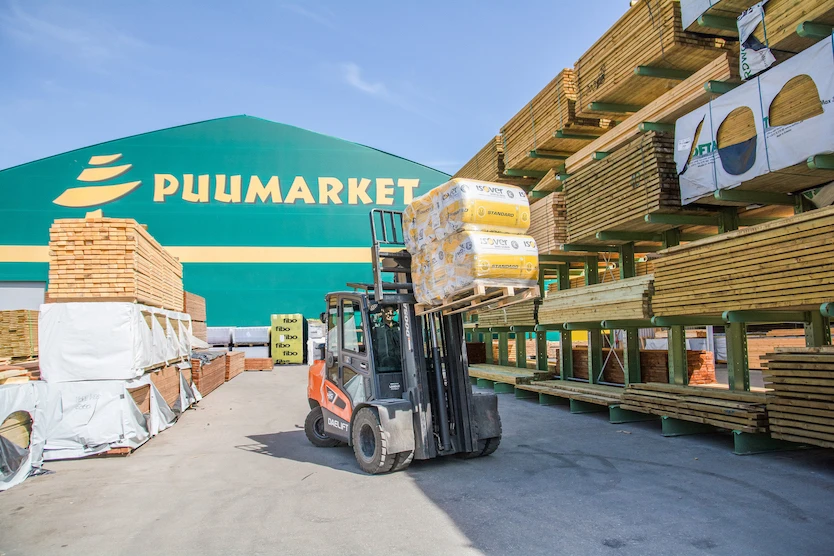
According to Raul Kadaru, Purchasing Director of Puumarket, the Baltic region's largest timber retailer, both timber and general construction materials sales grew by 20% this year compared to the same period last year, and greater pessimism is beginning to fade from the sector.
According to Raul Kadaru, winter is traditionally a low season in construction because outdoor work is difficult. "Typically, the last two and first two months of the year are the quietest in construction, but this year the situation was surprisingly good – a warm winter allows construction to continue without interruption. At the same time, the falling Euribor lending margin is affecting consumer confidence and greater pessimism is beginning to fade from the sector. Due to the combined effect of these factors, this year's turnover in both timber and general construction materials is 20% higher compared to last year," said Kadaru.
"The real estate sectors in Finland and Sweden are also doing somewhat better compared to last year, which promotes exports. Germany has problems with the automotive industry, while other sectors show signs of recovery," Kadaru described the situation on Estonia's main export markets.
"Construction timber prices are now almost half cheaper compared to the peak from a couple of years ago, but there is pressure from manufacturers in the second quarter for a 5-10 percent price increase. This is mainly due to two reasons – with a warm winter, the ground does not freeze, which makes it difficult to extract timber from the forest. Regular log storage is lower, some of our sawmills are operating at half capacity and some have been shut down for the winter in Scandinavia. Additionally, general harvesting volumes have been reduced and this affects the market and prices," explained Kadaru.
"Since overall demand is still below average, the price of general construction materials, such as steel reinforcement, remained stable throughout the past year. In conditions of rapid inflation, this actually means a real price decline," said Kadaru.
"Since the main production inputs – energy and labor – are clearly becoming more expensive, a 2-5 percent increase in the purchasing prices of some construction products occurred at the beginning of this year. For the next quarter, fortunately, no major price increases in general construction materials are expected, but there is also no reason to expect a decline," said Kadaru.
"The construction materials market would certainly be affected by the end of the Ukraine war or more stable peace. With European support, rebuilding the homes of millions of people and entire major cities would significantly increase demand in our region and likely also increase material prices through this," predicted Puumarket's purchasing director.
Search
Keywords
Most read articles
- Price per Square Meter of Apartments in Tallinn in 2025
- Apartment Market in Early 2026: Prices Rising, Transaction Activity Remains Modest

- Apartment Market in Early 2026: Prices Rise, Transaction Activity Remains Modest
- Estonian Apartment Prices and Market Expectations in 2025
- Notary Fee and State Fee – Who Pays and How Much?