Eamets: The Impact of Euribor Decline is Already Felt in the Real Estate Market, but Wages Have Risen Slower Than Property Prices
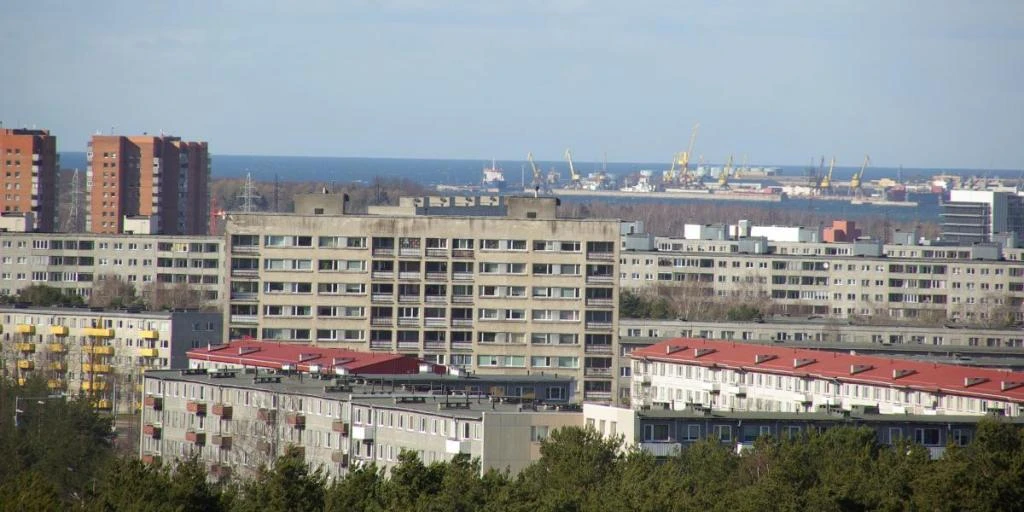
Eesti Pank disclosed its financial stability overview today, which assesses our banking system, loans, and developments in the real estate market.
If we were to briefly characterize the background system affecting the functioning of the financial sector, there are two contrasting trends here. On one hand, geopolitical risks have increased, uncertainty in the world has grown, and we cannot precisely estimate how growing protectionism will affect the Estonian economy in the future. It can be assumed that for a small open economy, this impact tends to be rather negative. On the other hand, we are currently in a cycle of falling interest rates, where one can expect interest rates to fall certainly also during the next year. This in turn amplifies positive developments in the economy. From this picture, Estonia's own fiscal policy decisions are currently excluded, which can amplify positive developments or on the other hand slow down economic recovery. Currently, the latter measures are dominant.
It was also important news that Coop Bank and Bigbank are considered systemically important banks from the beginning of next year, which shows on one hand that these are important and trustworthy banks from the perspective of the Estonian economy, which have grown large enough. On the other hand, it also means setting up additional capital buffers, which is bad news for the banks' owners, who must increase the bank's equity.
The report provides a good opportunity to look at the developments that have taken place in the Estonian real estate market and compare our developments with our neighbors. The number of real estate transactions has declined to the level where we were in 2015. It is also true that the latest data from October provide hope that the real estate market has turned to growth, at least the Tallinn data confirm this.
The data also shows that real estate prices have not fallen, but remained stable over the past two years. If based on transactions one might expect that apartments have become cheaper, then the reason is rather that more secondary market apartments are being bought and sold. New apartments are rather standing idle. Will their prices start to fall? I dare to doubt it, because new developments have been undertaken mainly by well-capitalized and rather larger companies that also engage in construction. They have cash buffers and they can survive difficult times. It is also clear that if interest rates fall at the rate that is predicted, then prices in the real estate market will soon start to grow.
The Eesti Pank graphs show that real estate loans in Estonia have started to grow. A similar trend is also seen in Lithuania and to a smaller extent in Latvia. Finland continues to be in a downward trend and Sweden also shows a very slight increase. If we look at real estate price indices, then compared to the beginning of 2018, real estate prices have grown fastest in Estonia and Lithuania – over 80% – in Finland there has been 0% growth during this period, in Latvia growth is slightly below 60%. Wage growth in Estonia during the same period has been on the order of 60%, while in Latvia and Lithuania wages have grown nearly 80%. So if we look at ratios, then compared to wages, the price per square meter of an apartment in Estonia has grown about 16%, in Lithuania 8%, and in Latvia 0%. In Finland and Sweden, wages have grown faster than housing prices. However, it should of course be noted that in absolute figures, prices in the Nordic countries and Baltic states are very different. The difference in the price per square meter of an apartment between Stockholm and Tallinn is approximately twofold.
The data presented confirm that the positive effect of falling interest rates on the economy is slowly taking effect. First, mortgage loans grow, then the real estate market begins to liven up, and finally the entire construction sector gets a new lease of life.
Search
Keywords
Most read articles
- Price per Square Meter of Apartments in Tallinn in 2025
- Apartment Market in Early 2026: Prices Rising, Transaction Activity Remains Modest

- Apartment Market in Early 2026: Prices Rise, Transaction Activity Remains Modest
- Estonian Apartment Prices and Market Expectations in 2025
- Notary Fee and State Fee – Who Pays and How Much?