Competition for Architectural Solutions for Two RMK Office Buildings Has Begun
The Estonian Association of Architects and the State Forest Management Centre (RMK) have announced architectural competitions to find new architectural solutions for two RMK office buildings – in Paikuse and Ussimäe – as the current buildings have become outdated.
This is a forward-looking project by RMK to gradually modernize the organization's network of offices across Estonia. The first swallow of the project is the new RMK office building in Tartu, which has already been completed.
According to the conditions of the Paikuse and Ussimäe architectural competitions, both planned RMK office buildings must feature high-level architecture and be representative, comfortable and functional for end users, energy-efficient, and built at optimal costs. Wood has been selected as the primary structural and finishing material for the buildings.
„In addition to creating a better work environment, our goal is to visualize RMK's identity and values – to serve as an example in the valorization of local timber. The aim is to use wood to the maximum extent in both the building's structures, façade, and interior design," said Agne Aija, Head of RMK Support Services.
By modernizing the office buildings, RMK wishes to ensure its employees a quality work environment based on an activity-based concept – the office offers different types of workspaces that support different kinds of work. „Architecture can support the work process with flexible and diverse solutions, offering a wide range of environments with different atmosphere, openness, and functions instead of traditional named workstations, keeping work life varied and stimulating," commented Aija.
Thus, architectural solutions are expected to present a vision of how to combine formal and informal work areas – workstations with desks, rest areas, quiet work rooms, social zones, and mobile workspaces.
RMK's new office buildings must meet the nearly zero-energy building threshold – a requirement for energy efficiency class A or better, meaning low energy consumption, prudent and environmentally friendly choice of construction and finishing materials and building technology, and easy maintenance. In creating the architectural solution, circular economy principles must certainly be considered – for example, reusing existing structures and building materials where possible.
The current high vegetation around the buildings must be preserved to the maximum extent, and when planning new vegetation, plants native to the region and suitable for the climate should be preferred. The courtyards of the buildings are expected to have sitting and activity opportunities created with small-scale structures and street furniture. In outdoor spaces, it is also important to ensure that rainwater can seep into the soil – large hard-surfaced areas or extensive stone pavements that create urban heat islands should be avoided.
The prize fund for both architectural competitions is 28,000 euros. Submissions for the Paikuse office building competition are expected by January 11, and for the Ussimäe competition by January 25, 2024.
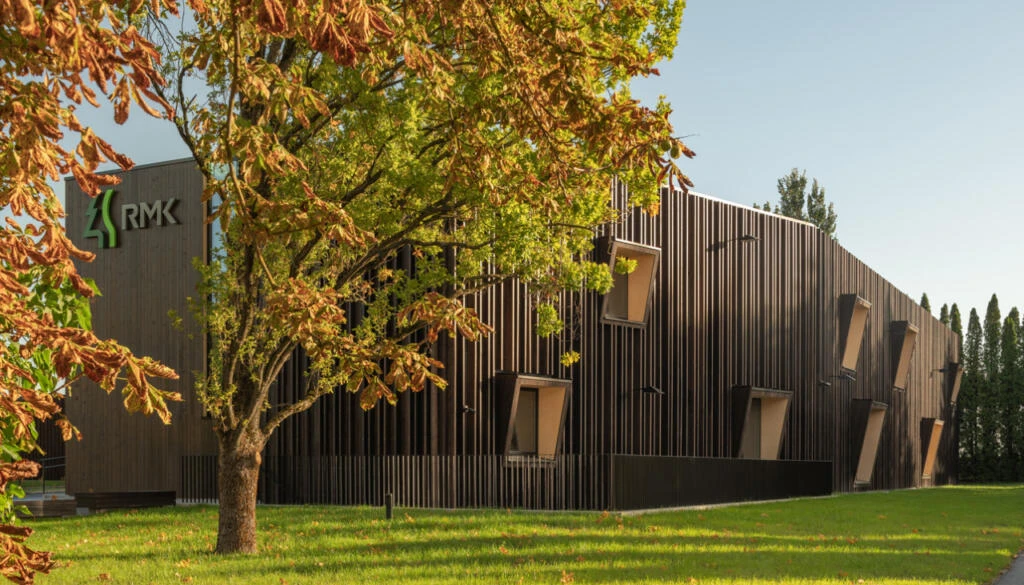
RMK opened its first office building built according to the new concept three years ago in Tartu. The office building, constructed from domestic timber and inspired by hiking trail motifs, with A-class energy efficiency, was already then recognized as a trendsetter for Estonian timber architecture.
Search
Keywords
Most read articles
- Price per Square Meter of Apartments in Tallinn in 2025
- Apartment Market in Early 2026: Prices Rising, Transaction Activity Remains Modest
- Apartment Market in Early 2026: Prices Rise, Transaction Activity Remains Modest
- Estonian Apartment Prices and Market Expectations in 2025
- Notary Fee and State Fee – Who Pays and How Much?